How to Choose a Landscaping Company in South London (And Avoid the Common Horror Stories)
Vetting, Logistics & Trust Guide | The Tree Amigos
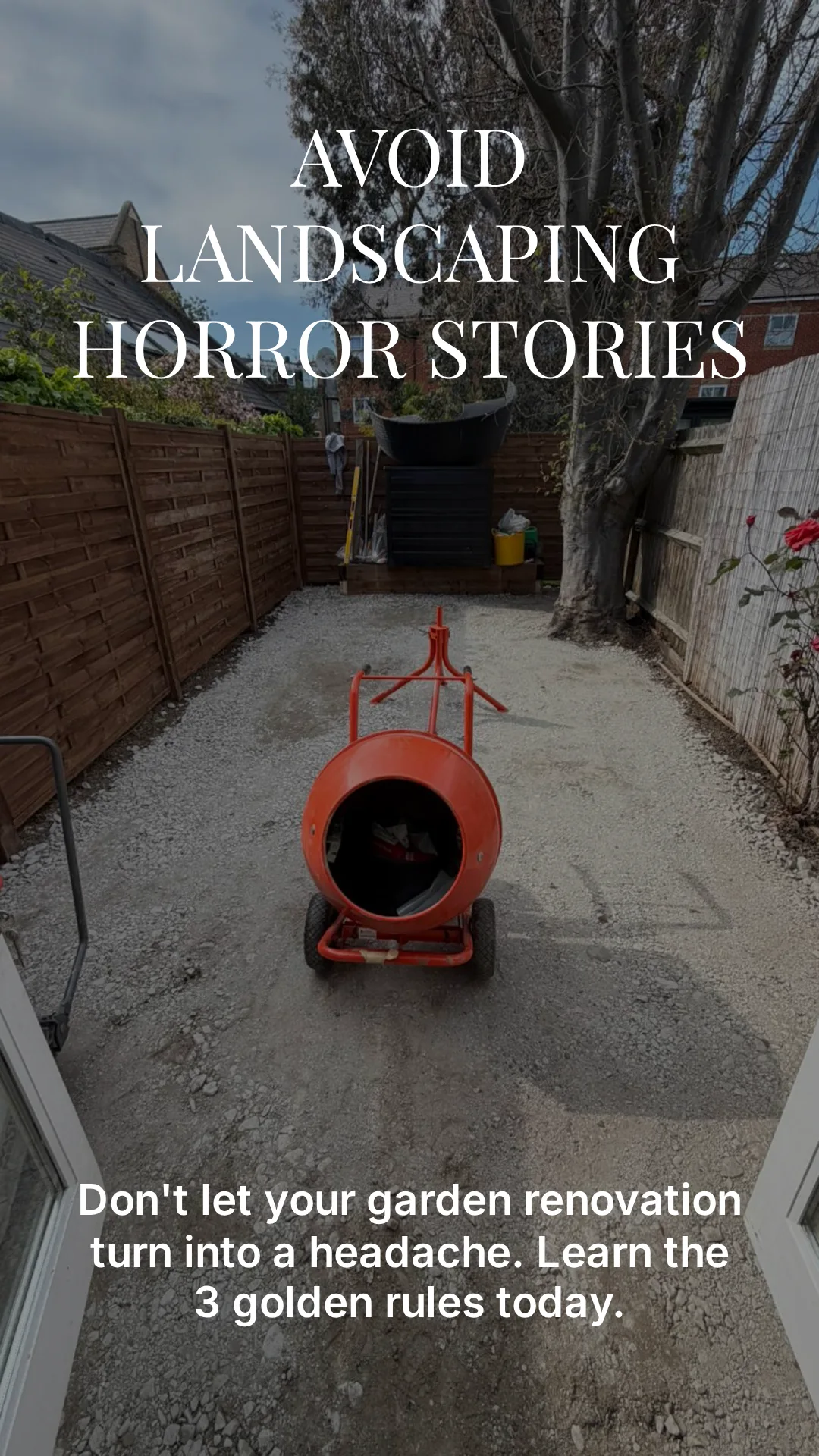
Choosing a landscaping company in London can feel like a minefield. Across UK advice forums like r/DIYUK, r/LegalAdviceUK, and MoneySavingExpert, homeowners repeatedly share stressful stories of garden projects gone wrong. Phrases like “I’m losing sleep over this landscaping job,” “I don’t want to be taken for a mug,” and “I’m terrified of making an expensive mistake” are all too common.
Many homeowners have experienced contractors taking large deposits and pushing back start dates repeatedly, or worst of all, leaving them with poor workmanship—like uncompacted sub-bases, rocking slabs, and water pooling against the house.
At The Tree Amigos, we believe you shouldn’t have to worry about whether your contractor will turn up. This guide breaks down the core options for landscape gardeners in South London, common red flags to watch for, and the technical specifications required to ensure your porcelain patio, composite decking, or custom pergola stands the test of time.
1. Understanding the South London Landscaping Market
When searching for the best landscaping companies in London or landscape gardeners near me London, it helps to know that the market generally consists of three main categories. Each has distinct pros and cons:
| Company Type | What They Do | Pros | Cons |
|---|---|---|---|
| General Builders & Handymen | House renovations, brickwork, standard block paving, and general repairs. | ✓ Often cheaper and readily available for quick tasks. | ✗ Lack specialist garden engineering (fall ratios, soil conditioning, and premium timber/stone detailing). |
| Subcontracted Design Agencies | High-end bespoke conceptual design and outsourced construction. | ✓ Outstanding 3D renderings and comprehensive planting schemes. | ✗ High design overheads; communication gaps due to subcontracted build crews. |
| Boutique Hardscaping Specialists (The Tree Amigos) | Owner-operated teams specialising in [porcelain paving](/porcelain-patio-installation-london), [composite decking](/composite-decking-london), driveways, and [garden makeovers](/garden-makeover-london). | ✓ Direct founder presence on-site daily, precise sub-base and fall engineering, and 100% itemised quotes. | ✗ Exclusively focused on premium residential installations (no routine garden maintenance). |
By focusing exclusively on premium residential garden builds rather than spreading ourselves across house extensions or commercial contracts, we maintain strict quality control on every joint, post, and level.
2. The Red Flags: Deposits, Contracts, and "Vague Quotes"
Vague quotes and payment anxieties are the root of most landscaping disputes. Let’s look at what to expect from a reputable contractor.
How much deposit should a landscaper in London charge?
A reputable landscaping company should only request an initial deposit that covers early material costs—typically between 10% and 25%—with the remaining balance structured around clear, milestone-based staged payments.
Beware of contractors demanding 50% or more upfront before a spade has touched the ground. A professional company with established trade accounts with local builders’ merchants will not require you to fund their entire labor bill or overheads in advance. Staged payments should always align with verifiable progress (e.g., Stage 1: Excavation and sub-base complete; Stage 2: Framing or paving laid; Stage 3: Final snagging and sign-off).
What should a proper landscaping quote include?
A professional landscaping quote must be fully itemised, detail the exact materials to be used, outline waste removal costs (skips), and specify payment structures.
Never accept a one-line quote like “Garden makeover: £8,000.” This is a significant red flag that often leads to unexpected “extras” mid-job. Your proposal should split out:
- The depth of excavation and sub-base materials for patios (e.g., MOT Type 1).
- Brand-specific surface details (e.g., vitrified Italian porcelain or Millboard composite decking).
- Waste management (skip hire licenses and commercial disposal permits, particularly critical in tightly packed South London boroughs like Lambeth, Southwark, and Wandsworth).
- Snagging terms.
3. The Technical Details: Why Patios and Decks Fail
Many garden regrets stem from poor engineering underneath the finished surface. When investing in premium materials, correct sub-base and drainage engineering are vital.
Why is water pooling or puddling on my new porcelain patio?
Because porcelain is non-porous and absorbs virtually zero water, it requires a fall gradient of between 1:60 and 1:80 directing water away from your home toward a lawn, flowerbed, or dedicated slot drain.
If a contractor lays porcelain flat, water will pool, grout will fail, and the surface will become slippery and green. Furthermore, according to UK Building Regulations and industry-standard reference sites like PavingExpert, patios must sit at least 150mm (two brick courses) below your property’s Damp Proof Course (DPC). If a patio slopes toward the house or sits too high, water will bypass the DPC and cause internal damp issues. In restricted spaces, an ACO slot drainage channel must be installed along the house wall to catch run-off.
The Porcelain Bonding Standard:
Unlike concrete slabs, porcelain will not bond directly to a standard sand and cement mix. A professional installer must apply a polymer-modified SBR slurry primer to the back of each tile before laying it onto a full mortar bed. Without this bonding agent, your slabs will rock and lift after just one winter frost.
Is composite decking worth the premium, and will it fade?
Premium composite decking brands (such as Millboard or Trex) are highly durable and resist rot, but cheap composite alternatives can fade, warp, or become scorching hot under direct sunlight.
Homeowners frequently ask if composite decking is worth the extra cost over traditional timber. While timber requires annual oiling and sanding, composite is virtually maintenance-free. However, cheap, hollow-board composite products often fade significantly within 1–2 years, warp due to temperature fluctuations, and retain high levels of radiant heat, making them uncomfortable for bare feet in the summer.
When choosing composite, we advise ordering samples and leaving them out in the sun to test heat absorption and aesthetics. We always recommend solid-core, premium brands like Millboard or Trex and installing them on an engineered sub-frame with adequate ventilation to prevent moisture build-up underneath.
4. The Planning and Neighbour Rules
Before beginning a project, it’s essential to understand the rules around boundaries and raised platforms to avoid local council enforcement or neighbor disputes.
Do I need planning permission for decking or raised patios in London?
Under official UK Planning Portal guidelines, decking and raised platforms do not require planning permission if the walking surface is no higher than 30cm off the ground and, combined with other outbuildings, covers less than 50% of the total garden area.
If your garden has a slope and your deck or raised patio exceeds 30cm in height at any point, you must obtain planning permission. Raising a platform too high often leads to complaints about “privacy invasion” from neighbors who find their windows or gardens overlooked. A professional contractor should verify these levels with a digital laser level during the initial consultation.
5. Your 5-Question Landscaping Interview Checklist
When vetting landscape gardeners in Beckenham, landscape gardeners in Bromley, Croydon, Wandsworth, or elsewhere in London, check for qualifications and affiliations with professional trade bodies like the Association of Professional Landscapers (APL). Ask these five questions before signing a contract:
- ✓ "Can I speak with a past client whose garden you completed over 12 months ago?" — This confirms their work survives seasonal weather shifts and winter frosts.
- ✓ "What is the exact specification of the sub-base you will excavate?" — For patios, verify a minimum of 100–150mm of compacted MOT Type 1; for composite decks, verify correct joist spacing and sub-frame airflow.
- ✓ "Who will be on-site managing the project day-to-day?" — Large agencies subcontract builds out, creating communication gaps. At The Tree Amigos, founders Vincent and Billy are on-site daily.
- ✓ "Will you provide a written contract that breaks down materials, waste disposal, and a milestone-based payment structure?" — Protect your deposit. Staged invoices should link directly to physical build milestones.
- ✓ "How will you manage levels and drainage relative to my house's Damp Proof Course (DPC)?" — Confirm they will maintain the 150mm clearance and construct a fall ratio of between 1:60 and 1:80 to prevent interior damp.
Book a Free On-Site Consultation
Vincent and Billy will visit your property, assess your site's specific logistics, check your levels, and design a custom, high-engineering layout. We serve all 32 London boroughs, with a focus on South London.
Book Your Free ConsultationExplore Our Guides: