Complete Garden Transformation in Battersea, SW11
This project in Battersea gave us the opportunity to take a tired, neglected rear garden and completely rebuild it from the ground up. The client wanted something clean, durable, and low-maintenance — a garden that would look good year-round without demanding constant upkeep. What they had was a combination of ageing concrete slabs, deteriorated decking, and boundary fencing that had seen better days. What they ended up with was a fully reimagined outdoor space built to last.
The Brief
The client came to us with a clear idea of what they did not want — the old slabs, the rotting decking, the failing fences — but a more open brief about what should replace it. During the initial consultation, Vincent walked the garden, assessed the soil and light conditions, took measurements, and sat down with the client to talk through material choices, plant options, and how the space could be made to feel bigger than it was. The result was a project scope that covered everything: full patio replacement, new boundary fencing on all sides, a raised timber sleeper bed, and a considered planting scheme chosen specifically for the conditions of a South West London urban garden.
What the Garden Looked Like Before
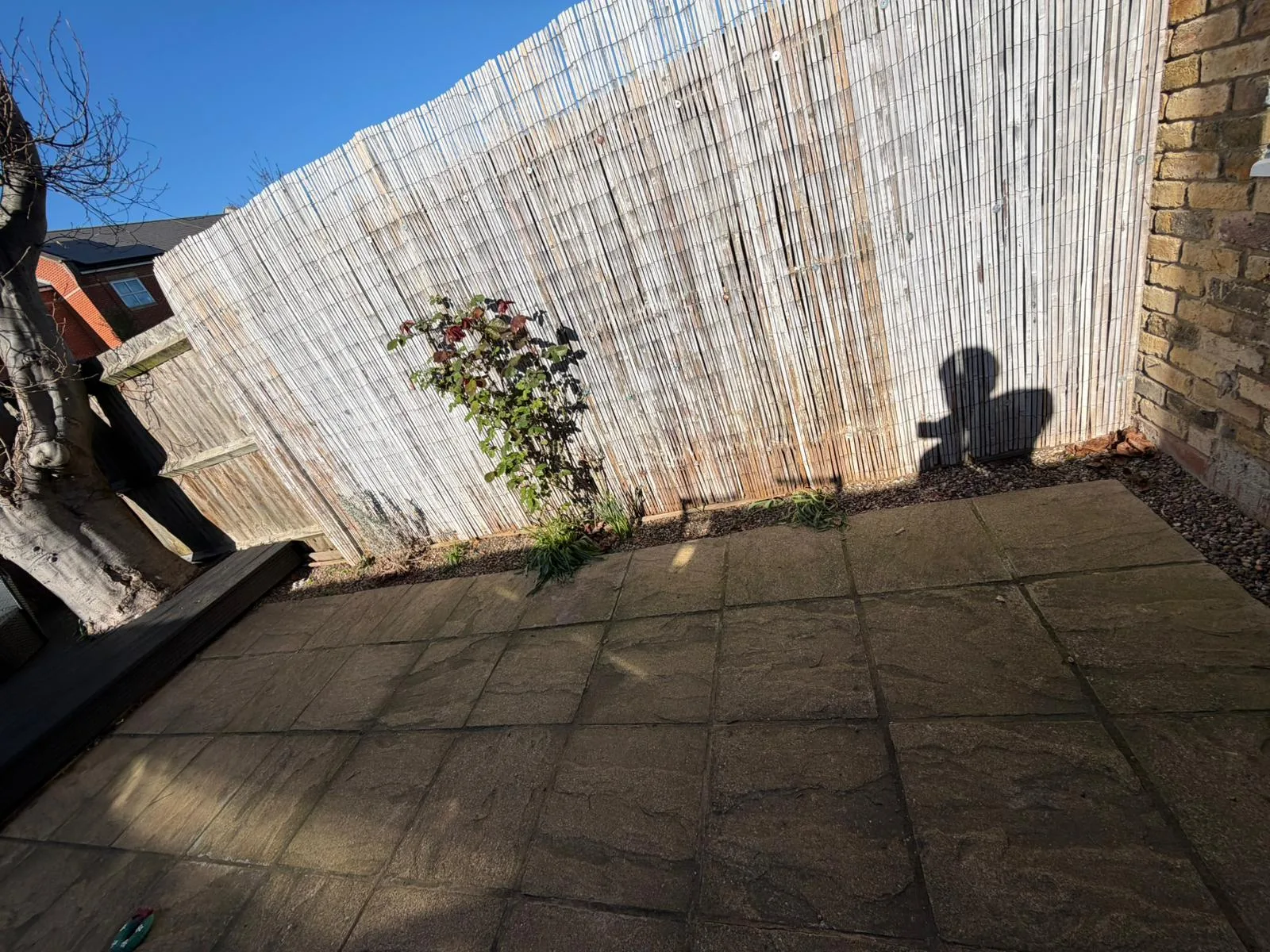
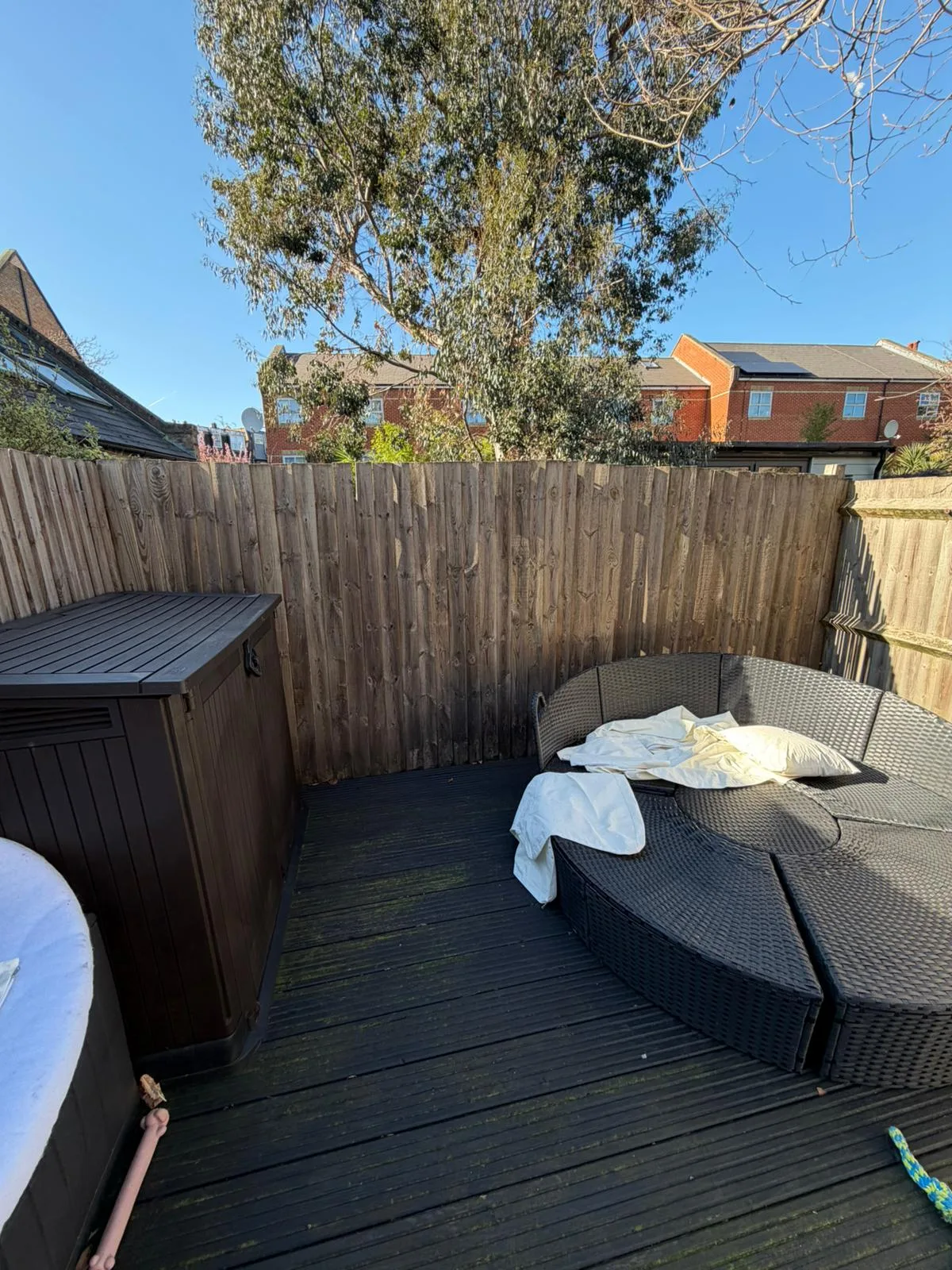
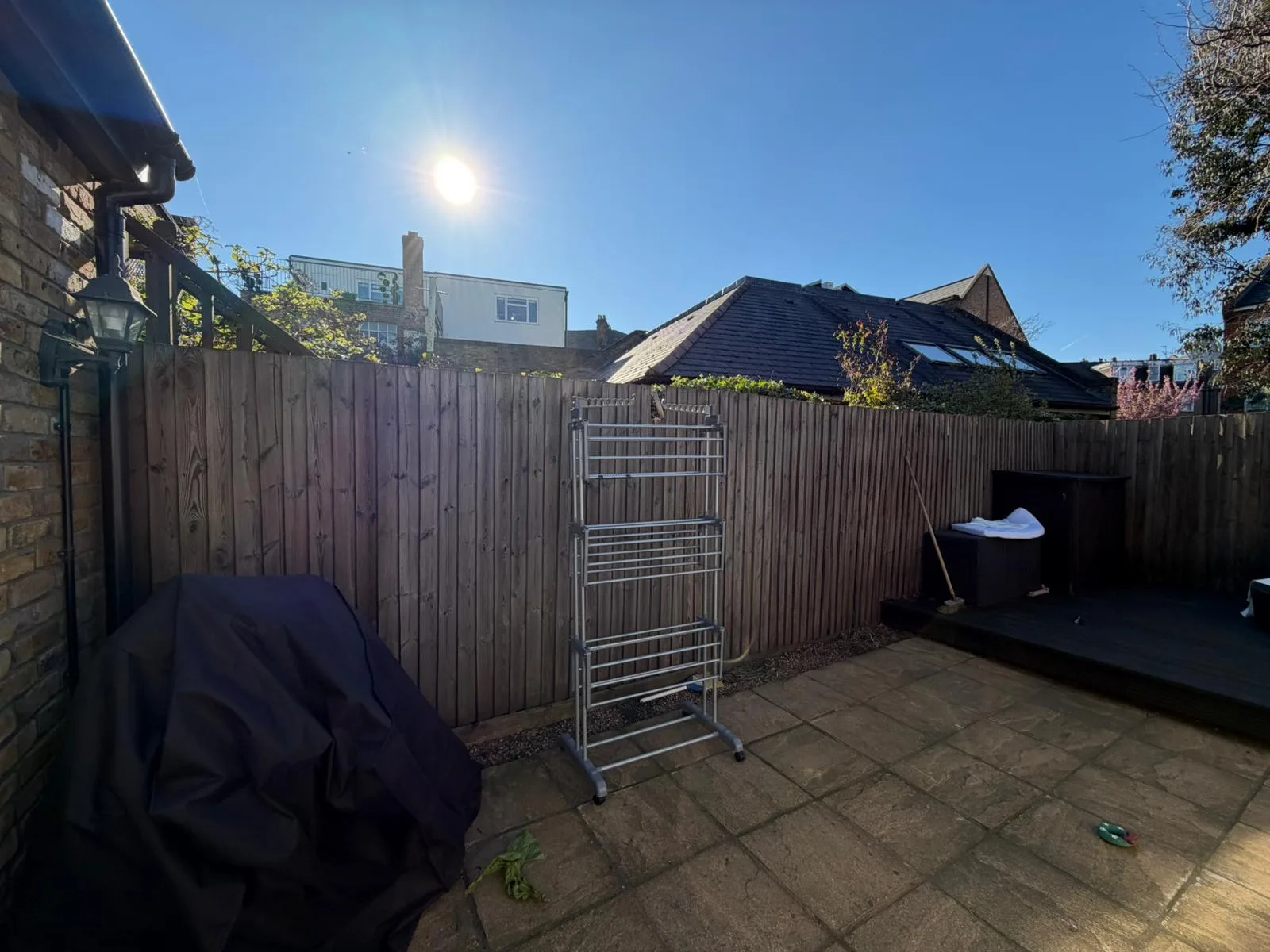
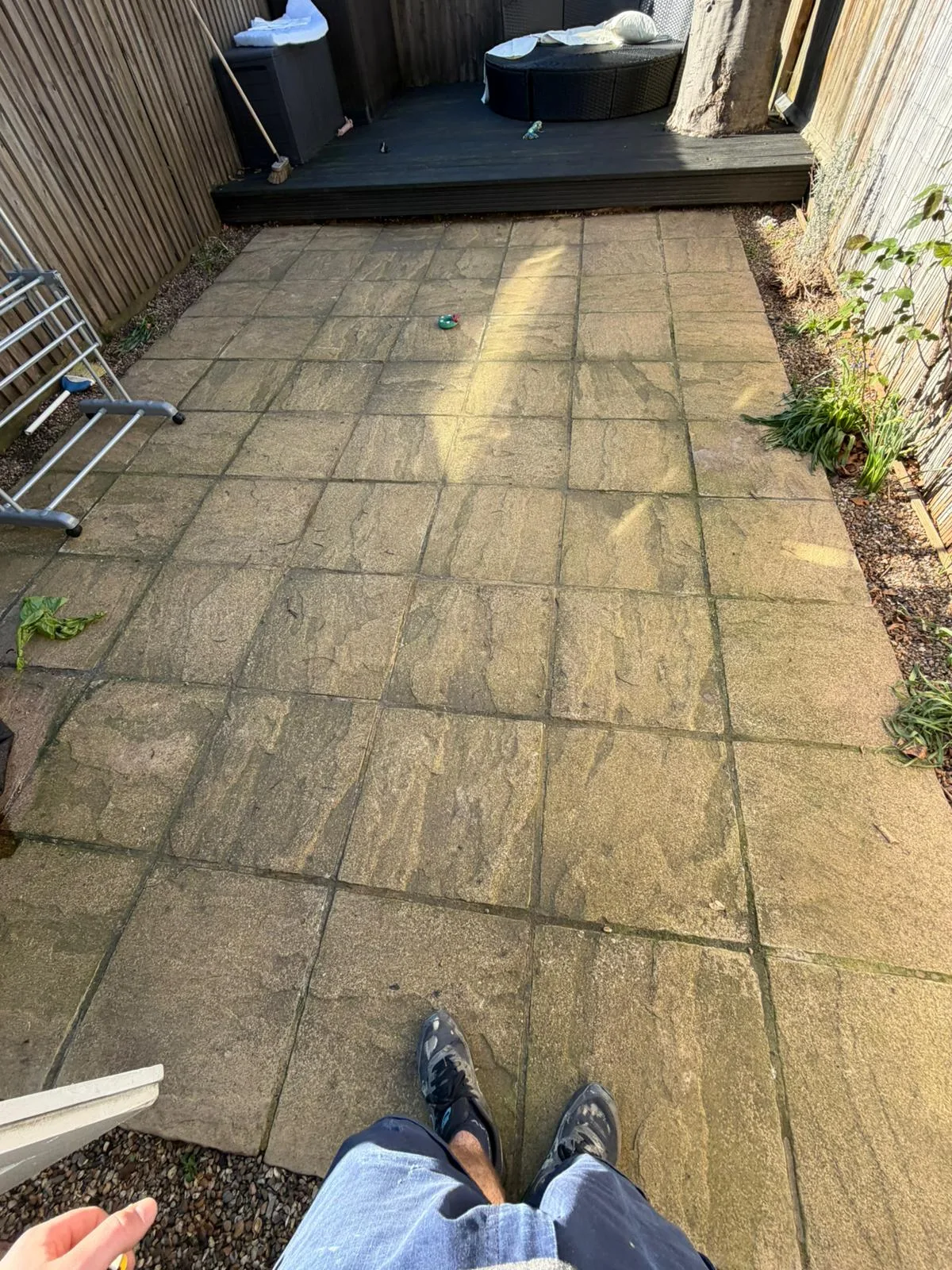
The main garden area was paved with old concrete slabs that had lifted, cracked, and discoloured over years of London weather. At the rear of the garden, a timber decking section had deteriorated beyond repair — soft in places, moss-covered, and structurally unreliable. The boundary fencing on all sides was dated vertical panel fencing that offered little privacy and had no visual coherence with the house. The garden was functional in the loosest sense but gave the client no real reason to use it.
Ground Clearance and Preparation
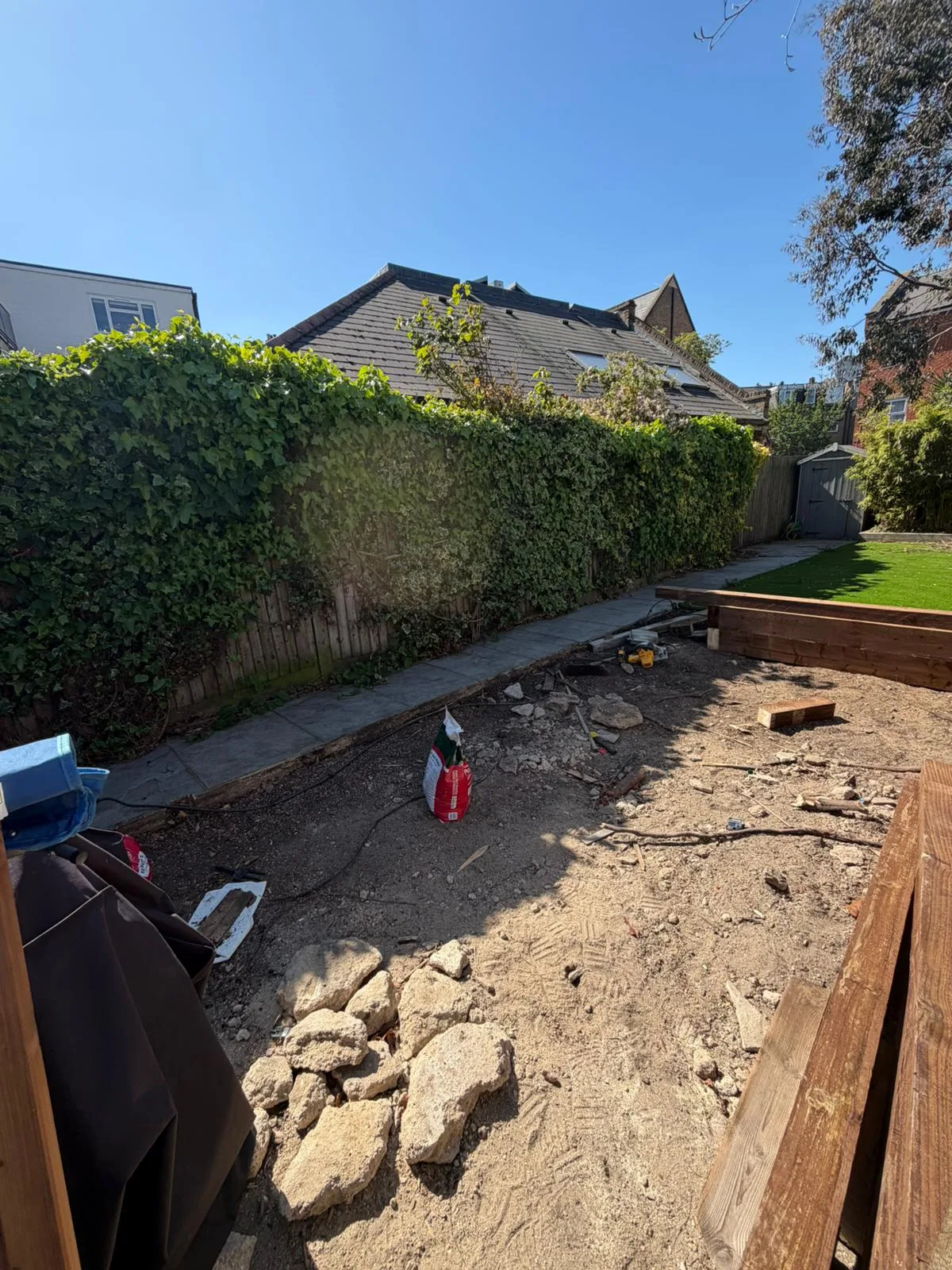
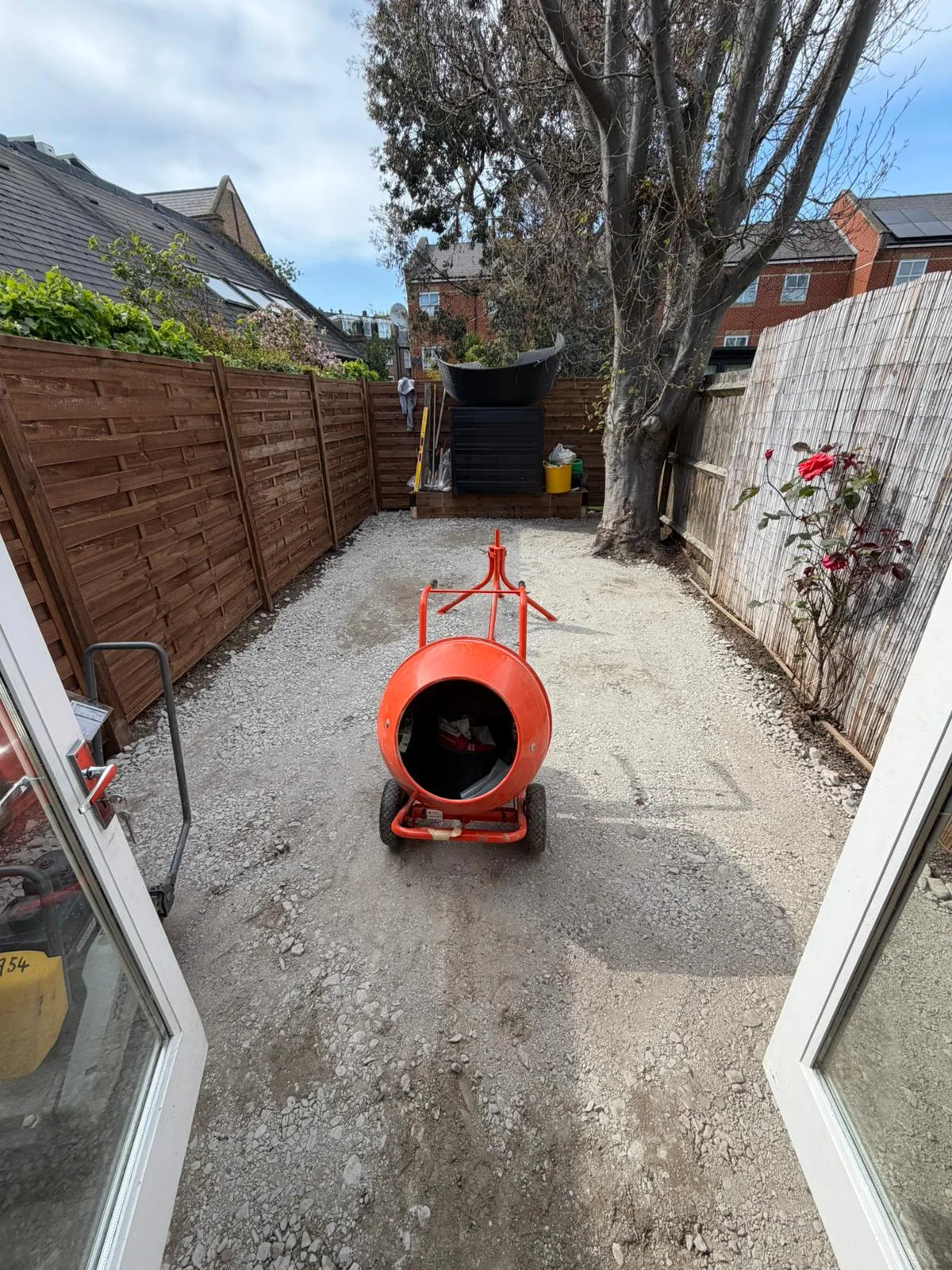
Before any new material went down, everything had to come out. We removed all the existing concrete slabs and decking in full — no overlaying, no shortcuts. The ground was then excavated, levelled, and compacted to create a stable base for the new porcelain patio. This stage is where a lot of landscaping projects cut corners and pay for it later with slabs that shift, crack, or lift within a few years. Getting the sub-base right is not visible in the finished garden, but it is the difference between a patio that lasts five years and one that lasts twenty.
Porcelain Patio Installation
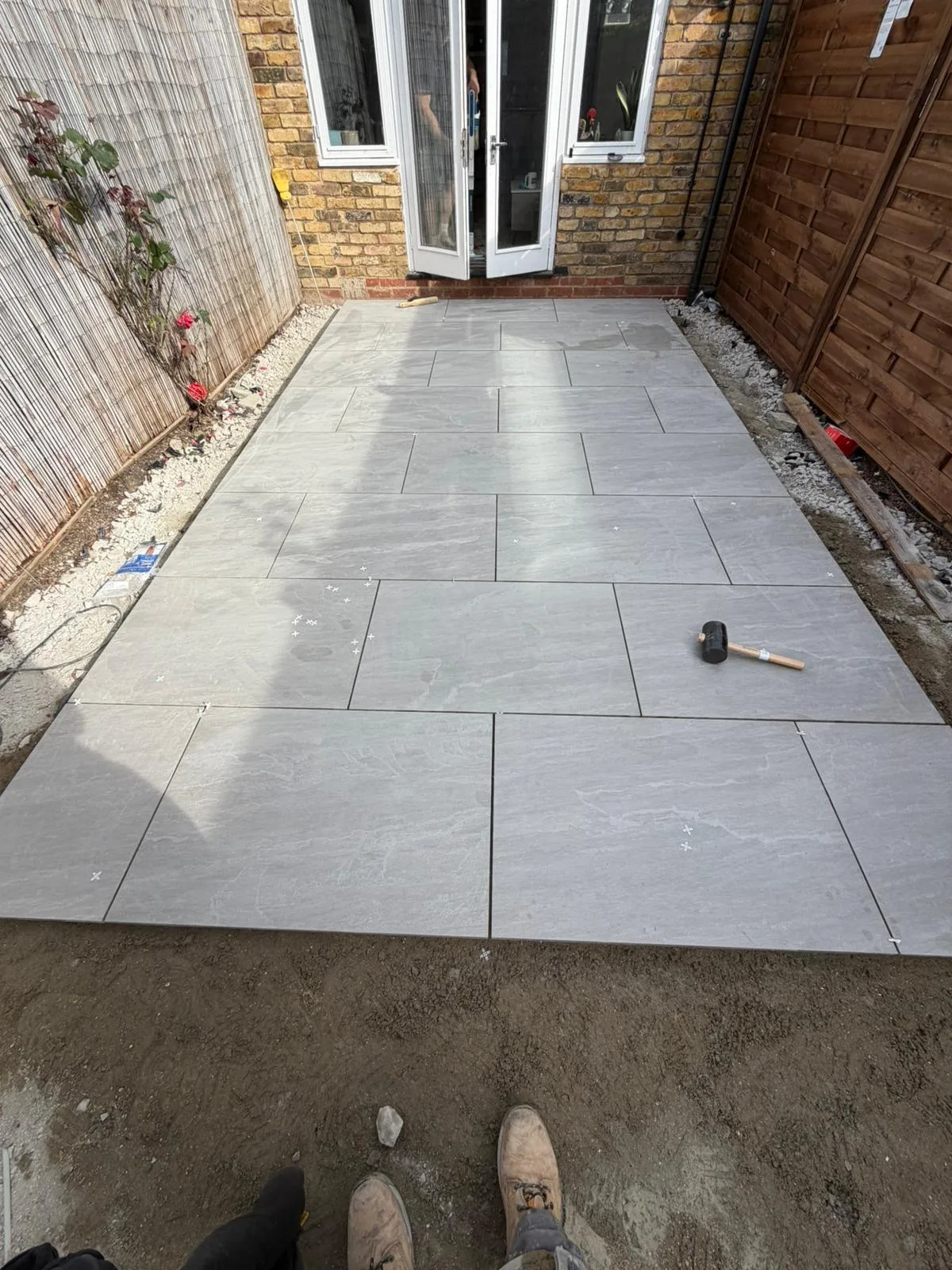
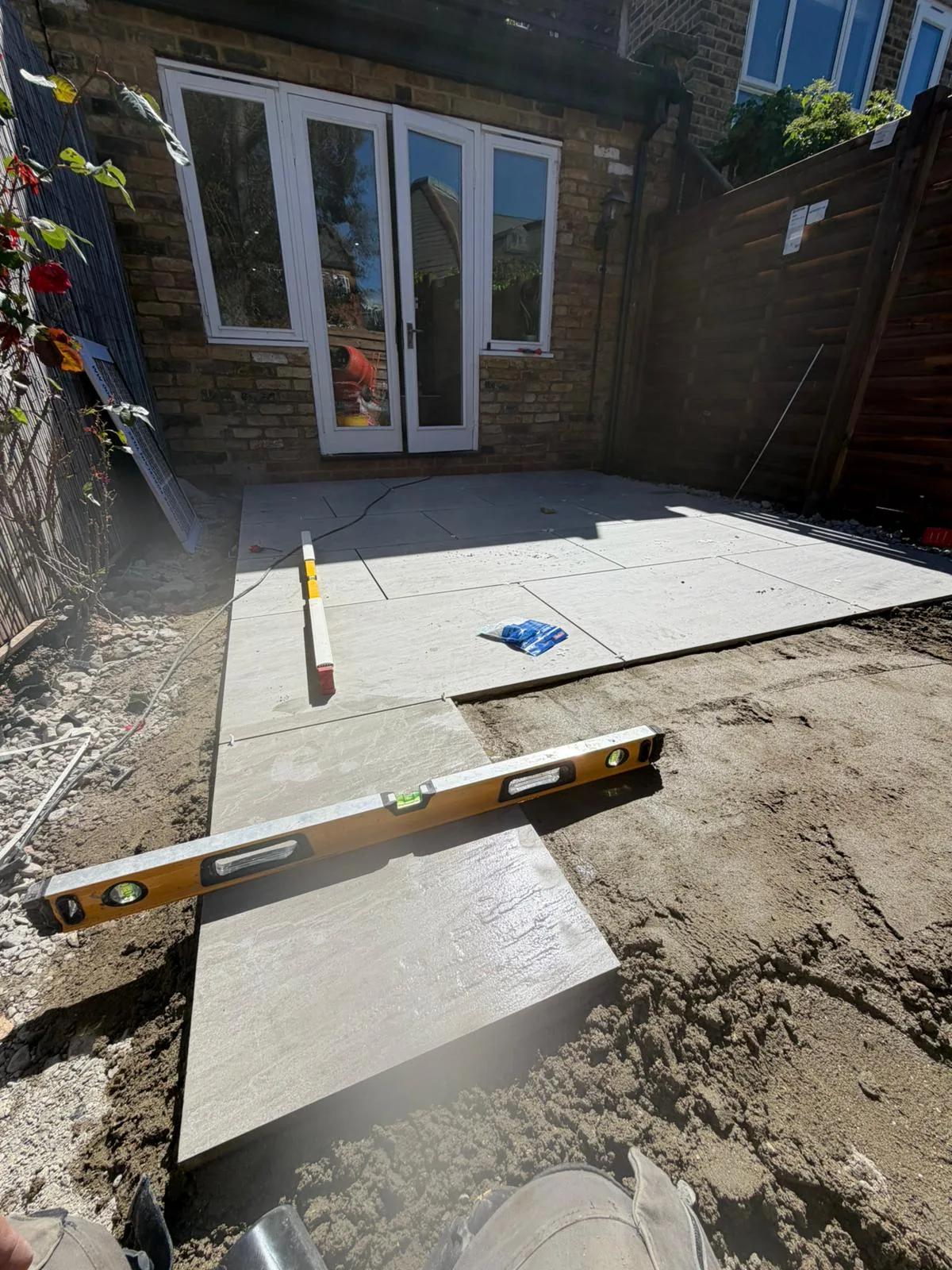

We laid a full porcelain patio across the main garden space using large-format grey porcelain tiles. Porcelain was the right material choice for this particular garden for several reasons. It is completely non-porous, which means it does not absorb water and is not vulnerable to the frost damage that causes natural stone to crack and lift through a London winter. It is also significantly easier to maintain than Indian sandstone or limestone — no annual sealing, no specialist cleaning products, just a pressure wash when needed. The large format tiles, laid in a simple grid pattern, open the space up visually and sit cleanly against the rear doors of the house.
Every tile was checked with a spirit level during laying to ensure consistent fall across the patio — critical for drainage in a garden of this size. The finished surface is flat, even, and precisely graded away from the house.
New Boundary Fencing
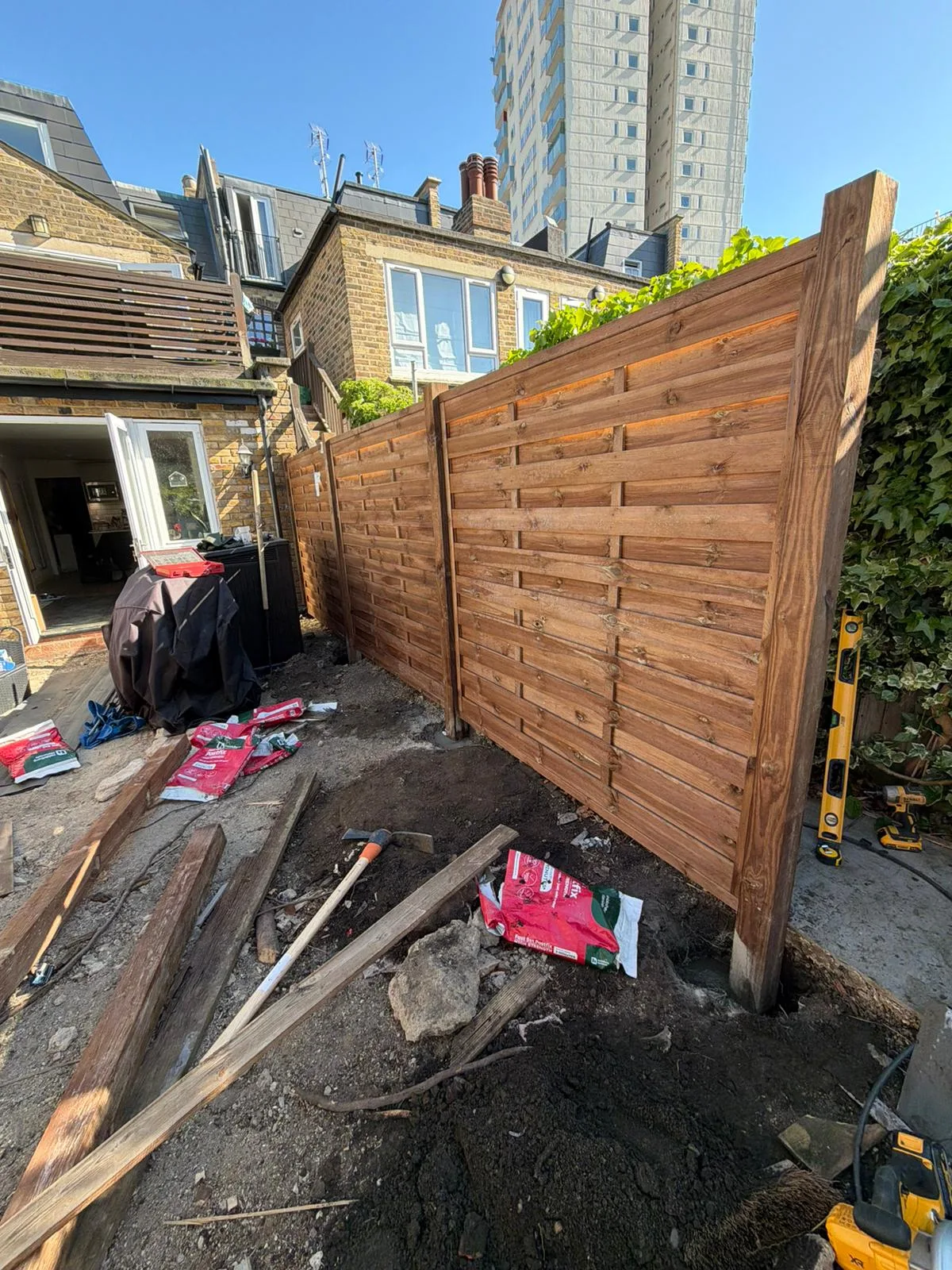
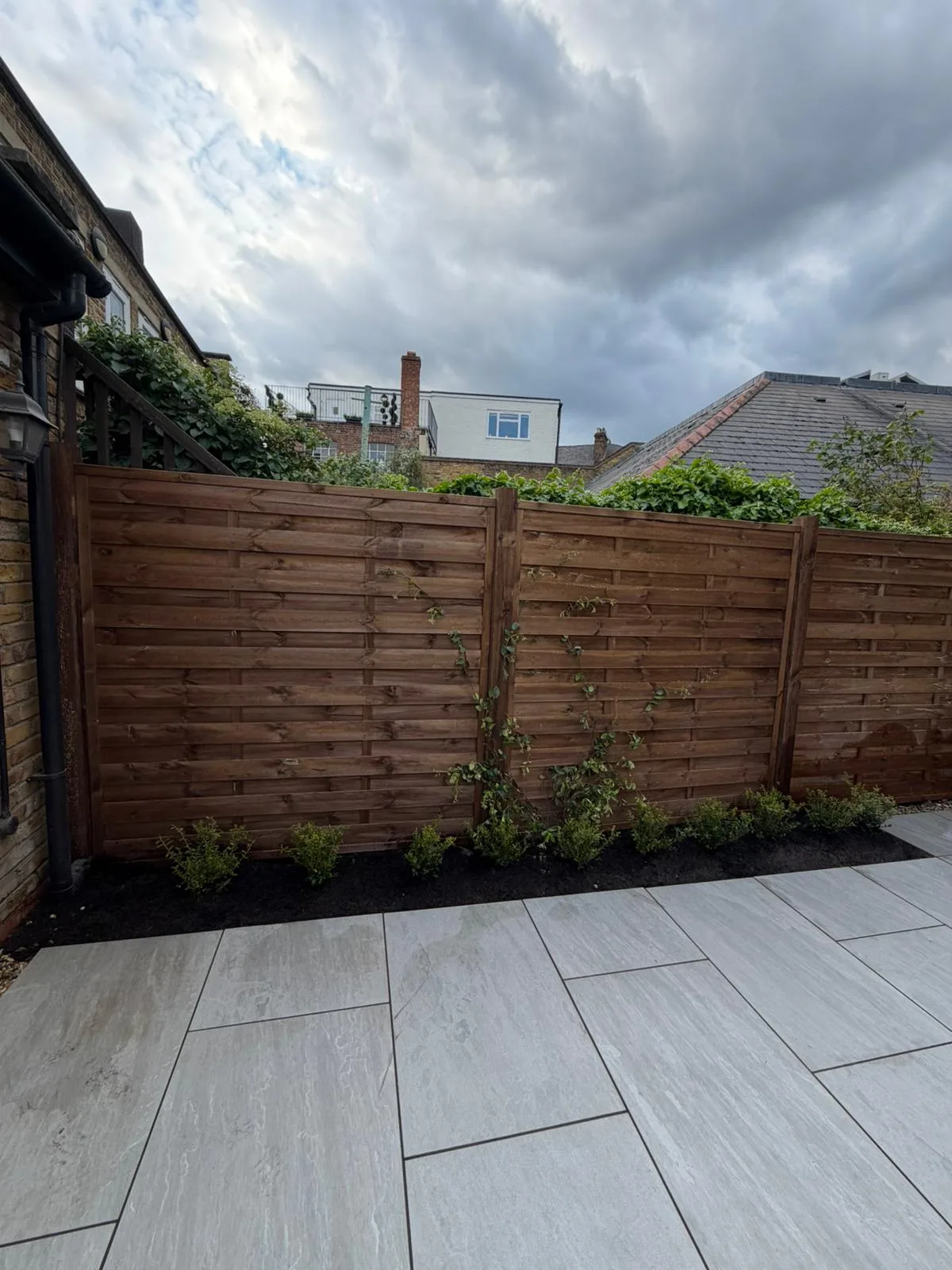
The old vertical panel fencing was removed and replaced on all boundaries with new horizontal timber slatted panels. Horizontal fencing gives a more contemporary finish than traditional overlap or featherboard panels — it frames the garden deliberately rather than simply enclosing it, and it pairs naturally with the clean lines of the porcelain patio. The new fencing also gave us defined, structured borders to plant against, which was important for the planting scheme that followed.
Raised Timber Sleeper Bed
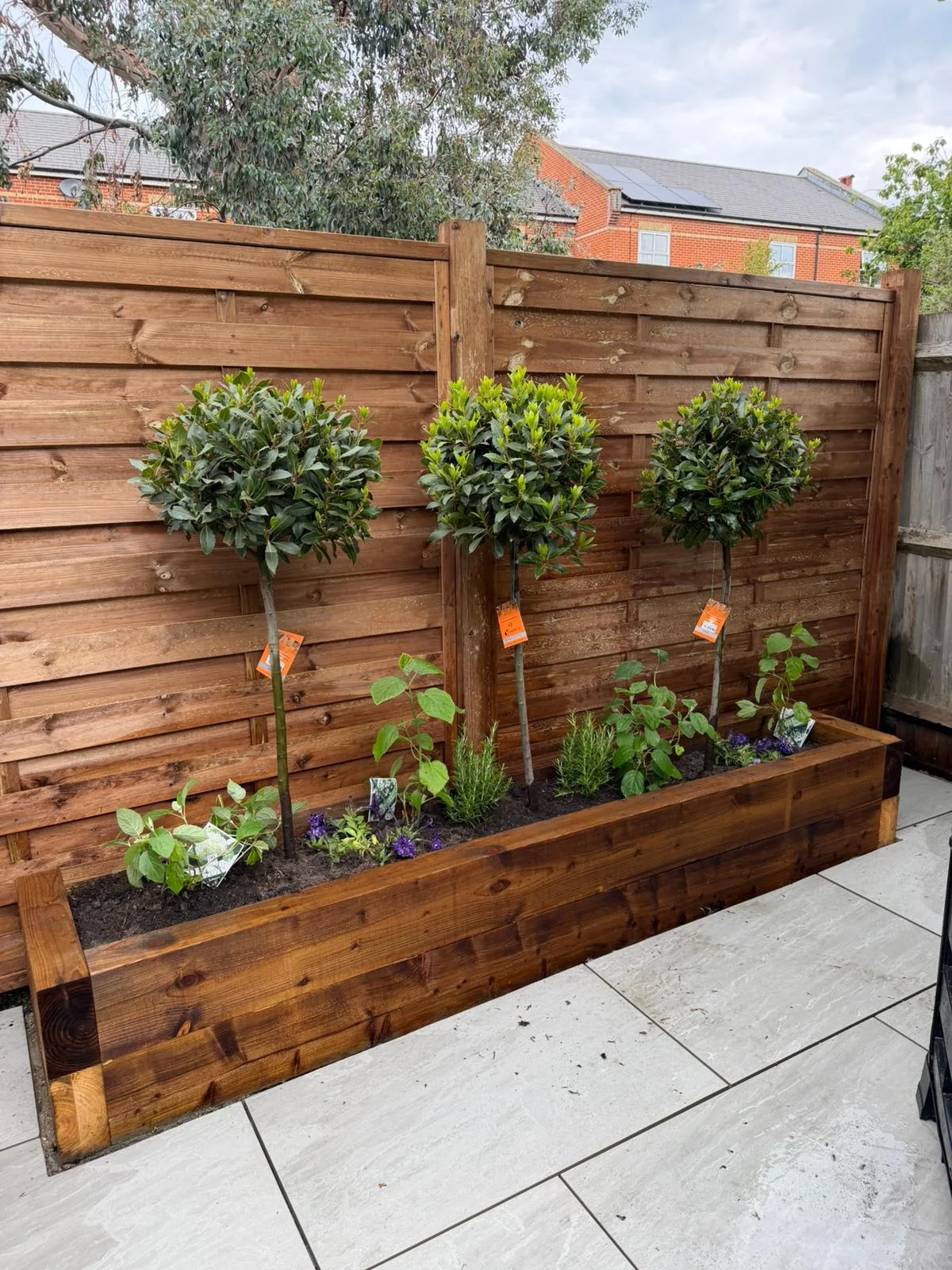
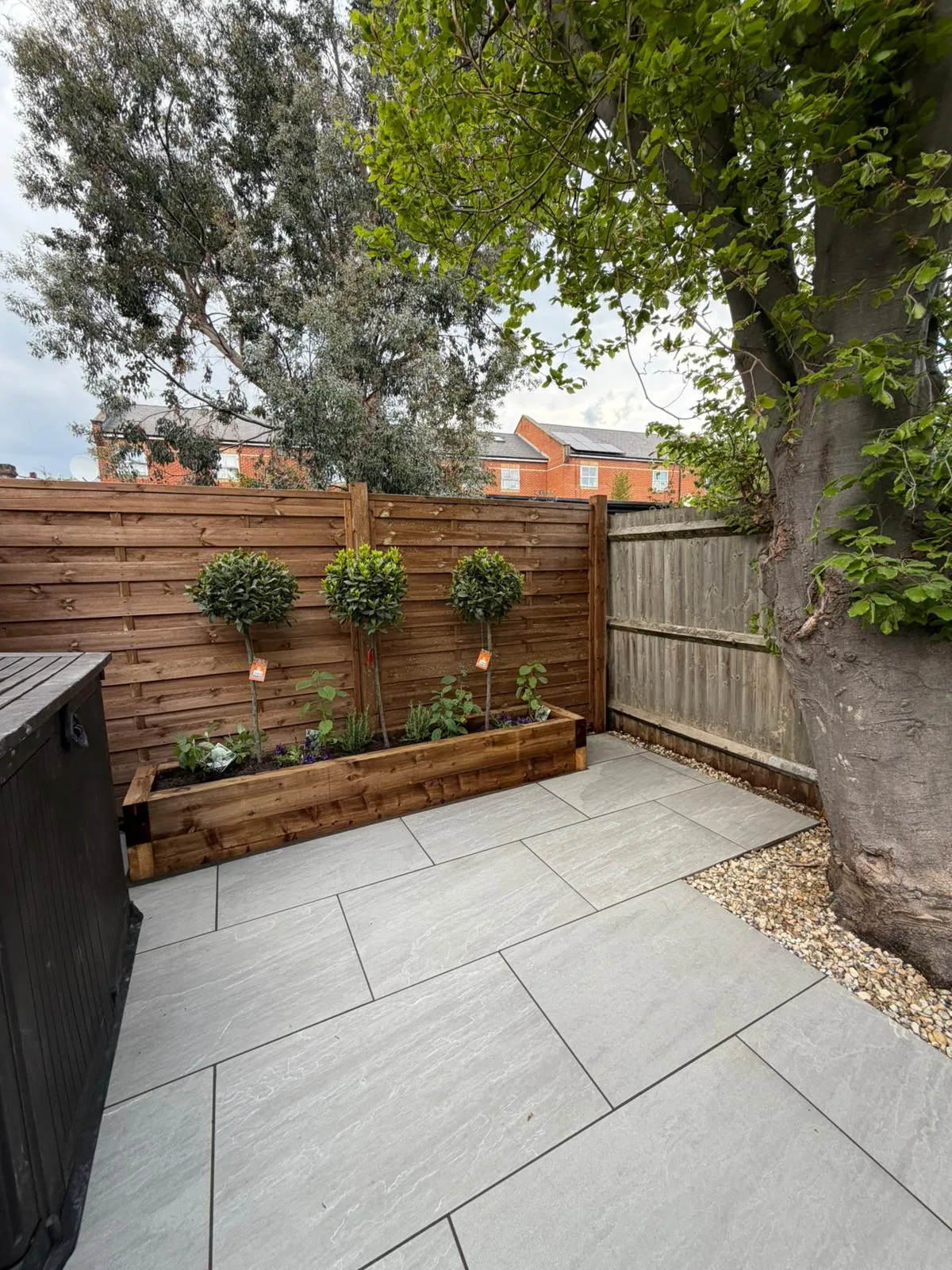
At the far end of the garden we built a raised timber sleeper bed to add structure and depth to what would otherwise be a flat, one-dimensional space. Raised beds do several things well in a compact urban garden: they create a natural focal point at the end of the sightline from the house, they separate the planting zone clearly from the patio, they make maintaining plants considerably more practical, and they add a sense of layering that makes the garden feel more designed rather than simply paved. The sleeper bed was built from treated hardwood and sized to sit proportionally against the fence panel behind it.
The Planting Scheme
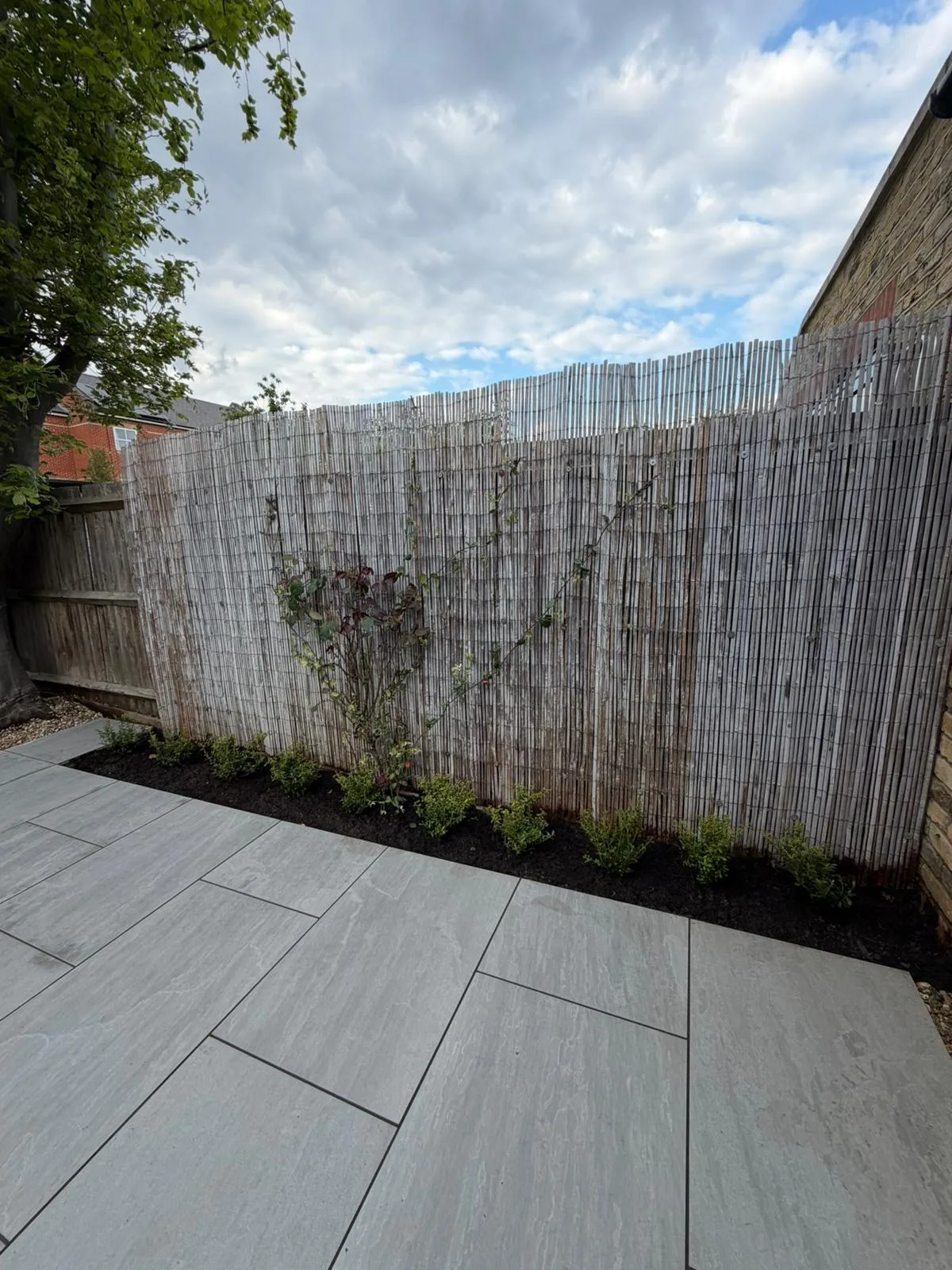
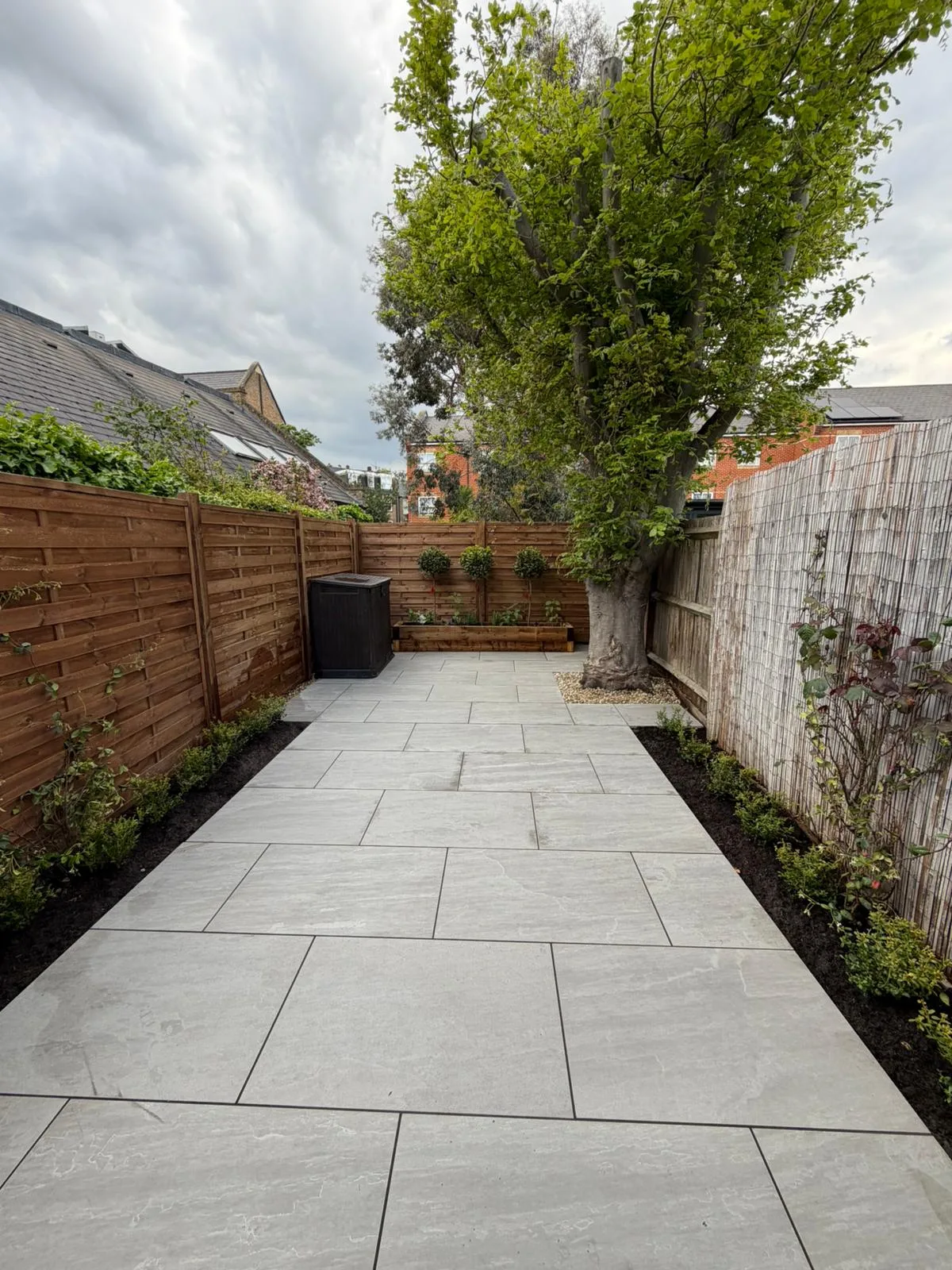
This is where the project became something more than a hard landscaping job. Vincent worked with the client on a planting scheme tailored specifically to the conditions of this garden — an urban plot in SW11 with clay-heavy soil, limited airflow at the boundaries, and the kind of pollution exposure common to inner South West London.
Along the base of the new horizontal fence panels on both sides of the garden, we planted a row of ilex crenata — Japanese holly — to form a low, dense evergreen hedgerow. Ilex crenata was chosen over traditional box hedging deliberately. Box blight has swept through London gardens over the past several years and can wipe out an established hedge in a single season. Ilex crenata gives you the same tight, clippable, evergreen finish as box without any of the vulnerability. It is a more intelligent long-term choice for any urban London garden.
In the raised sleeper bed, three standard bay trees were planted as the centrepiece — trained lollipop forms that give the bed immediate height and a sense of maturity from day one. Bay is evergreen, aromatic, edible, and practically indestructible in the UK climate. Alongside the bay trees, we planted hydrangeas for summer and autumn colour, rosemary as a low-maintenance fragrant filler between the larger plants, and star jasmine trained up the fence panel behind the bed. Star jasmine is a semi-evergreen climber that will eventually cover the timber completely and produce clouds of small, intensely scented white flowers each summer — one of the most rewarding climbing plants for a London fence.
The complete planting list for this project: ilex crenata (Japanese holly hedging), standard bay trees, hydrangeas, rosemary, and star jasmine.
The Finished Garden
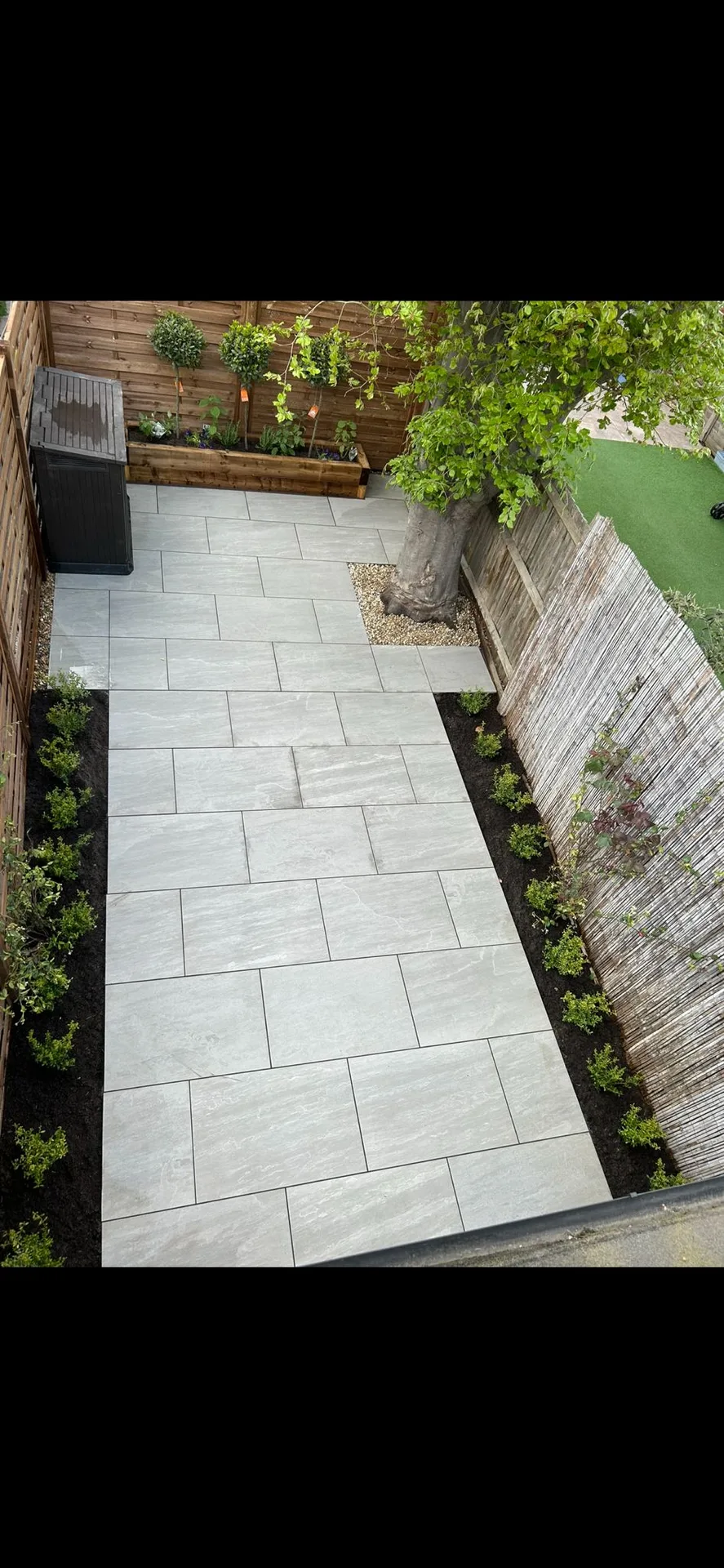
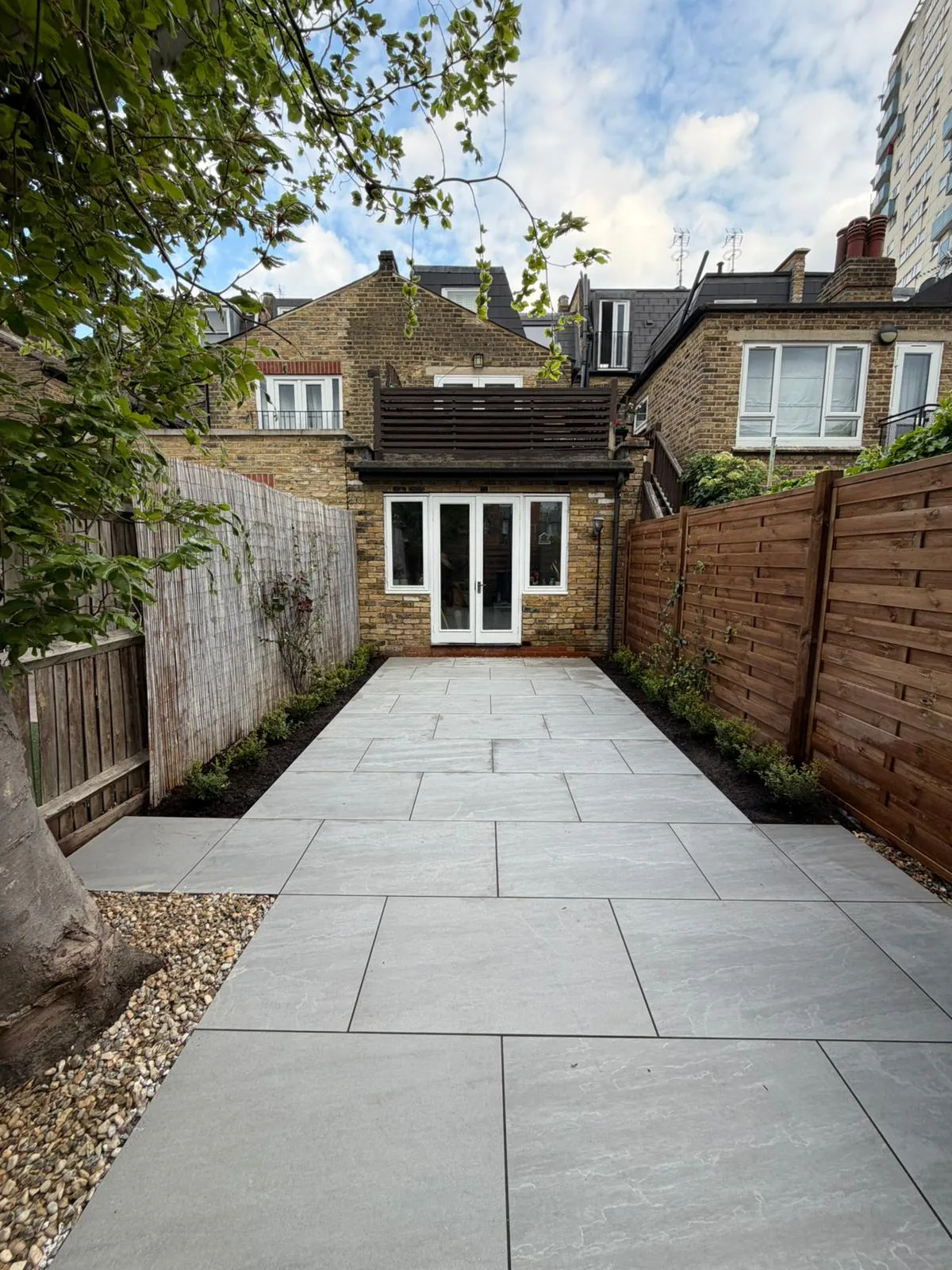
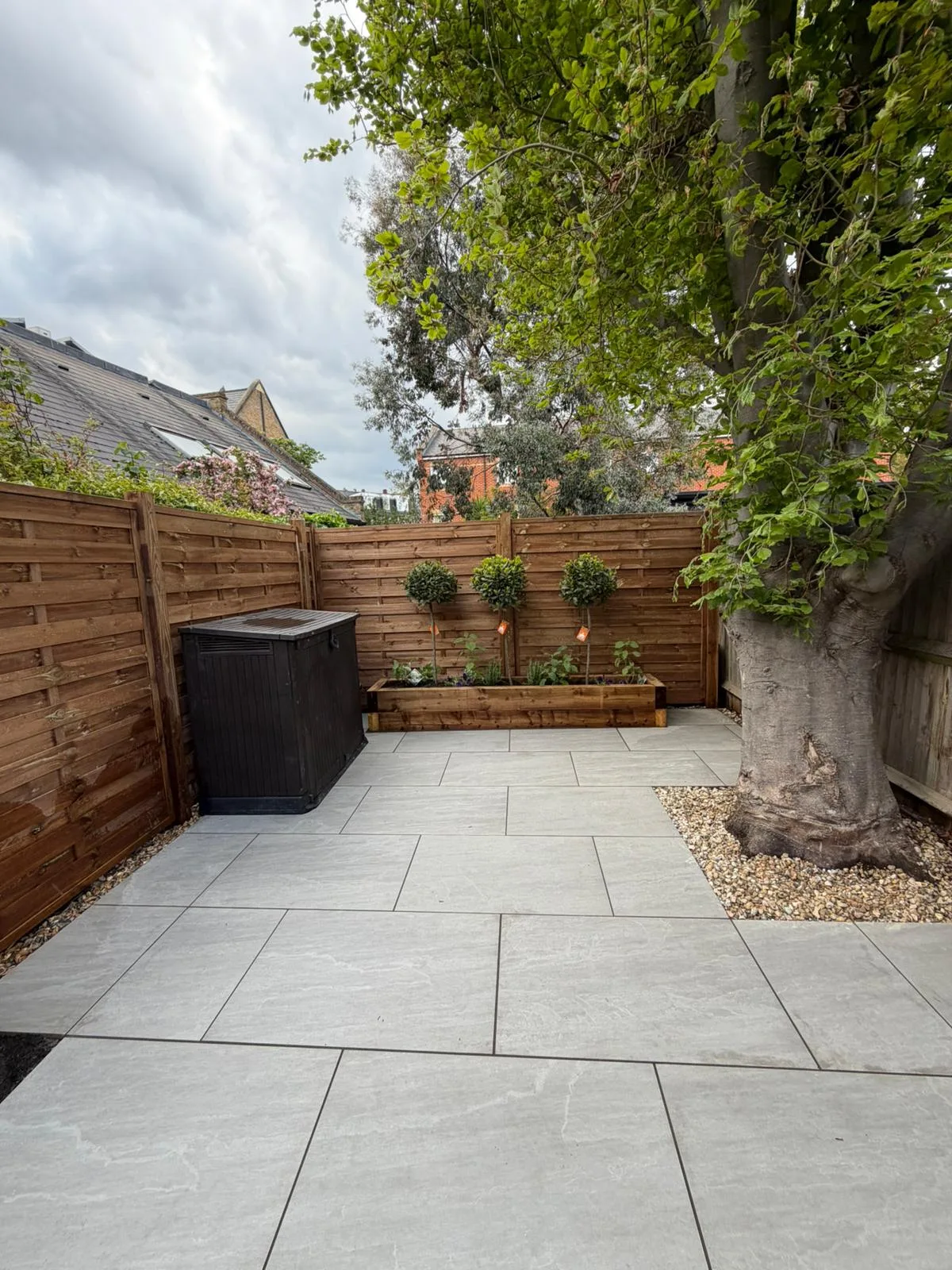
The transformation from start to finish took eight working days. The client has a garden that is now genuinely usable — clean porcelain underfoot from the back door to the end of the plot, private and well-defined boundaries on all sides, a planting scheme that will improve rather than deteriorate as the plants establish, and a raised bed that gives the whole space a focal point it never had before.
The ilex crenata hedging along the borders will thicken over the next two seasons. The star jasmine will begin to cover the fence behind the sleeper bed within the first summer. The bay trees are already established. In two years, this garden will look considerably better than it does now — which is exactly what a well-chosen planting scheme should do.
Project details: Battersea, SW11 — London Borough of Wandsworth. Work completed May 2026.
Services: porcelain patio installation, full boundary fencing replacement, raised timber sleeper bed, native and climate-appropriate planting scheme.
Thinking About Transforming Your Garden?
We offer free on-site consultations across Wandsworth and all SW postcodes. Get in touch to discuss your project.
Get a Free Quote