Indian Sandstone Paving London | Natural Stone Patios
The Tree Amigos design and install premium natural stone patios across London, with a strong focus on South East London including Eltham, Greenwich, and Blackheath. Led by founders Billy Maddox and Vincent O'Connell, our team constructs character-rich Indian Sandstone patios built on solid foundations. We use only 22mm calibrated natural stone laid on a full wet mortar bed with SBR slurry priming, creating a stable, structurally sound paving finish that highlights the raw, earthy beauty of natural sandstone for decades.
The Value of Natural Indian Sandstone
Natural Character
No two slabs of natural sandstone are identical. Formed over millions of years, the stone features unique riven textures, fossils, and organic stratification that bring authentic heritage and natural beauty to your garden space.
Earthy Color Palette
Choose from classic color tones sourced from high-quality Indian quarries. Whether you prefer the cool modern tones of Kandla Grey, the warm hues of Raj Green, or the rich character of Autumn Brown, there is a stone to match your home's character.
Naturally Non-Slip
The naturally riven surface texture of hand-split Indian sandstone provides an excellent grip. Unlike smooth cut slabs, natural sandstone offers a high slip-resistance rating that remains safe for pets and children even during heavy London downpours.
Cost-Effective Premium
Indian Sandstone represents a highly cost-effective option for premium natural stone paving. It provides a luxurious, traditional look at a lower initial investment than vitrified porcelain, adding substantial market value to your property.
Traditional Heritage Charm
Indian Sandstone matches the historical brickwork of London's Victorian and Edwardian properties. It is the ideal material choice for character homes in conservation areas like Wimbledon Village, Blackheath, and Greenwich.
Indian Sandstone vs. Vitrified Porcelain
Choosing between natural sandstone and vitrified porcelain is the most important decision for any new London patio build. Here is how they compare:
| Feature | Indian Sandstone Paving | Vitrified Porcelain Paving |
|---|---|---|
| Material | 100% natural sedimentary rock | Vitrified clay fired at 1200°C |
| Aesthetic | Rustic, unique riven textures, warm hues | Minimalist, modern, completely uniform finish |
| Porosity | Porous (requires periodic sealing) | Near-zero absorption (never needs sealing) |
| Initial Cost | More cost-effective / budget friendly | Higher material cost |
| Maintenance | Needs sealing, pressure washing, algae control | Ultra-low (occasional wash with soapy water) |
While porcelain offers a modern, zero-maintenance finish, natural sandstone remains the undisputed standard for traditional properties. For homeowners in Greenwich, Eltham, and Bromley seeking an organic, warm-toned garden patio that feels like a natural part of their property's history, Indian Sandstone is an unmatched choice.
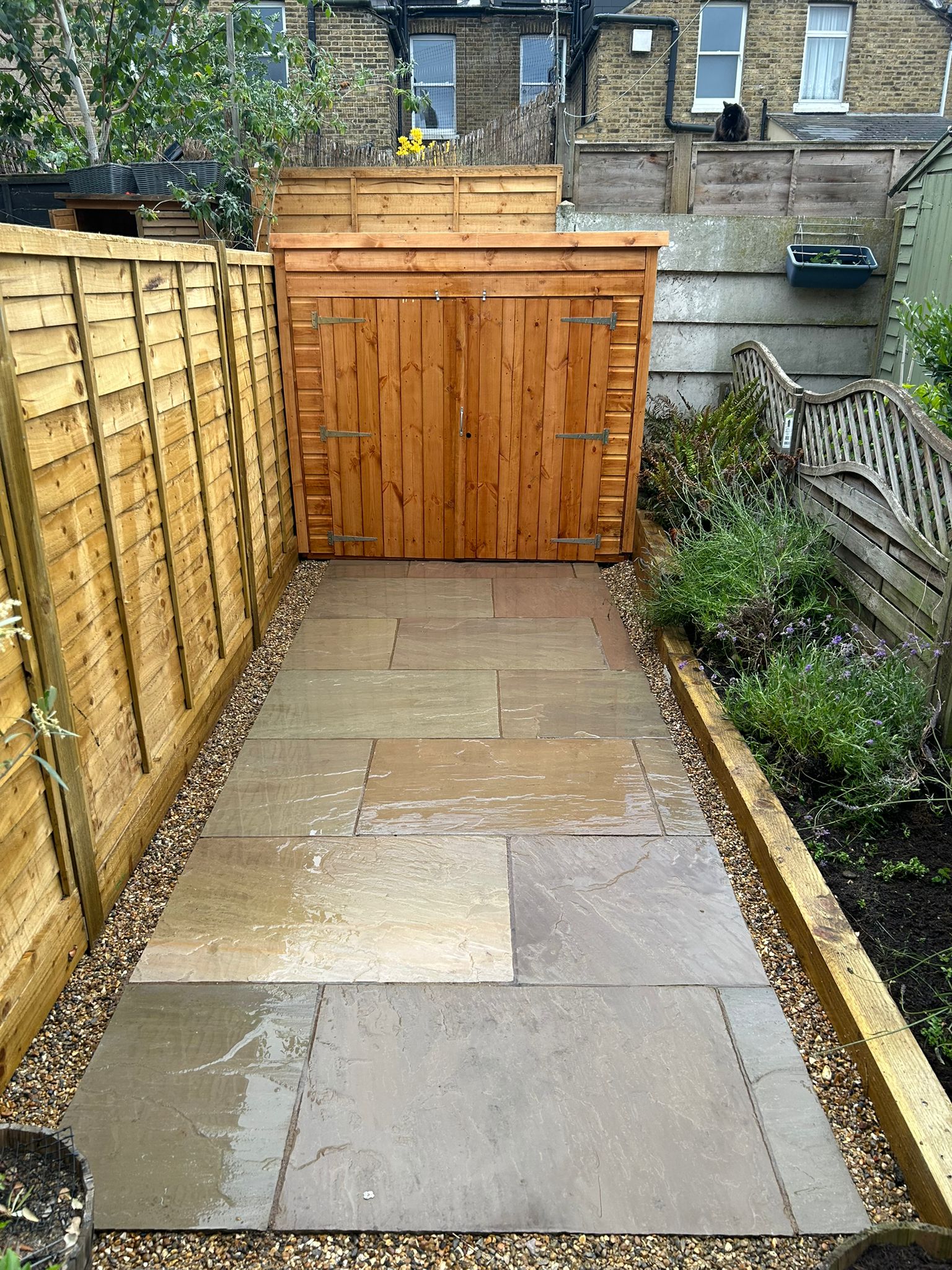
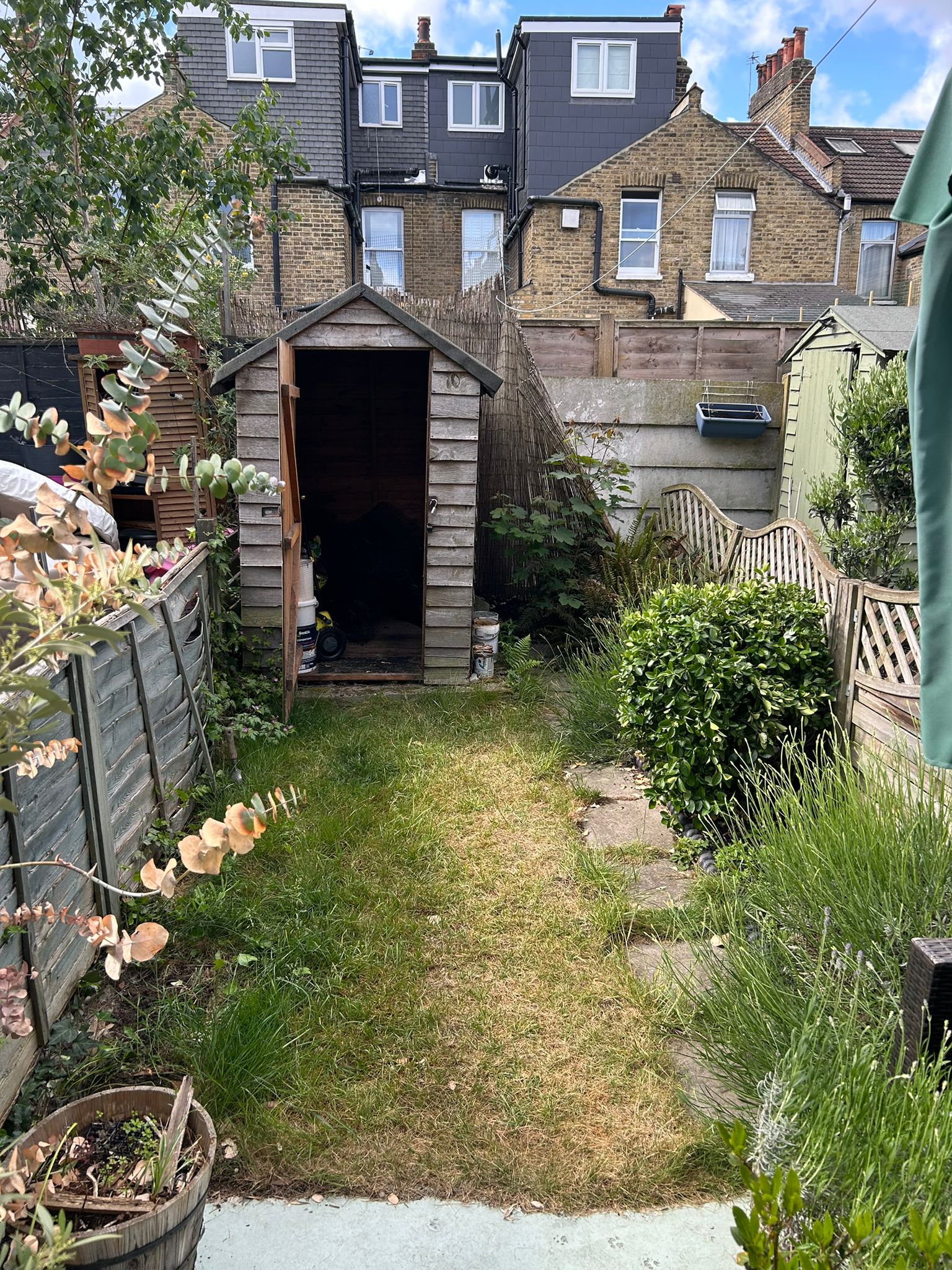
This South East London property required a complete transformation. We cleared away a heavily overgrown lawn and old, damaged paths to construct a premium Autumn Buff Indian Sandstone patio.
Our Engineering & Laying Process
Cheap installations fail because contractors cut corners on the foundations and preparation. At The Tree Amigos, we apply rigorous construction standards to ensure your sandstone patio remains level, solid, and free from rising damp stains.
Deep Excavation
We excavate to a minimum depth of 150mm. This is vital to remove soft topsoil and lay a thick structural foundation that will not sink or shift under the weight of furniture or changing seasons.
Sub-Base Engineering
We install a compacted MOT Type 1 aggregate sub-base, creating a highly stable "floating" platform. This is especially critical in areas with heavy London Clay soil (like Eltham and Croydon) to mitigate shrinking and swelling.
SBR Slurry Priming
Every single sandstone slab is back-coated with SBR polymer bonding slurry. Sandstone is porous; without this barrier, it absorbs water from the cement bed, leading to permanent, ugly moisture framing and lifting.
Full Wet Mortar Bed
We lay the slabs on a full, continuous 4:1 sharp sand and cement wet mortar bed. We never use the "dot-and-dab" (spot bedding) method, which creates hollow cavities where water collects, causing freeze-thaw cracking.
Specialist Grouting & Sealing
We seal the joints with professional-grade, weather-proof compounds. Once the mortar has fully cured (4-6 weeks), we apply a high-quality, breathable impregnating sealant to protect the stone against oil, wine, and algae.
Indian Sandstone Care & Maintenance
Natural sandstone is an organic stone that reacts to its environment. Following a simple seasonal routine keeps the patio looking spectacular:
- Spring Cleaning: Give the patio a deep clean after winter using warm water, a pH-neutral detergent, and a stiff brush. This easily removes dirt and surface grime without eroding the sealant.
- Clear Organic Debris: Sweep away fallen leaves, grass cuttings, and organic matter promptly during autumn. If left damp on porous sandstone, tannins can leach from leaves, leaving dark brown organic stains.
- Avoid Acid Cleaners: Never use acid-based brick cleaners, bleach, or wire brushes on natural sandstone. Acid reacts chemically with the iron minerals inside the stone, causing permanent rust-like discolouration.
- Resealing Schedule: To keep moisture absorption at a minimum, reseal your sandstone patio every 2 to 3 years with a high-performance, breathable impregnating sealer.
Serving South East & South London
We install natural stone patios across South and South East London. Based in South London, our team has extensive local knowledge of the area's geology and structural regulations:
- Eltham & SE9/SE12: Many properties in Eltham benefit from larger, mature gardens. We design expansive sandstone dining patios that blend naturally with these green surroundings.
- Greenwich & Blackheath: With numerous conservation areas, Greenwich properties require planning-sensitive landscaping. Natural sandstone is an approved traditional material that respects local heritage guidelines.
- Bromley & Croydon: We adapt our foundations to handle the challenging, shifting clay-heavy soil profile common in these outer boroughs.
No matter where you are located, Billy and Vincent oversee every build on-site to ensure our rigorous standards are met. Check out our Battersea Garden Transformation case study to see our approach to complete garden makeovers.
Frequently Asked Questions
Does Indian sandstone need to be sealed?
What is the difference between calibrated and uncalibrated sandstone?
Why do some sandstone patios get damp patches on the edges?
Is Indian sandstone slippery when wet?
Plan Your Dream Patio
Contact Billy or Vincent today on 07470 419 056 for a free consultation and itemised quote.
Get a Quote