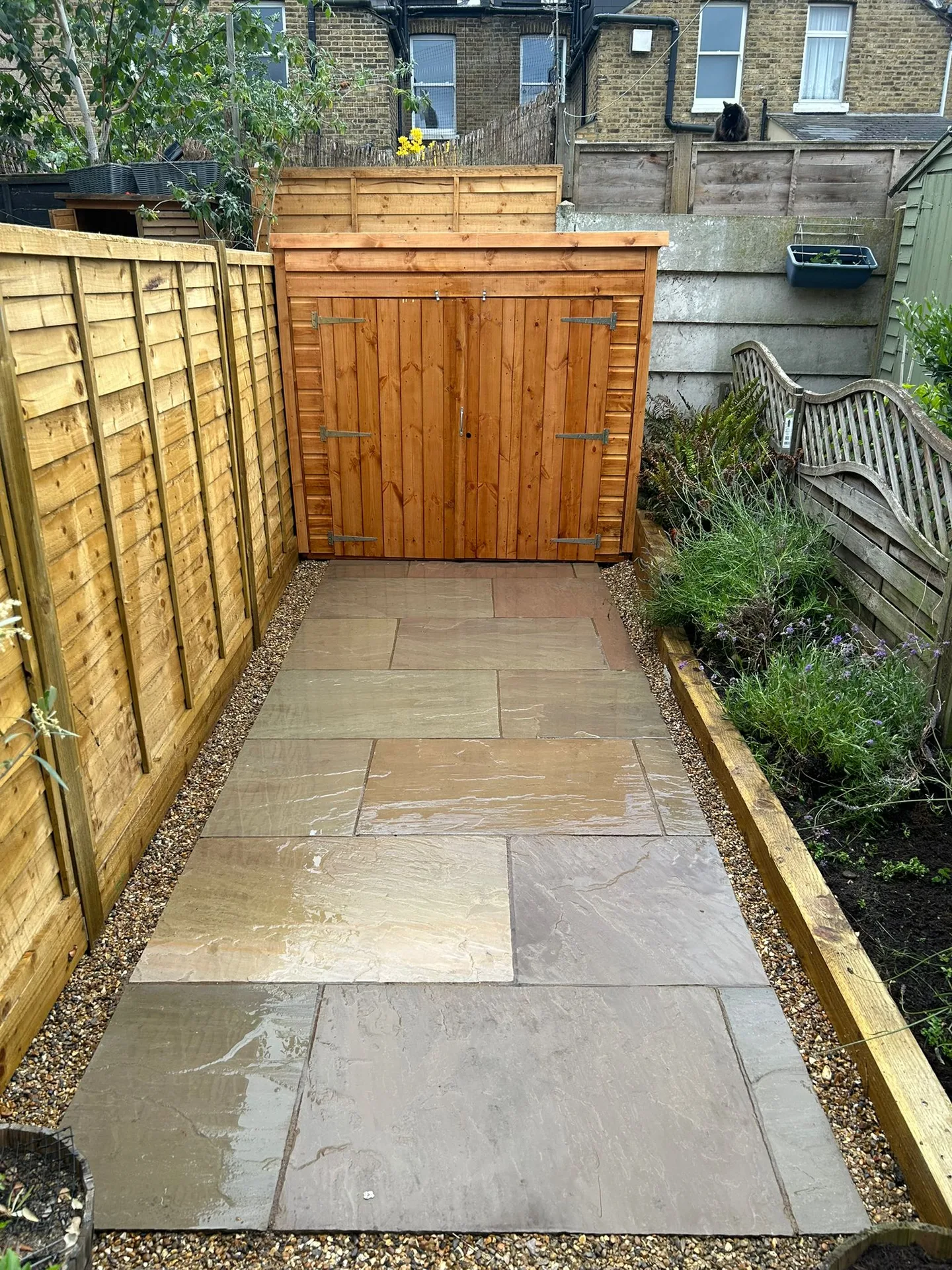
Expert Indian Sandstone Paving in Plumstead
Durable, beautifully crafted natural stone patios engineered for the steep gradients of SE18.
Plumstead is defined by its dramatic, sweeping topography. From the flatlands near the Thames up to the steep inclines around the Common and Shooters Hill, gardens in SE18 rarely offer a level canvas. For homeowners here, building a new patio is rarely just about laying paving; it often involves serious earth-moving, structural retaining walls, and stepped terraces to carve out a usable outdoor space. At The Tree Amigos, we thrive on these heavy structural challenges. Established in 2024 but backed by over half a decade of hands-on landscaping experience, our team transforms steep, unusable Plumstead plots into stunning, multi-tiered living areas using high-grade Indian sandstone. We don’t shy away from complex groundworks. By building reinforced retaining walls and solid stone steps, we ensure your new patio is not only visually striking but entirely safe and capable of withstanding the immense pressure of shifting gradient soils.
Why Indian Sandstone Suits Plumstead
When constructing tiered gardens, natural sandstone is an exceptionally forgiving and versatile material. Unlike poured concrete or rigid porcelain, it can be expertly hand-cut and finished with bullnose edges to create beautiful, sweeping steps that connect different levels of a steep garden seamlessly. The naturally riven texture is a major practical benefit. Elevated gardens are often exposed to the elements, and wet, steep steps pose a real slipping hazard. Indian sandstone provides high natural grip, making it a safe choice for families. Visually, its earthy, robust tones help soften the imposing look of large retaining structures, blending your new living space naturally into the surrounding hillside.
Area Comparison
| Local property / garden style | Why sandstone works | Recommended paving approach | Key installation consideration |
|---|---|---|---|
| Steep Sloped Gardens | Easily custom-cut for steps and tiering. | Multi-level terracing to maximise flat, usable space. | Engineering robust, reinforced retaining walls. |
| Victorian Terraces (Lower) | Classic aesthetic suits 19th-century homes. | Traditional random layouts using 4 mixed sizes. | Managing large volumes of soil removal. |
| Ex-Industrial Plots | Highly durable on uneven sub-soils. | Thicker 22mm calibrated slabs for structural strength. | Deep excavation to remove poor-quality made ground. |
| Family Homes near the Common | Riven texture provides a non-slip surface. | Warm tones like Autumn Brown to hide muddy footprints. | Integrating secure, solid stone steps. |
Our Approach In Plumstead
In SE18, preparation dictates success. Our process kicks off with strategic excavation to carve out level platforms within your sloped garden. We manage the logistics of soil removal cleanly and efficiently, even if access is limited to your front door. Once the earth is moved, we compact deep MOT Type 1 sub-bases to guarantee the ground will not subside. Where retaining walls are needed, we construct them using dense concrete blocks tied into solid footings, which can then be faced with natural stone or rendered. To combat the lateral pressure created on stepped patios, we lay every Indian sandstone slab on a full wet mortar bed, having first coated the underside in a heavy-duty SBR bonding agent. This locks the stone solidly in place, resulting in a terraced garden that feels as permanent as the bedrock itself.
Service Highlights
- Gradient Specialists: We excel at excavating and levelling steep SE18 gardens.
- Structural Integrity: Heavy-duty retaining walls built to support tiered patios.
- Bespoke Stone Steps: Hand-finished sandstone for safe transitions between levels.
- Solid Mortar Bedding: Slabs are fully bedded to prevent shifting on slopes.
- Turnkey Service: We handle all excavation, soil removal, and structural engineering.
Frequently Asked Questions
How do you build a patio on a steep hill?
Is Indian sandstone safe for garden steps?
Do retaining walls need planning permission in Plumstead?
How is the excavated soil removed?
Can you match the patio stone to my retaining wall?
To learn more about our broader expertise and the different finishes available, visit our main Indian Sandstone London hub page.