Professional Turf Installers in Plumstead
Lush, green, and flawlessly level lawns expertly laid in SE18.
- Premium Natural Turf Laying
- Full Soil Preparation & Premium Lawn Laying
- 9.8/10 Rated Local Landscaping Specialists
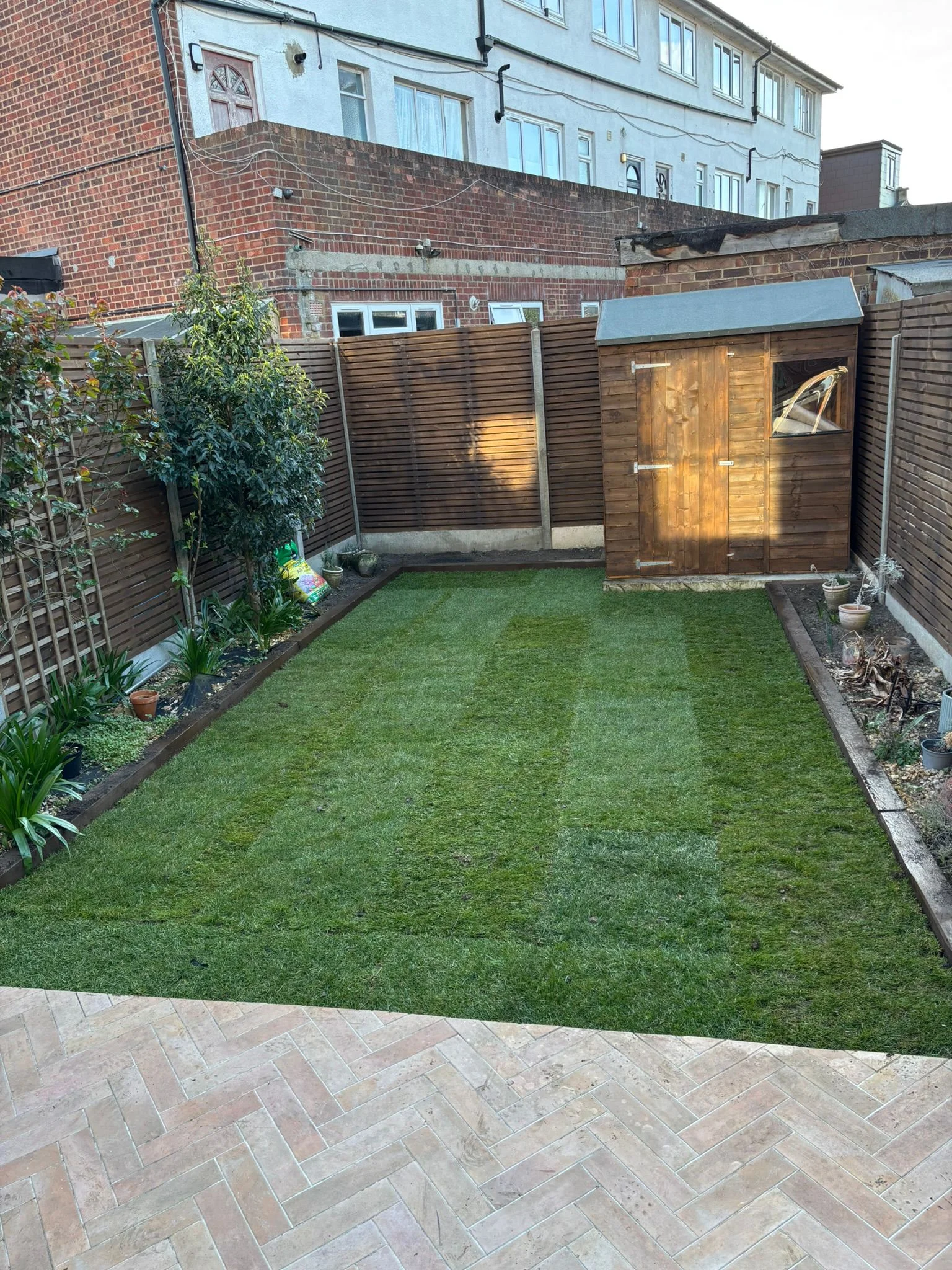
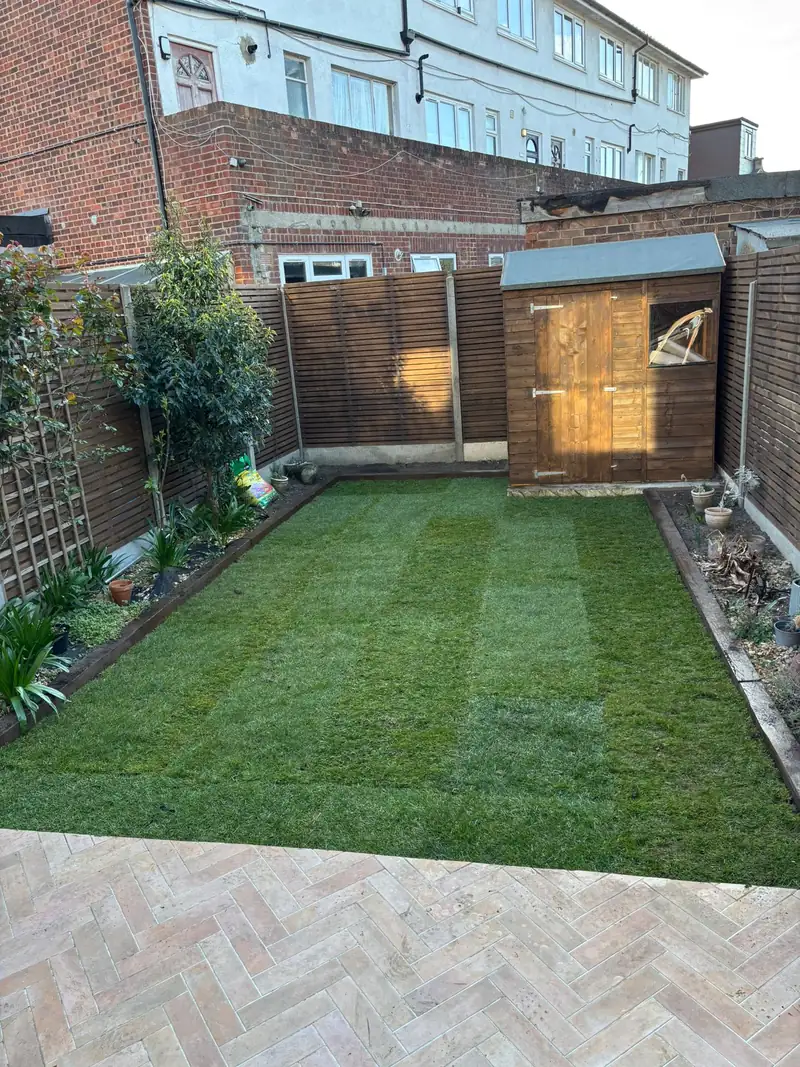
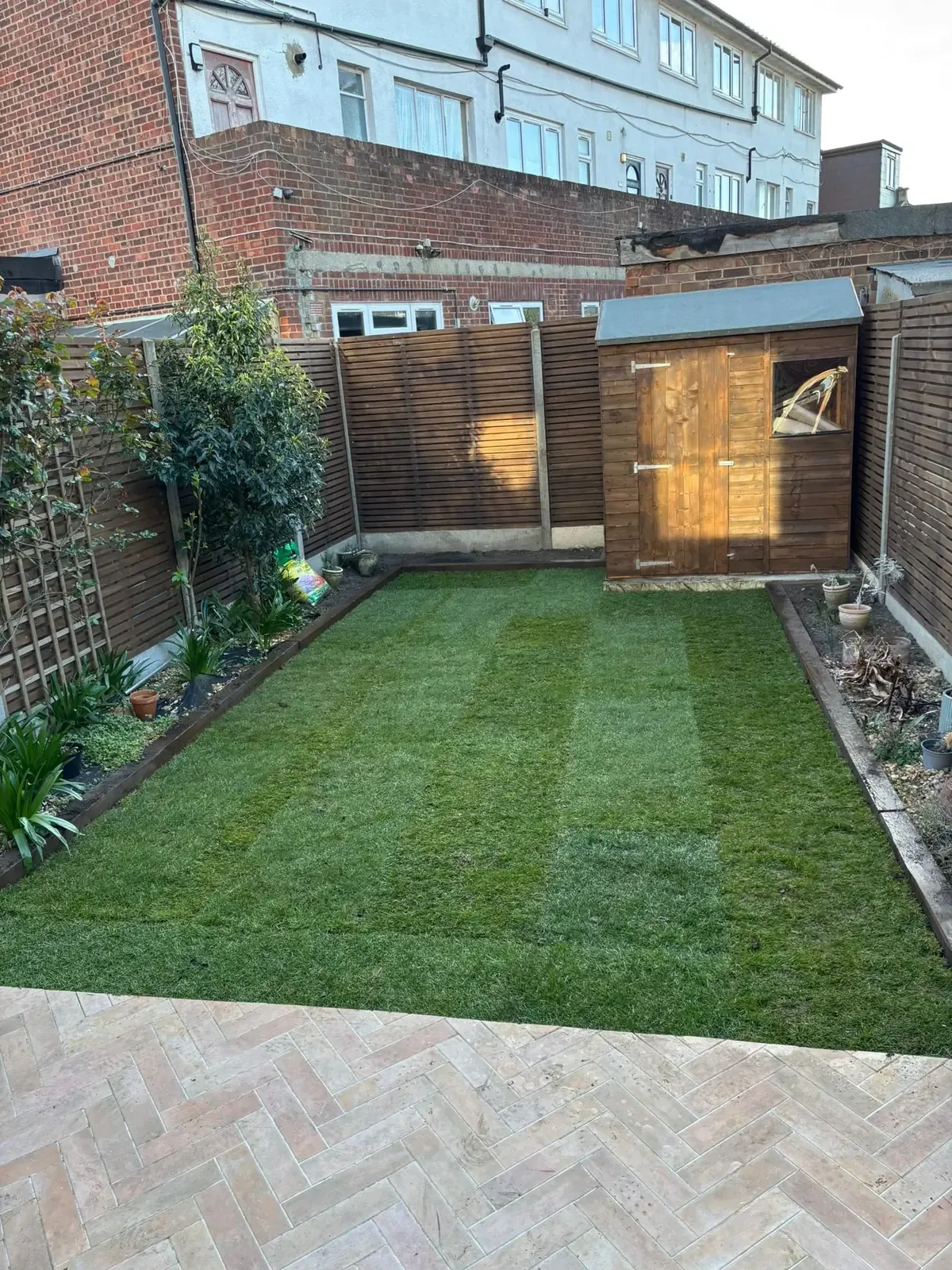
Plumstead Garden Transformations
See how our natural turf installations breathe new life into tired gardens.
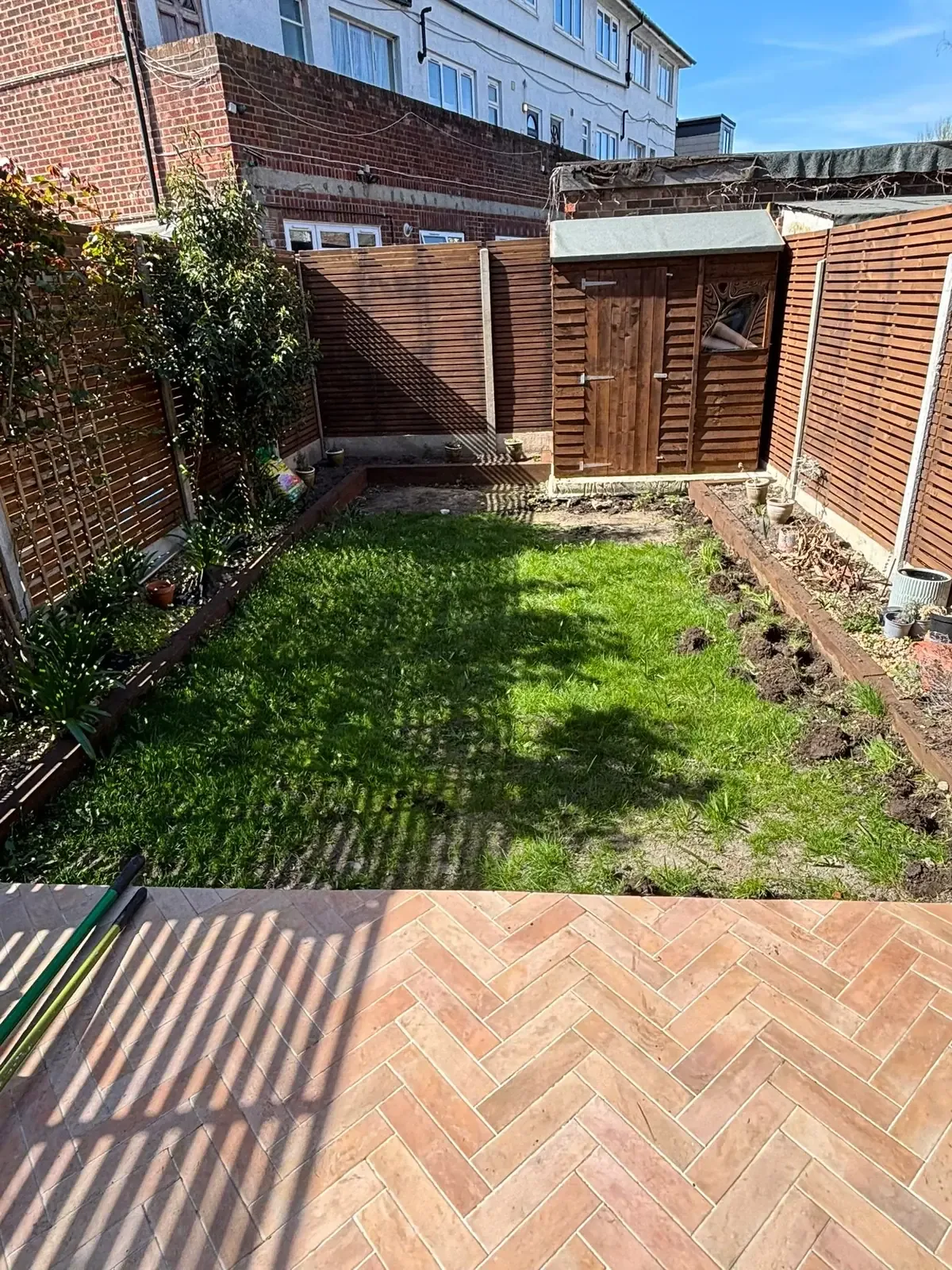
Turf Laying in Plumstead
From removing old, worn-out grass to enriching the topsoil and laying premium farm-grown turf, we provide a complete service.
Sloped Runoff & Clay Erosion
The Problem: Gardens on Shooters Hill slopes suffer topsoil wash-away during heavy rain, leaving bare clay and pooled water at lower borders.
Our Fix: We re-grade sloping areas, blend organic compost into the clay to improve absorption, and pin turf rolls securely to prevent slipping while rooting.
Compacted, Nutrient-Starved Soil
The Problem: Dense Plumstead clay hardens into a tight crust in summer, starving grass roots of air and essential nutrients.
Our Fix: We rotovate 20cm deep, incorporate organic soil improver and balanced pre-turf fertilizer for deep, rapid root development.
Patchy Moss & Overgrown Borders
The Problem: Poor drainage and moss invasion leave lawns patchy, while borders bleed into grassed areas.
Our Fix: We strip old lawn weeds completely, re-nourish the topsoil, lay fresh turf, and cut crisp borders with a half-moon edging tool.
Our Turf Installation Process
Site Assessment & Clearance
We check sun/shade, drainage, and soil type, then strip back old turf, roots, and weeds to bare earth.
Soil Preparation
We rotovate to 15–25cm, work in organic matter (and grit on heavy clay), then rake to a fine, level tilth.
Levelling & Firming
We tread and firm the ground in different directions, checking with a plank for dips and a slight fall away from the house.
Pre-Turf Fertiliser
We rake a phosphorus-rich starter fertiliser into the top layer to give new roots a strong start.
Laying The Turf
We lay in a staggered brick-bond pattern with tight, unstretched joints, working off boards to protect the prepared soil.
Watering & Aftercare
We soak thoroughly straight away, then keep it consistently moist for 2–3 weeks while the roots knit in before the first cut.
Ready for a New Lawn in Plumstead?
Speak to Billy and Vincent directly about your Plumstead turfing project.
Preparation & Aftercare
Site Preparation
Clear the area of existing grass, weeds, roots, stones, and debris before starting any installation. Then level the ground, improve the soil or base as needed, and make sure the surface is firm but not compacted so the new finish sits properly. Good preparation is the difference between a lawn that settles well and one that sinks, shifts, or looks uneven later.
For natural turf: Dig or rotavate the soil to around 100–150mm deep, then rake it level and add quality topsoil if the ground needs improving. The final surface should be smooth, firm, and slightly moist before laying the turf so the roots can make good contact with the soil. If the soil is badly compacted or weedy, the turf may struggle to establish.
Natural Turf Aftercare
Water the turf immediately after laying, then keep both the surface and the soil beneath it consistently moist for the first 2 to 4 weeks so the roots can establish properly. Avoid walking on it as much as possible during this period, and only start using the lawn once it has knit into the ground and no longer lifts easily at the corners. In dry, windy, or warm weather, new turf may need daily watering at first.
Proudly Serving the Plumstead Community
Areas We Cover in SE18
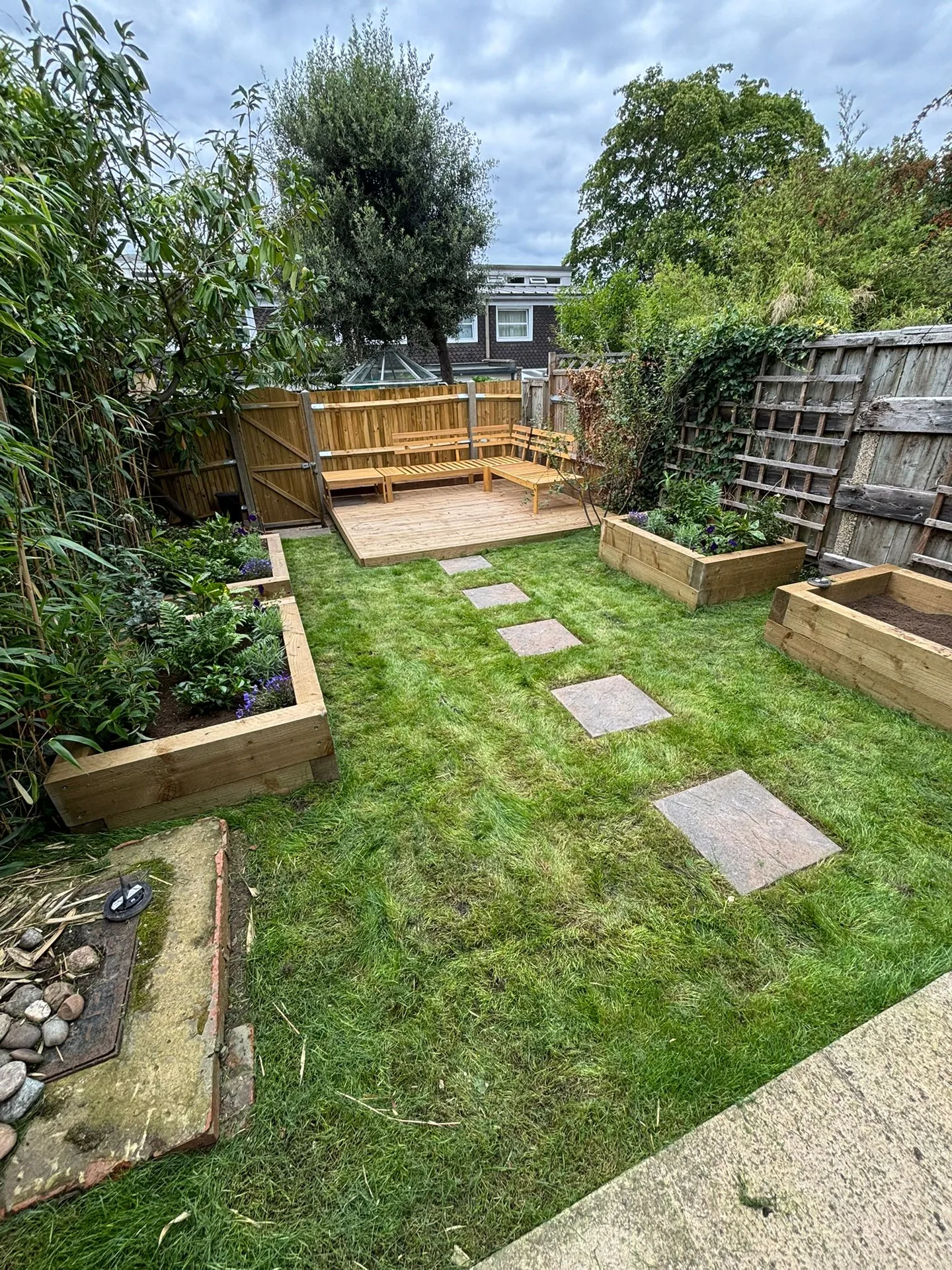
Serving homeowners across Plumstead SE18, from Shooters Hill slopes to Plumstead Common terraces. We specialize in solving sloped drainage issues, enriching dense London clay, and laying premium natural turf that thrives.
- Plumstead Common
- Shooters Hill
- Winn's Common
Other South East London Areas We Cover
As well as Plumstead, we provide premium natural turf installations across South East London, including:
Looking For Artificial Grass?
If you prefer a zero-maintenance option, we also install premium artificial grass. We also specialise in full garden makeovers, porcelain patios, and decking across the borough.
Turf Installation Questions We Hear Across Plumstead
How do you handle turf laying on sloped Plumstead gardens?
When should I schedule lawn laying in Plumstead SE18?
How deep do you rotovate the soil before laying fresh turf in Plumstead?
How do I know when my new Plumstead turf has rooted?
What maintenance does new turf require during the first month?
Can natural turf survive on heavy clay in Plumstead?
Got a question we haven't covered? Call Billy and Vincent or WhatsApp us directly.