New Shed, Full Replacement or Just a Roof Re-Felt? A London Decision Guide
Written by Billy Maddox & Vincent O'Connell, Founders of The Tree Amigos Landscaping & Gardening
Published: September 2026
SHEDS GUIDE | The Tree Amigos
A leaking shed roof is the moment most people start Googling. Most of what comes back jumps straight into "how to felt a roof" without stopping to ask whether that's actually the job you need. Sometimes it is — a straightforward re-felt, done in a day. Sometimes the roof is just the visible symptom of a frame that's already failing underneath, and no amount of new felt fixes that. And sometimes there's no old shed to save at all, just a bare plot and a decision about what goes on it.
This guide is built around two real jobs we've done in South East London — a roof re-felt and a full shed replacement — and gives you the same condition-based way of telling them apart that we use on site. There's no pricing in this article on purpose: what something costs depends on the specific job, and a number here would go stale fast. What doesn't go stale is the physical evidence to look for, so that's what this guide is about.
Key Takeaways
- Torn or lifted felt with a sound timber frame underneath is a re-felt job. Rot that's spread into the frame, floor or walls is a replacement job — the roof itself isn't the deciding factor.
- UK shed roof felt typically lasts 10-15 years; budget mineral felt on flat-pack sheds often fails sooner in exposed, wind-driven rain.
- Felt most commonly fails at edges, corners and overlaps first, not across the flat field of the roof.
- EPDM rubber roofing can last 40-50 years against felt's 10-15 — genuinely worth considering any time the roof is already stripped back, whether for a re-felt or a new installation.
- On a bare plot, the base determines how long a new shed lasts more than the timber grade of the shed itself.
Is Your Shed Roof a Re-Felt Job or Something Bigger?
If the felt itself has torn, lifted, or perished but the timber frame and walls underneath are sound, re-felting is the right fix. Full replacement only becomes necessary once the problem has spread past the roof covering and into the structure holding the shed up.
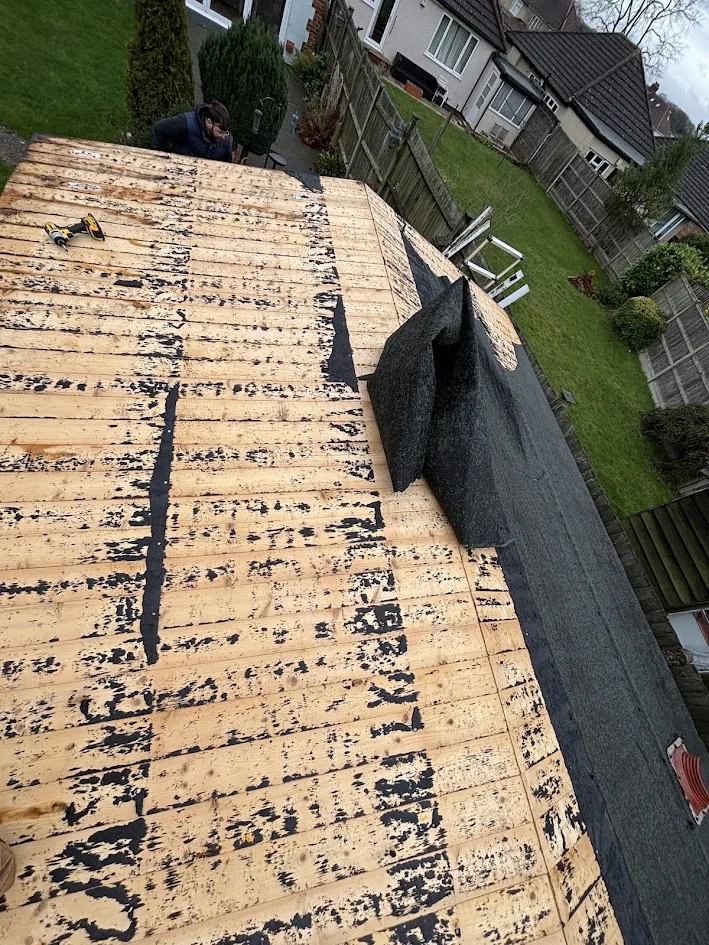
On a recent South East London job, this is exactly what we found: felt that had torn and lifted at the edges, letting water track in along the top of the walls, but a frame and floor that were still perfectly sound once we got the old covering off. That's the pattern worth checking for on your own shed before assuming the worst:
- Torn, lifted or perished felt — visible tears, bubbling, or felt that's gone brittle and cracked, especially at the edges.
- A sound frame underneath — press a screwdriver into the roof timbers where you can reach them; healthy wood resists, rotten wood gives way easily.
- No sagging roofline — a roof that still sits flat and square, rather than dipping in the middle.
- No history of repeated patch repairs — one clean re-felt is a very different job to a roof that's already had three separate patches over the years.
UK shed roof felt typically lasts 10-15 years, and polyester-reinforced felt can push toward 20 with reasonable care. Budget mineral felt — the kind supplied as standard with most flat-pack sheds — often fails well inside that decade in genuinely exposed, wind-driven London rain. If your shed is somewhere in that age range and the felt looks tired, that's consistent with normal wear, not a sign anything's gone badly wrong.
What a Roof Re-Felt Actually Involves
A re-felt is a contained, same-day job: strip the old felt back completely, check and treat the timber decking underneath, then fit new felt with proper overlaps and flashing detail at the edges. That last part matters more than it sounds — felt almost always fails first at edges, corners and overlaps, not across the flat field of the roof, so getting those details right is most of what makes a re-felt actually last.
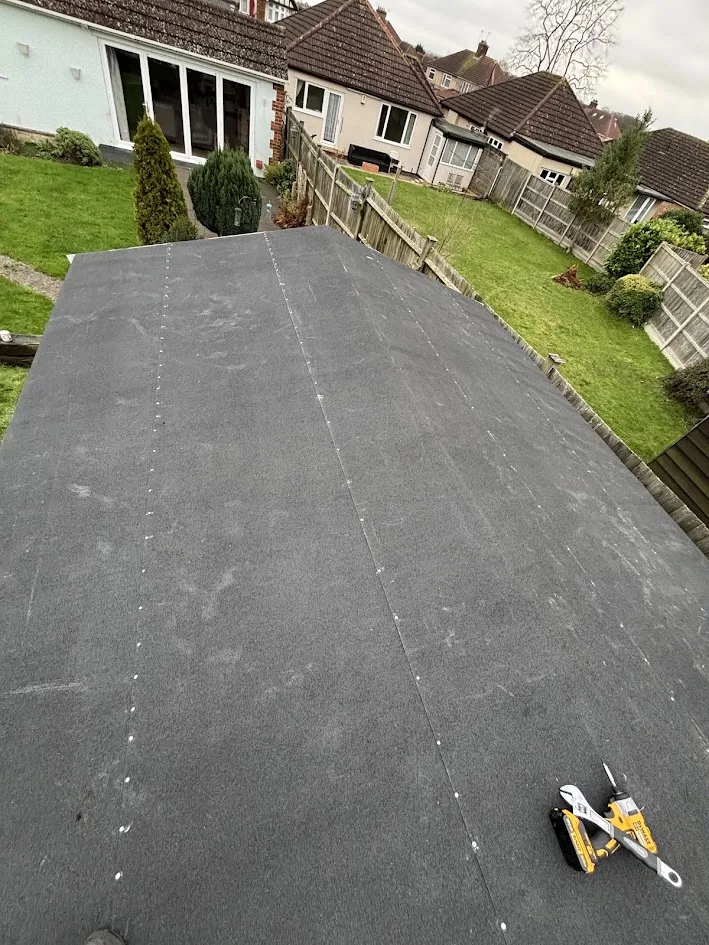
On the job pictured here, the same pattern showed up again once the old felt came off: the wear was concentrated at the edges and around the flashing, not across the middle of the roof. That's the part a re-felt has to get right — new felt laid over the same weak points without addressing the flashing detail is why some re-felt jobs fail again within a couple of years.
Because the roof is already stripped back to bare timber during a re-felt, it's also the natural moment to think about whether felt is even the covering you want to put back. That's worth its own section, below.
When Full Replacement Makes More Sense Than a Re-Felt
Once rot has spread into the timber frame, floor or walls — not just the roof covering — a re-felt is patching a symptom rather than fixing the actual problem. Full replacement becomes the more sensible call at that point, and this is a condition decision, not a cost one: no amount of new felt on a failing frame buys you very long.
The signs worth checking, beyond the roof itself:
- A soft or spongy floor — walk the full floor area, not just near the door; damp tends to sit and rot from the edges inward.
- A structure that racks or shakes — push gently on a corner post; a sound shed shouldn't visibly flex.
- Rot spread across more than one section — a single rotten board is a repair; rot in the floor, a wall panel, and the roof frame together is a structural problem, not a maintenance one.
- A history of repeated patch repairs — if the same shed has already had more than one roof patch or panel replacement over the years, that's usually a sign the structure as a whole is on its way out, not just unlucky in one spot.
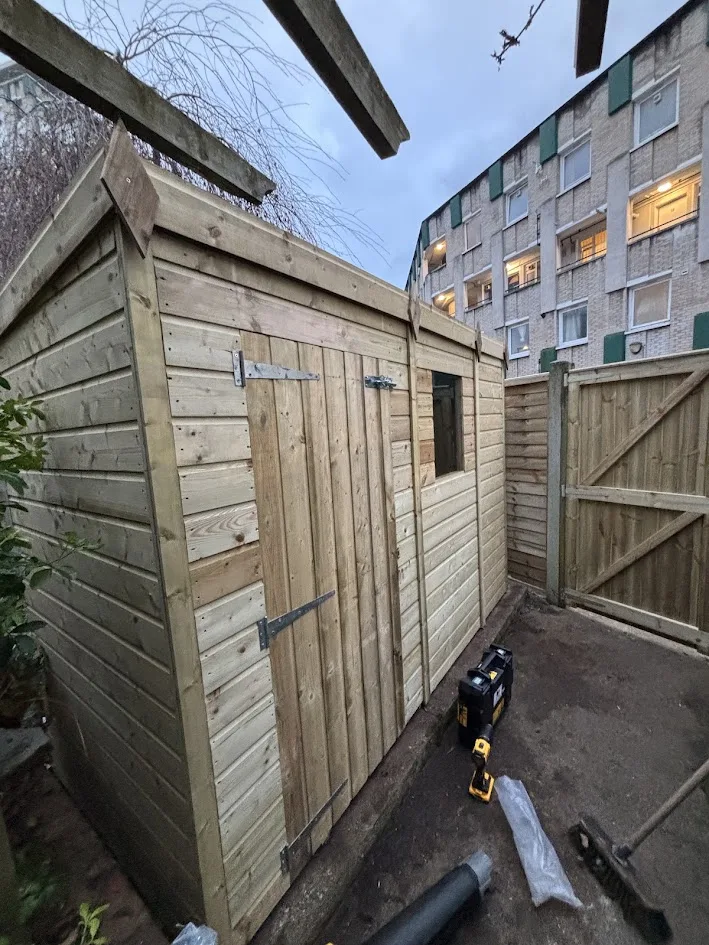
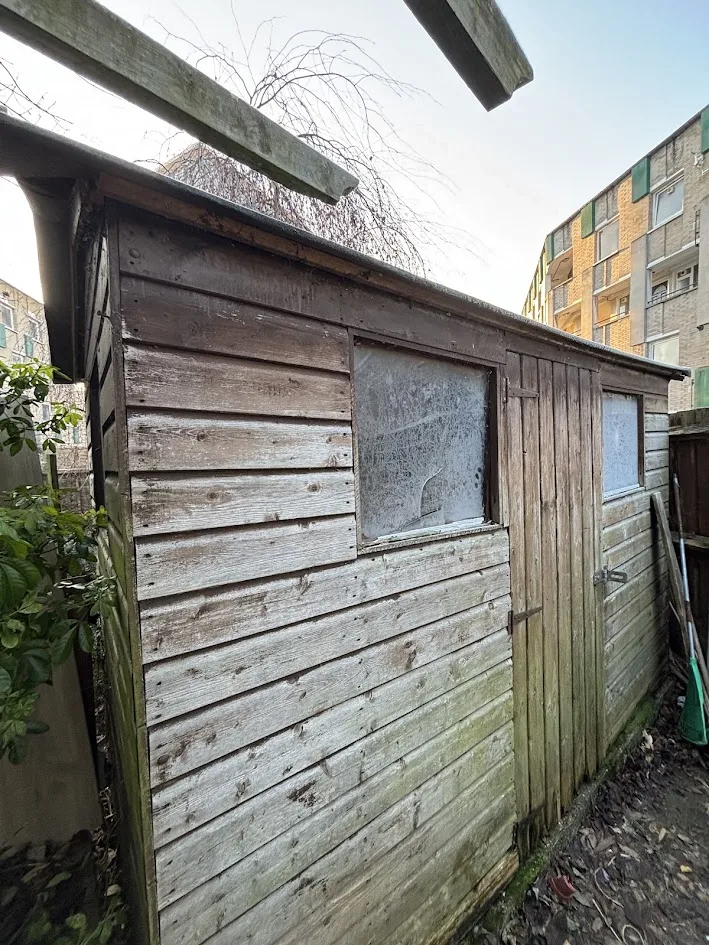
This was the situation on the job above: the old shed had rot running through the floor and lower wall panels, well beyond what the roof alone would explain. Removing it and starting again with a new pressure-treated timber shed on a properly prepared base was the straightforward call, and it's a full-service job we handle directly — our shed installation, base preparation and removal services cover exactly this, removal and disposal of the old structure included.
Felt vs EPDM — Worth Upgrading When You're Already Re-Felting or Replacing?
Felt needs redoing roughly every 10-15 years. EPDM rubber roofing, fitted as a single sheet rather than overlapping rolls, can last 40-50 years and resists the UV brittleness that eventually cracks felt. Any time a roof is already stripped back — for a re-felt or as part of a full new shed — that's the point to genuinely weigh up whether felt is still the right covering to put back.
| Factor | Felt | EPDM Rubber |
|---|---|---|
| Typical lifespan | 10-15 years (up to ~20 for polyester-reinforced felt) | 40-50 years |
| Installation method | Overlapping rolls with multiple joins | Fitted as a single sheet, far fewer joins |
| Common failure point | Edges, corners and overlaps first | Fewer weak points due to fewer seams |
| UV behaviour | Gradually dries out, cracks and perishes with UV exposure | Stays flexible for much longer under UV and ozone exposure |
This isn't a case for always upgrading. A shed that gets light, occasional use doesn't necessarily need a 40-year roof covering, and felt done properly — with good edge and flashing detail — is still a perfectly reasonable choice. It's simply worth knowing the option exists and asking about it at the point the roof's already open, rather than finding out afterwards that it was possible all along.
Starting From Scratch? What New Shed Installation Actually Involves
On a bare plot with no existing shed to assess, the decision is simpler, but there's one part homeowners consistently underweight: the base matters more than the shed itself. More shed failures we see start with a poorly prepared base — one that isn't level, doesn't drain, or sits directly on bare soil — than with anything wrong in the timber the shed arrived with.
A sound base means level ground, proper drainage so water doesn't pool underneath, and a surface that keeps the shed's floor bearers off damp soil. Get that right and even a modest shed will comfortably outlast one built on a rushed base, regardless of how good the timber above it is.
Worth knowing if you're replacing an old shed: removing an old structure often uncovers boundary issues that were hidden behind it — a rotten fence panel, a leaning post — worth fixing in the same visit rather than as a separate job later. If that's the case for you, our fencing installation or repairs pages cover that side of things.
What We See Most Often Across South East London Gardens
Almost every call-out starts the same way: "the roof's leaking." What that actually turns into — a straightforward re-felt or a full replacement — depends entirely on what's underneath, not on how bad the leak looks from inside on a wet day. The two jobs in this guide are a genuine illustration of that: one was a sound shed that just needed its roof covering redone properly, the other had rot running well beyond the roof and needed starting again from a new base up.
If you're not sure which one describes your own shed, that's exactly what a site visit settles in a few minutes — usually faster than reading a guide like this one.
FAQ: Shed Installation, Replacement and Roof Re-Felting
Quick answers to the questions we hear most from London homeowners weighing this decision.
Should I repair or replace my shed roof?
It depends on whether the problem is limited to the felt covering or has spread into the timber frame underneath. If the felt has torn or lifted but the frame and floor are sound, a re-felt sorts it. If rot has spread into the structure itself, full replacement is the better long-term call.
How long does shed roof felt last?
Typically 10-15 years, up to around 20 years for polyester-reinforced felt. Budget mineral felt supplied with flat-pack sheds often fails sooner, especially in exposed, wind-driven rain.
Is my old shed worth keeping?
If the frame, floor and walls are structurally sound and it's only the roof covering that's failed, yes — a re-felt is usually all it needs. If rot has spread into the structure itself, or it's been patched more than once already, replacement is the more sensible long-term choice.
What's the difference between felt and EPDM for a shed roof?
Felt is applied in overlapping rolls and typically lasts 10-15 years. EPDM rubber is fitted as a single sheet with far fewer joins, resists UV brittleness better, and can last 40-50 years — worth considering any time the roof is already being stripped back.
Do I need to replace the whole shed if the roof is leaking?
Not necessarily. Most roof leaks are a re-felt job, not a full-replacement one, provided the timber structure underneath the felt hasn't rotted.
South East & South West London Shed Specialists
Not Sure If It's a Re-Felt or a Replacement?
Billy or Vincent can usually tell the difference on sight during a free visit — no obligation, and an honest answer either way.
See our full shed installation, base preparation and removal services, browse our full range of garden services, or see all the areas we cover.
About the Authors
Billy Maddox and Vincent O'Connell are the founders of The Tree Amigos Landscaping & Gardening Ltd, the South East and South West London landscaping firm they run together. Every shed installation, replacement and re-felt is personally overseen by Billy and Vincent, who work hands-on across gardens throughout the capital. The Tree Amigos are rated 9.8/10 on Checkatrade.