Concrete or Timber Fence Posts: Which Is Better for a London Fence?
Written by Billy Maddox & Vincent O'Connell, Founders of The Tree Amigos Landscaping & Gardening Ltd
Published October 2026
FENCING & BOUNDARIES | The Tree Amigos
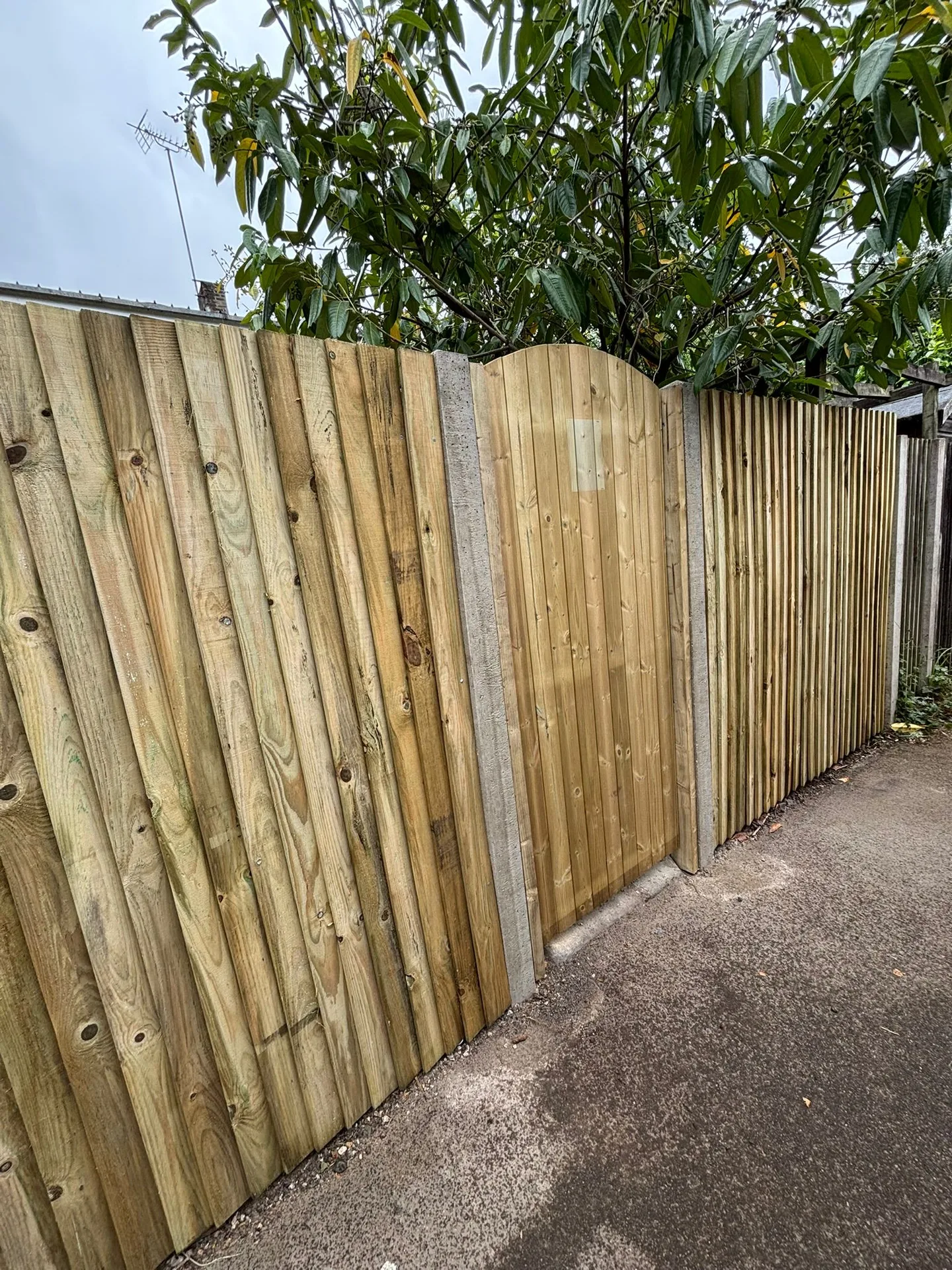
Neither material wins on its own. Concrete posts do not rot, but they are heavy, they can crack, and they only suit fencing made to slot into them. Timber posts suit more fence styles, but they fail where they meet the ground unless they are properly treated and set so that water can drain away. The useful question is which problem you would rather manage, and whether your fencer will install the posts to avoid it.
Key Takeaways
- Fence posts fail at the ground line: timber rots there, and concrete can chip and crack under frost and wind.
- Timber posts in the ground should be treated to Use Class 4 under BS 8417. The default desired service life is 15 years unless 30 is specified.
- Installation decides the result: a gravel base, no cut ends buried, a sloped concrete top, and no concrete boot around the foot of the post.
- Slotted concrete posts suit panel fencing with concrete gravel boards. A slatted screen is normally fixed to the face of timber posts.
- Ask your fencer which post, which treatment and how deep before you accept a quote.
The Short Answer
Choose slotted concrete posts when you are fitting standard fence panels or closeboard in a damp, shaded or exposed spot and you want a post that cannot rot. Choose Use Class 4 treated timber posts when the fence is a slatted screen, a bespoke design or a run that must follow the ground, or when a heavy concrete post is awkward to get into a restricted site.
For exposed gardens, we recommend heavy-duty closeboard on slotted concrete posts with gravel boards. For a continuous cedar slatted screen, timber posts are the usual choice, because the battens are fixed to the face of the post. Either way, the footing and drainage matter as much as the post itself.
Where a Fence Post Fails
A fence post is under most strain, and under most attack, in one narrow band. A Farmers Weekly report on rotting posts quotes an industry specialist saying some posts are lasting only three to five years instead of 15, and that the highest rate of decay is within two to three inches of ground level, which is also the most highly stressed part of the post. That report is about farm fencing, but the same physics applies in a garden: moisture, air and fungi meet at the ground line, and wind loads the post hardest at that point.
Concrete avoids the rot but not the stress. Both materials are tested at the same place, which is why the footing, the drainage and the gravel board matter more than the label on the post.
Timber Posts: What the Treatment Label Means
Timber in the ground is the highest-risk use for preservative-treated wood. The Timber Development UK and Wood Protection Association guide to UC4 treated timber says wood in permanent ground contact, or providing exterior structural support, must be treated to Use Class 4 (UC4) under BS 8417, and that anything less compromises service life and safety. It sets 15 years as the default desired service life unless 30 years is specified, and a 30-year specification requires deeper preservative penetration, which usually means incised timber.
Not all posts are equal on the same label. The guide notes that spruce is hard to treat and normally needs incising to reach the required penetration, while pine accepts treatment more readily. It also says wood treated for indoor use must never be substituted for outdoor use. When you compare quotes, ask for UC4 to BS 8417 in writing, and whether the posts are 15-year or 30-year.
Installing a timber post so it lasts
The same guide gives installation advice that is easy to check on site:
- Avoid cutting treated posts to length where you can. If you must cross-cut, drill or notch, give the new surface two liberal brush coats of end-grain preservative.
- Never bury a cross-cut end in the ground, even if it has been brushed with preservative. The uncut, incised end goes in the hole.
- Bore a hole if the ground is too hard. Do not hammer a post in if that could damage its preservative envelope.
- Put 150mm of gravel in the bottom of the hole for drainage.
- If you set the post in concrete, finish the concrete above ground and slope its top surface so water runs away from the post. Do not make a concrete "boot", because it keeps the foot of the post wet for long periods and increases the risk of decay.
Setting a timber post in concrete is standard practice. The point of the guide is that the detail decides whether the concrete protects the post or traps water against it.
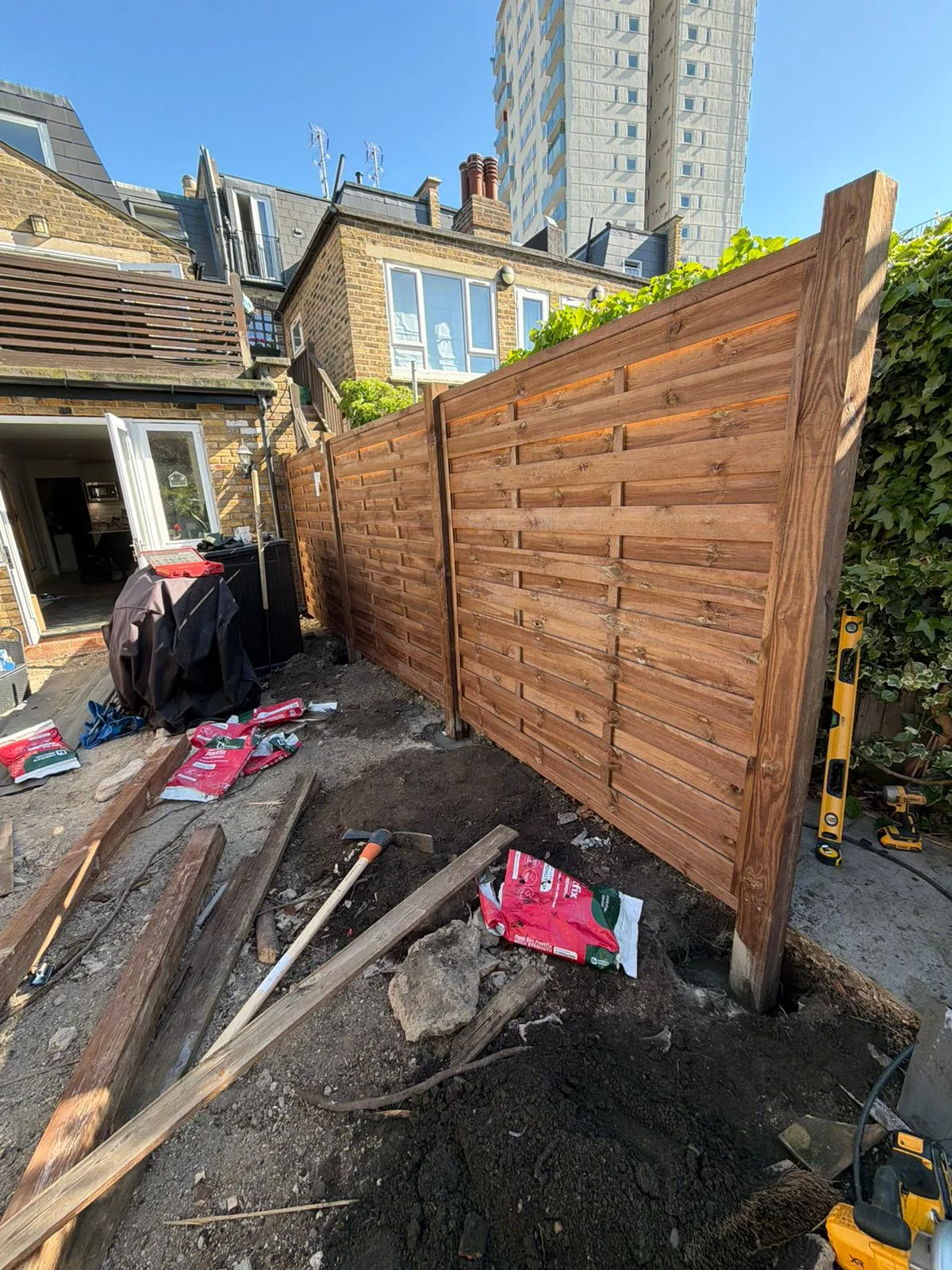
Concrete Posts: Strong, Heavy and Not Immortal
Precast concrete fence posts, rails, gravel boards and panels are covered by BS EN 12839. Concrete will not rot or be eaten by insects, and a slotted post is designed so that panels drop in and can be replaced one at a time.
Jacksons Fencing says concrete posts can last up to 20 years but are not immune to the elements: high winds and heavy rain can make a post prone to chipping or cracking, and once a crack appears, cold weather can make it worse. It also notes that concrete is heavy enough that installation can take two people where timber or metal takes one. Jacksons makes all three types, so treat its comparisons as manufacturer guidance, but it is notable that its own page says the three materials can have about the same lifespan, depending on quality and installation.
Appearance counts too. A concrete post is a visible grey upright between panels, which suits a plain closeboard run and less often suits a warm timber or cedar boundary.
Gravel Boards Matter as Much as Posts
A gravel board is the strip along the bottom of the fence. It lifts the panel clear of wet soil, which is where timber panels begin to rot, and it protects the bottom edge from mowers and strimmers. Concrete gravel boards are commonly sold at 150mm high, 50mm thick and 1.83m long, and they slot into recessed concrete posts or fix to timber posts with brackets. Timber gravel boards exist, but many are rated Use Class 3, which is meant for above-ground use, so check the use class before putting one at ground level.
Depth, Drainage and London Clay
London sits largely on clay, which drains slowly, so water lingers around a post footing after rain. That makes the gravel base the TDUK guide recommends, and the sloped concrete top, more important here than on freely draining ground. Jacksons recommends setting its timber posts at least 0.6 metres into the ground in concrete, and a common rule of thumb is to put about a third of the post length in the ground, which gives roughly 600mm for a 6ft fence. Depth is a minimum: exposed plots, taller fences and solid panels that catch the wind all call for deeper, better-drained footings.
Our guide to garden fencing covers post depth and storm protection in more detail, and how to tell whether a leaning fence needs repair or replacement explains what to check if a post has already started to move.
Five Questions to Ask Before You Accept a Fencing Quote
- Are the posts concrete or timber, and why for this fence?
- If timber, are they treated to Use Class 4 under BS 8417, and to a 15-year or 30-year service life?
- How deep will the posts go, and what goes in the bottom of the hole?
- How will the concrete be finished around the post so that water drains away from it?
- Will the panels sit on gravel boards, and are those boards concrete or treated to a ground-contact class?
A fencer who has thought about these will answer quickly. At our free survey, Billy or Vincent will look at the ground, the exposure and the fence style, and explain which post suits your garden and why.
Frequently Asked Questions
Do concrete fence posts last longer than timber posts?
Not necessarily. Jacksons Fencing, which makes concrete, timber and metal posts, says all three can have around the same lifespan depending on material quality, installation and conditions, and that concrete posts can last up to 20 years. Concrete does not rot, but it can chip and crack, and a timber post that is properly treated and installed can match it.
How long do timber fence posts last?
Under BS 8417, the default desired service life for Use Class 4 treated timber is 15 years unless 30 years is specified. A 30-year specification needs deeper preservative penetration. Poorly treated or poorly installed posts can fail far sooner, and Farmers Weekly has reported farm posts lasting only three to five years.
Should I set a timber fence post in concrete?
It is normal, and it works if the detail is right. The Timber Development UK and Wood Protection Association guide says to put 150mm of gravel in the bottom of the hole and finish the concrete above ground, sloped to shed water away from the post. It warns against making a concrete boot around the base, because that keeps the foot of the post wet.
Do I need gravel boards?
They are not a legal requirement, but they lift the bottom of a timber panel clear of wet soil, which is where panels start to rot. Concrete gravel boards are commonly sold at 150mm high and 1.83m long, and they slot into recessed concrete posts or fix to timber posts with brackets.
How deep should fence posts go?
Jacksons recommends setting its timber posts at least 0.6 metres into the ground in concrete. A common rule of thumb is to put about a third of the post length in the ground, which gives roughly 600mm for a 6ft fence. Exposed gardens and taller or solid panels call for more care, not less.
Planning a new fence?
Billy and Vincent will visit, check the ground and exposure, and give you a written quote that says exactly how the posts will be set.
Fencing guides and pages:
Landscapers in South East London and beyond
Fence and boundary work is part of our landscaping service in these areas: Woolwich, Plumstead, Charlton, Blackheath, Eltham, Lee, Thamesmead, Sidcup, Welling, Bexleyheath, Dartford. We also work across London, including Greenwich, Lewisham, Bexley, Southwark, Bromley, Wandsworth, Croydon, Merton.