Fencing in London: Rules, Styles and What Actually Changes at the Boundary
Written by Billy Maddox, Co-Founder of The Tree Amigos Landscaping & Gardening
Published: August 2026
Practical Boundary & Fencing Guide | 2026 Edition
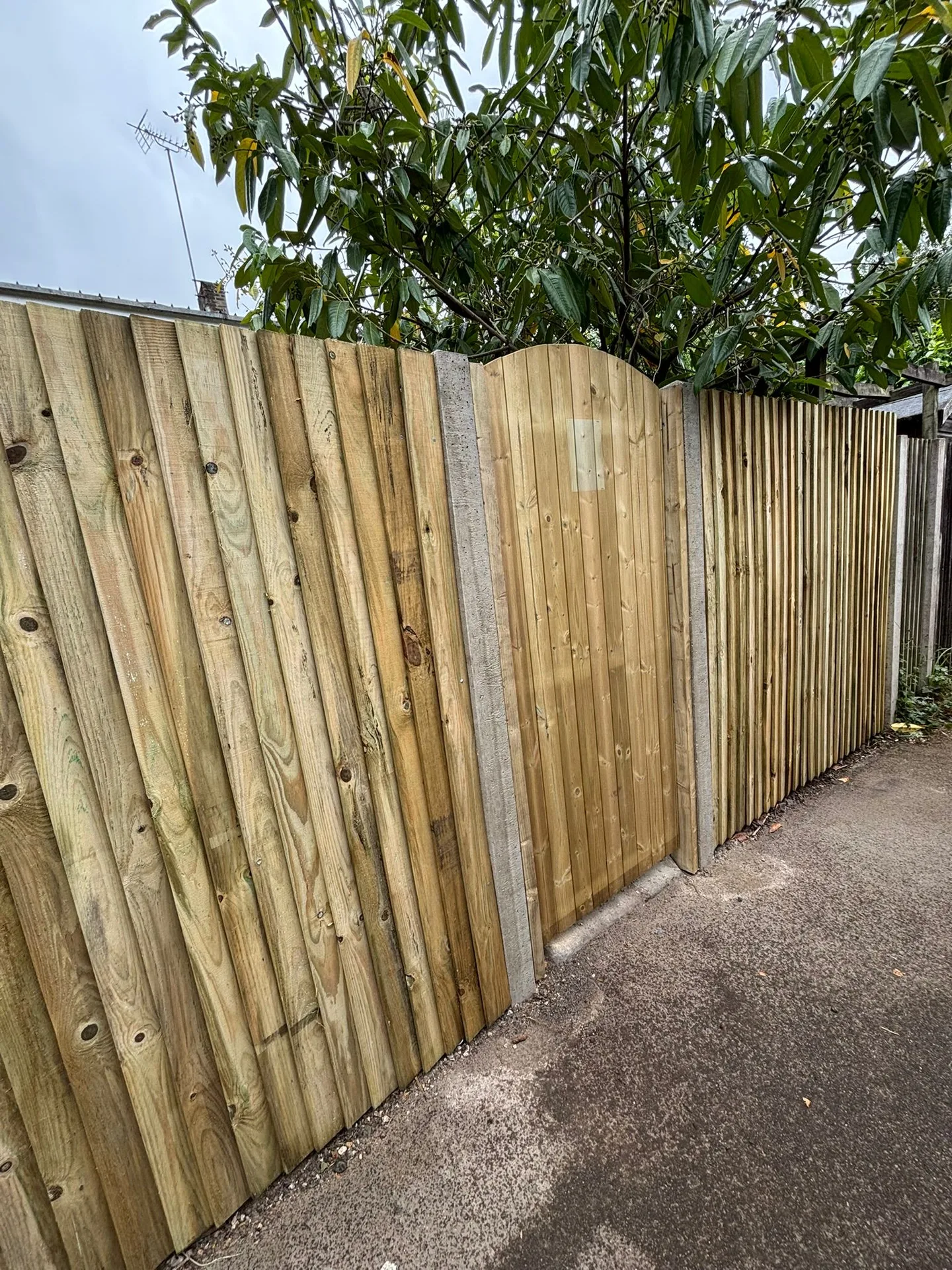
Fencing looks like the simplest job in the garden until a wobbly post, a neighbour dispute, or a winter storm proves otherwise. In London's terrace streets and suburban gardens, a fence does two distinct jobs: it keeps your garden private, and it marks a strict legal boundary line. Yet most people only start looking into fence rules after a post snaps off at ground level or a letter from the council arrives in the post.
When you search for fencing advice online, you usually get one of two extremes: dry legal textbook text that leaves you more confused than when you started, or glossy brochure pages that ignore local planning rules entirely. At The Tree Amigos, Vincent and I build, repair, and replace timber boundaries right across South East and South West London every week. We wrote this guide to give you straightforward, practical answers: what you're allowed to build, who is responsible for what on a boundary, and how to choose a timber style that won't rot out after a couple of wet London winters.
Quick Summary (TL;DR):
Most London back gardens can have a fence up to 2 metres high (about 6ft 6in) under Permitted Development without asking the council. That drops to 1 metre where the fence runs alongside a public road, pavement, or shared driveway. If you live in a Conservation Area or under an Article 4 direction, those rights can be restricted, so a quick check with your local council portal is always smart. Ownership comes down to your property deeds, not local myths — a "T" mark on your Land Registry plan is the traditional sign, but the original conveyance text carries the actual legal weight.
How High Can Your Fence Actually Be?
Here is the basic rule we give every homeowner: in standard UK residential properties, you can put up or replace a rear garden fence up to 2 metres (approx. 6ft 6in) high without needing planning permission. However, if that fence runs alongside a public highway, pavement, or a shared driveway used by vehicles, the limit drops to 1 metre (approx. 3ft 3in).
How the council measures height is where many DIY projects run into trouble. Official guidance on the UK Planning Portal — Fences, gates and garden walls makes it clear: height is measured from the natural ground level directly below each part of the fence. If your garden sits on a slope, you measure 2 metres vertically from the soil line at each individual post, rather than stepping the entire fence up from the highest point in the garden.
What Counts Toward the 2-Metre Height Limit?
Council enforcement officers measure the total combined height of everything attached to the structure. That includes:
- Gravel Boards: Whether concrete or timber, baseboards count toward your overall height.
- Fence Panels & Slats: The main body of the fence.
- Trellis Toppers: Screwing a 30cm trellis onto the top of a 1.8m fence takes your total height to 2.1m — which puts it over the 2m limit.
- Post Caps: Decorative timber caps or post tops count toward the measurement.
- Raised Ground & Planters: If you build a raised bed or retaining wall and put a fence on top, height is measured from the original lower ground line.
Another point highlighted on the Planning Portal: if you have an existing fence that already exceeds 2 metres, you cannot raise it any further without planning permission. If you buy a house with an older 2.4m fence, you are generally allowed to repair or replace it like-for-like at that height, but adding extra height or trellis onto an already over-height fence requires formal council approval.
When You Actually Need Permission
For most London homeowners replacing a rotten fence in a standard back garden, you won't need to talk to the council at all. As long as your new fence stays under 2 metres, sits on your existing property line, and doesn't overhang public land, standard Permitted Development rights cover the work.
However, because so many parts of London have historical protection, there are three common situations where Permitted Development rights are restricted or removed, as detailed on the Planning Portal:
1. Conservation Areas
London has over 1,000 Conservation Areas covering historic streets in Greenwich, Blackheath, Dulwich, Richmond, and Islington. In a Conservation Area, you usually need formal consent or planning permission just to demolish or take down an existing fence or wall over 1 metre high along a road, or 2 metres elsewhere.
2. Article 4 Directions
Local councils like Greenwich, Lewisham, or Southwark sometimes use an Article 4 direction to withdraw Permitted Development rights on specific streets or estates. Where an Article 4 direction covers fencing, you must submit a planning application even for a standard 1.8m back fence. A quick check on your council's website map takes five minutes and avoids headaches later.
3. Listed Buildings
If your house is listed (Grade I, II*, or II) or sits within the grounds of a listed property, standard fencing rules do not apply. Any new fence or wall attached to or bounding the property requires Listed Building Consent to ensure materials match the historic character.
Cedar Slatted vs Venetian Fencing — Which Suits Your Garden
Once you know your planning boundaries, picking the right timber style is where the project gets exciting. Most modern London garden makeovers have moved away from basic lap panels toward slatted screening. The two main styles we fit across London are Western Red Cedar slatted fencing and Venetian slatted fencing.
The difference comes down to warmth versus structure. Western Red Cedar brings rich amber, warm reddish-brown, and cinnamon tones that vary panel by panel. It adds natural warmth that softens grey porcelain paving and London stock brickwork. Venetian fencing uses neat horizontal battens with distinct shadow gaps, creating clean, sharp lines that feel modern and structured against rendered garden walls.
| Feature | Western Red Cedar Slatted | Venetian Slatted (Pressure-Treated / Larch) |
|---|---|---|
| Visual Style | Warm, rich natural tones with distinct cedar grain variations | Clean, crisp architectural lines with uniform gaps |
| Durability Class (BS EN 350) | Class 2 ("Durable") — Natural thujaplicin oils resist rot naturally | Class 3 ("Moderately Durable") / Class 2 for Siberian Larch |
| Untreated Lifespan | 15–25 years untreated (30–50+ years with regular UV oil care) | 12–20 years depending on timber grade & ground contact |
| Privacy & Airflow | Strong privacy; tight 5mm shadow gaps block direct views | Light and airy; 10mm–15mm gaps let light and breeze pass |
| Best Suited For | Bespoke garden boundaries, patio backdrops & planter surrounds | Modern urban courtyards, side passages & contemporary terraces |
Why do we use cedar so much across South East London? It comes down to how the wood naturally handles wet weather. Western Red Cedar contains natural oils (thujaplicins) that protect the timber against rot and fungal decay without needing chemical treatment. According to timber reference site GreenSpec — Timber Cladding: Durability, Quality & Movement, Western Red Cedar carries a BS EN 350 Class 2 ("Durable") rating. That means an untreated cedar fence will easily last 15 to 25 years in outdoor UK weather, and well past 30 to 50 years if it's set off the ground on proper posts and oiled every few years.
Storm Damage — What to Do First
Every winter, Atlantic storms sweep across South East London, and garden boundaries take a battering. If a gale leaves your fence leaning or flattened on the grass, taking a few sensible steps first saves hassle and money later.
Storm Damage Check: 4 Steps Before Calling a Contractor
- Check for Safety Hazards First: Look for leaning posts near public footpaths, loose masonry on garden walls, or hanging panels. Secure the area if anyone could be hurt.
- Take Photos Before Moving Anything: Take clear photos of the collapsed fence, broken posts at ground level, and any damage to neighbour property. Your insurer will want these if you make a claim.
- Find Where the Fence Broke: Nine times out of ten, a fence fails right at ground level where timber posts sit in wet soil or concrete, not in the middle of the panels. Check if the posts snapped or if concrete footings pulled out of wet clay.
- Speak to Your Neighbour Early: If the fence sits on a shared boundary line, share your photos and discuss repairs before booking work. Good communication prevents arguments over shared repair bills.
Storm weather varies sharply from year to year. Official figures from the Met Office — A look back at the 2024/25 storm season show there were 12 named storms during the 2023–24 UK season compared to 6 in 2024–25. Because the official UK storm season runs from 1 September to 31 August, posts that rotted quietly underground over summer are often caught out by early autumn gales.
Need an Urgent Boundary or Storm Damage Inspection?
If wind damage has left your garden fence leaning or collapsed, or if you need an expert on-site measurement to check heights and boundary compliance before ordering materials, Billy Maddox and Vincent O'Connell can help across South East London.
Book a Free On-Site SurveyGetting Privacy Without a Boundary Fight
Privacy is the single biggest reason London homeowners want to upgrade their garden fencing. But trying to block upstairs neighbouring windows by putting up an illegal 2.5m or 3m fence is a fast track to neighbour complaints and council enforcement notices.
Because height limits apply to both sides of the garden line, getting good privacy while keeping neighbours happy comes down to layered design. Instead of relying on one massive fence, we use a combination of a legal 2-metre timber fence at eye level paired with features set inside your garden.
Layered Privacy Solutions for London Gardens:
- Pergolas Over Seating Areas: Placing a timber or aluminium pergola over a patio seating spot blocks direct views from upper-storey windows without touching boundary fence rules.
- Pleached Trees: Evergreen trees grown on raised bamboo frames (like Photinia 'Red Robin' or Hornbeam) give you screening up to 3.5 metres high legally, because living plants aren't covered by fence height limits.
- Slatted Cedar Panels: Narrow horizontal slats block direct lines of sight while letting light and breeze pass through, keeping compact gardens from feeling closed in.
For a full breakdown on measuring sightlines and choosing privacy screening, read our full guide to garden privacy in London.
Repair or Replace — How to Decide
When a fence starts leaning or showing its age, figuring out whether to patch it or replace the whole run comes down to checking the posts. Trying to repair panels when the underlying posts have rotted is simply throwing money away.
Here is our simple rule: if less than a third of the fence is damaged and the posts are completely solid, repair is the sensible choice. But if timber posts wobble at ground level, concrete footings have cracked, or rot has spread through multiple bays, full replacement works out cheaper over the long run.
The Quick Post Wobble Test
Grip each post at chest height and push back and forth. If the post stays rigid, the underground base is good — broken panels or top rails can be swapped out easily. If the post moves or pivots at the soil line, the timber underground has rotted or the concrete footing has cracked. No amount of new panels will fix a fence with failed posts.
When choosing a landscaper to fit or repair a fence, make sure they set posts deep into proper concrete or use heavy-duty concrete spurs. Learn more about checking contractor standards in our guide on how to vet a landscaper before hiring one.
For a full walkthrough of post depths, concrete footings, and storm-proofing an existing fence, see our complete guide to garden fencing repairs and storm protection.
Who Owns the Boundary Fence?
Boundary arguments almost always start with urban myths. You'll often hear that you automatically own the fence on the left (or right) side of your garden. Another popular belief is that whoever faces the "smooth side" of the fence panels owns it. In UK property law, neither myth is true.
Who owns and maintains a fence comes down to the title deeds for your house recorded at HM Land Registry. Guidance from HM Land Registry — Plans: boundaries (Practice Guide 40, Supplement 3) explains that boundary ownership is shown on official Title Plans using an inward-pointing "T" mark symbol.
Reading Land Registry "T" Marks:
- Single "T" Mark: A "T" symbol pointing into your garden means that boundary belongs to your property, making fence maintenance your responsibility.
- Double "H" / "T" Mark: Two "T" marks joined together ("H" shape) across the boundary line means it is a shared party fence, where maintenance costs are split 50/50.
- No Visible "T" Marks: Many older London properties have plans with no "T" marks at all. In those cases, the wording in the original house deeds carries more legal weight than the plan drawing.
If you're stuck in a stalemate with a neighbour over a rotting fence, official consumer guidance from RICS — Boundary disputes in England and Wales confirms that boundary issues are settled by checking historic deeds and physical markers on site, not local guesswork.
Fencing Across South East London
While height limits are set nationally, Conservation Area boundaries, wind exposure, and soil types vary genuinely borough by borough across South East London.
Our team works across South East London every day, fitting timber fencing and carrying out emergency storm repairs tailored to local ground conditions:
To view specifications for installation across all 32 London boroughs, check our main London fencing installation service page.
Frequently Asked Questions
Do I need to tell my neighbour before replacing a fence?
It isn't a legal requirement if the fence sits entirely on your land, but we always tell clients to chat with their neighbour first. Letting them know when installers will be working avoids friction, especially when posts sit right on the boundary.
Can my neighbour force me to fix a broken fence?
Only if the fence is legally yours on your title deeds and its failure creates a genuine hazard or safety risk. Ownership has to be proven first through your Land Registry deeds rather than guesswork.
What is an Article 4 direction?
An Article 4 direction is a rule brought in by a local council to remove standard Permitted Development rights in a specific area. It means you must apply for formal planning permission even for routine changes like putting up a new fence.
Does trellis on top of a fence count toward the height limit?
Yes. Planning rules measure the entire structure from ground level up. Trellis toppers, gravel boards, post caps, and even fence panels placed on raised garden beds all count toward the 2-metre total.
How long does a cedar fence actually last in London?
Western Red Cedar carries a BS EN 350 Class 2 rating, meaning it naturally lasts 15 to 25 years outdoors without any chemical treatment. Mounted off ground contact on proper posts, it regularly lasts 30 to 50+ years.
Conclusion & Next Steps
Navigating garden fencing in London comes down to balancing legal rules, title deeds, and garden style. To recap: check your 2m or 1m height limits before ordering materials, check for local Conservation Area or Article 4 rules, confirm boundary ownership from Land Registry deeds rather than local myths, and pick a timber profile like Western Red Cedar or Venetian slatted that handles London weather well.
Get a Straight Answer on Your London Boundary
Billy Maddox and Vincent O'Connell offer free on-site consultations across London. We'll inspect your boundary, measure exact levels, and provide a fixed-price itemised quote for bespoke fencing done properly.
Book Your Free On-Site ConsultationCall us on: 07470 419 056
Source basis: Planning Portal — Fences, gates and garden walls guidance, GreenSpec (BS EN 350 timber durability rating), Met Office UK Storm Season statistics, HM Land Registry Practice Guide 40 Supplement 3, RICS Boundary Disputes consumer guide. Compiled August 2026.