Can You Repair or Install a Fence in Winter? A London Guide
Written by Billy Maddox & Vincent O'Connell, Founders of The Tree Amigos Landscaping & Gardening Ltd
Published October 2026
FENCING GUIDES | The Tree Amigos
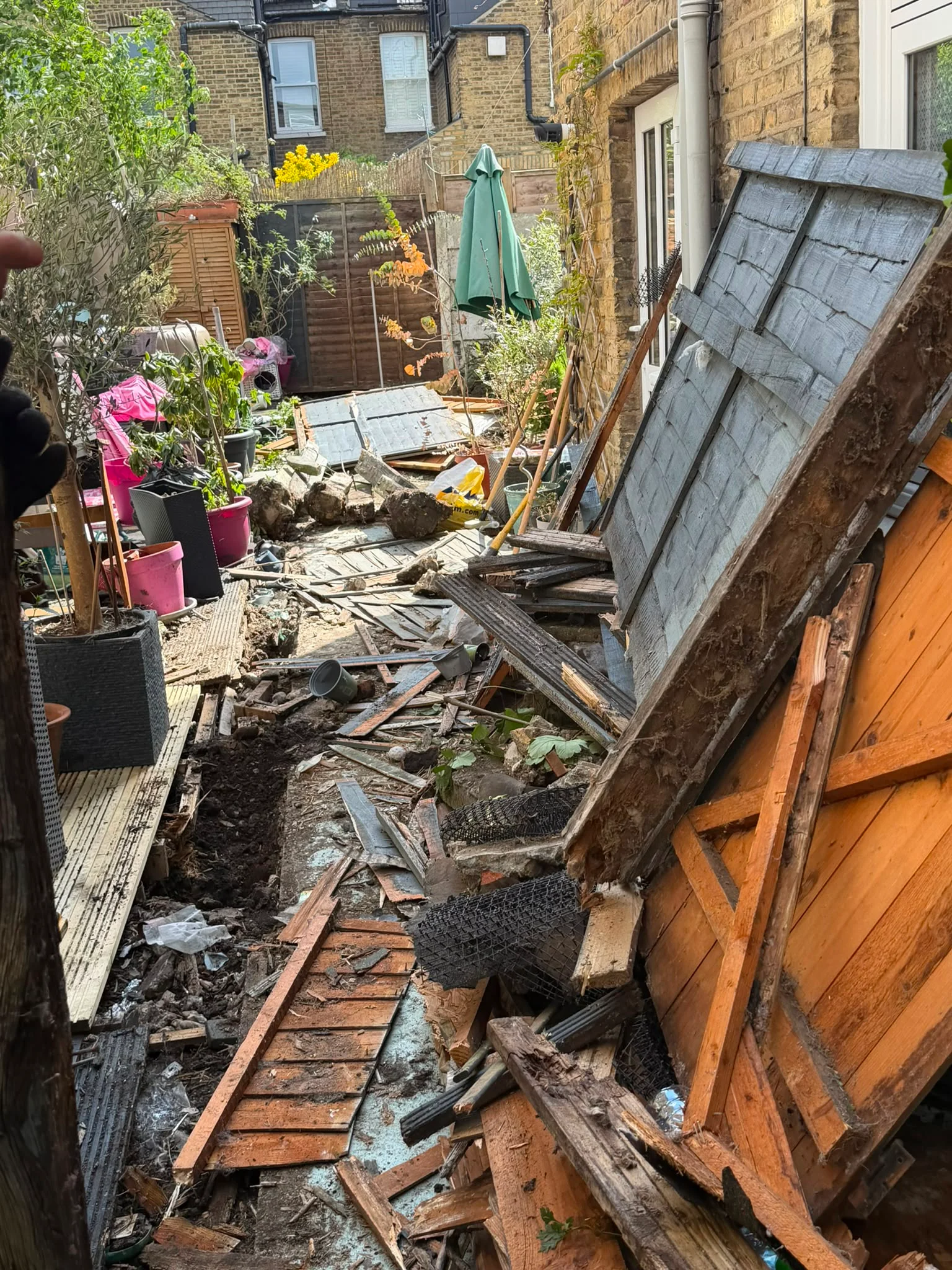
Yes, most fence repairs and installations can go ahead in winter, with two real limits: frozen ground and cold air when posts are being set in concrete, and high winds when panels are going up. Heavy rain and saturated clay can also delay a job. The trick is knowing what is urgent, what can wait for a calm, mild few days, and what to do in the meantime.
Key Takeaways
- Post-setting mixes are not for use below 5°C or in frozen ground, according to manufacturer data sheets.
- Strong wind is the other limit: fresh panels act as sails.
- A leaning fence, loose panels or a gate that won't close are worth fixing now.
- A sound fence that just looks tired can wait for settled weather.
- Treatments and stains belong in a dry spell, not mid-winter.
This guide is about timing. If you want to decide whether to repair or replace, see our guide to storm-ready fence repair or replacement. For the full picture on fencing, see the ultimate guide to garden fencing.
Why Cold and Frost Matter for Posts
A fence is only as sound as its posts, and posts are held by concrete. Concrete needs the right temperature to set and gain strength. The manufacturer data sheet for Hanson Fast Set Postfix gives an application temperature of 5°C to 35°C and says not to use it when the air temperature is below 5°C or the ground is frozen. Setting times lengthen in cold conditions, and concrete that freezes before it has gained strength can be damaged. That is why a good installer will postpone a post job in a hard frost rather than risk it.
Frozen ground is also a problem in itself. Holes are harder to dig cleanly, ice in the hole can weaken the bond, and ground that freezes and thaws can shift, so a post set in the wrong conditions may settle out of line later.
Wind, Rain and Clay
A new panel is a large flat surface. Fixed to posts that have not yet set, or in strong wind, it can move or fall. That is why work stops in gales, and why posts need a settling period before panels go on. Heavy rain makes the ground difficult to work, and saturated London clay is slow to drain and awkward to dig. We cover the clay problem in more depth in our storm guide, which explains why posts fail in clay as well as wind.
What Should Be Done Now, and What Can Wait
Do something now
- A leaning fence or panels that could come down in the next blow.
- A broken post, or a post that moves at the base.
- A gate that will not close or latch, leaving a gap.
- A fence that is the only barrier for children or pets.
Even if a permanent repair has to wait for a mild spell, the fence can usually be secured in the meantime so it does not cause damage or injury.
Wait for settled weather
- A sound fence with faded or weathered panels.
- A full new run where the old fence is still standing and secure.
- Staining, oiling or preserving timber.
- Anything that needs concrete to cure in cold air.
Shared Boundaries
If the fence sits on a shared boundary, find out who owns it before work starts. Title deeds sometimes mark ownership with a T-mark. Talk to the neighbour early, because a dispute can hold things up more than the weather. We note this in our storm guide too.
Planning Ahead for Spring
If the fence is not urgent, winter is a good time to plan. You can decide on the style, check the rules on height and boundaries, and get a written quote ready so work can begin when the weather settles. Our fencing rules and styles guide covers the height limits and style choices, and our cedar fencing page shows the option many customers choose when they replace.
We repair and replace fences across South East and South West London. See our fence repair page for the areas we cover.
Fence damaged or leaning?
Billy and Vincent will take a look, tell you honestly what needs doing now and what can wait, and give you a written quote with no obligation.
Related reading:
Frequently Asked Questions
Can a fence be repaired or installed in winter?
Usually yes. Most fence work can carry on through winter, but it depends on the weather on the day. The main limits are frozen or very cold ground when posts are being set in concrete, and high winds when panels are being fixed.
Can you set fence posts in concrete in cold weather?
Not safely in frost. Manufacturer data sheets for post-setting mixes, such as Hanson's Fast Set Postfix, give an application range of 5°C to 35°C and say not to use the product when the air temperature is below 5°C or the ground is frozen. Check the bag for the mix being used.
What should I do right after a storm damages my fence?
Make it safe first: keep people away from leaning panels, and secure anything that could fall. Photograph the damage, check who owns the boundary, and then get a repair booked. Our storm-damage guide explains how to judge repair against replacement.
Is it worth waiting until spring to replace a fence?
If the fence is safe and the boundary is secure, waiting for a settled spell of weather is reasonable. If panels are loose, leaning, or a gate no longer closes, a temporary fix or repair now stops it getting worse in the next storm.
Does wet weather stop fence work?
Rain slows work and makes the ground heavy, but it does not always stop it. Heavy rain, saturated clay or strong wind are the usual reasons to postpone.
Should I stain or treat a fence in winter?
Wood treatments need dry timber and a suitable temperature, so check the product label. Winter is rarely the right time for it. Spring or a dry autumn spell is better.
Landscapers in South East London and beyond
Fence and boundary work is part of our landscaping service in these areas: Woolwich, Plumstead, Charlton, Blackheath, Eltham, Lee, Thamesmead, Sidcup, Welling, Bexleyheath, Dartford. We also work across London, including Greenwich, Lewisham, Bexley, Southwark, Bromley, Wandsworth, Croydon, Merton.