Best Patio Materials and Stones for UK Gardens: How to Choose
Written by Billy Maddox & Vincent O'Connell, Founders of The Tree Amigos Landscaping & Gardening Ltd
Published August 2026 · Updated November 2026
MATERIALS GUIDE | The Tree Amigos
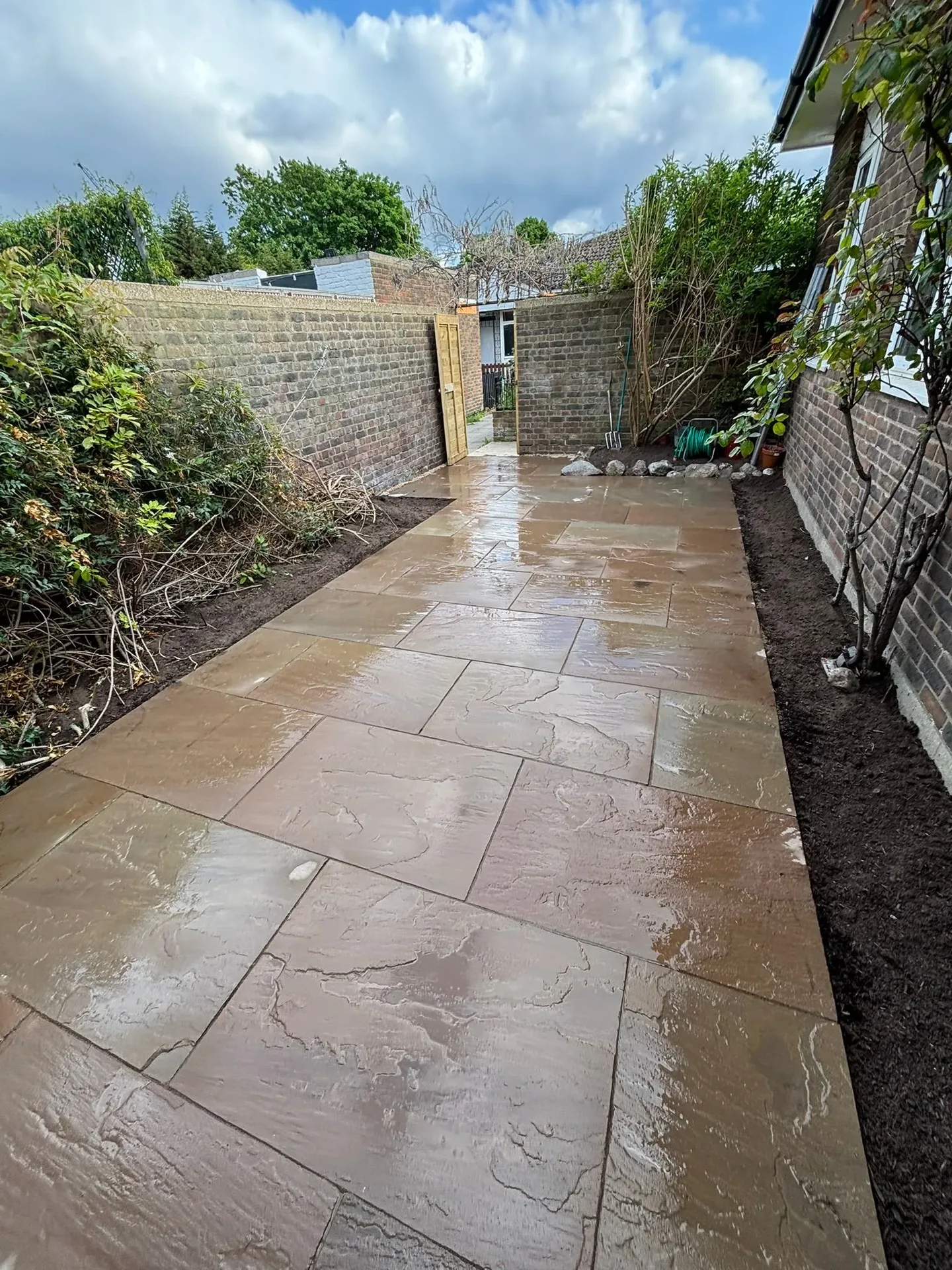
There is no single best patio material, but there is a best one for your garden. For most London gardens, porcelain is the lowest-maintenance choice. Indian sandstone is the best-known natural stone for a patio and suits period houses. Granite, limestone, slate, clay pavers, resin-bound surfacing and gravel each suit particular jobs. The right choice depends on shade, drainage, how you use the space and the look of the house, not on a ranking.
Key Takeaways
- Shade and damp point to non-porous porcelain, or sealed natural stone that is washed regularly.
- Clay soil makes the base and drainage more important than the surface.
- Period houses suit sandstone, clay pavers or granite details; modern gardens suit porcelain.
- Porcelain and Indian sandstone are the two surfaces we install as standard services.
For a head-to-head on the two most popular choices, read our porcelain vs sandstone guide. This page looks wider: how to choose by your garden's conditions, and what the other options are good for.
Start with the Garden, Not the Catalogue
Is it shaded or damp?
North-facing gardens and gardens under trees stay damp, and algae and moss follow. Non-porous porcelain is easiest in these conditions. Natural stone can do well too, but it needs sealing and regular washing, and it is worth planning for.
What is the ground like?
Much of London sits on clay, which drains slowly and moves with the seasons. On clay, put your effort into the base and the falls so water runs away from the house. Permeable surfaces such as gravel and permeable block paving help rain soak through, but they still need the right sub-base.
What is the house like?
Victorian and Edwardian brick tends to suit natural tones and textures, such as sandstone or clay pavers. A modern extension with bifold doors often suits clean, even porcelain. Match the patio to the house, not the other way round.
Who will use it?
Children, pets and furniture favour a hard-wearing surface that wipes clean. Wheelchairs and prams need a smooth, firm one. Barefoot use in summer is kinder on natural stone than on dark, sun-baked surfaces.
How much upkeep will you accept?
Be honest about this. A sealed stone patio looks wonderful if you wash it and reseal it from time to time. If that sounds like a chore, choose porcelain.
The Options, Briefly
| Material | Good for | Watch out for |
|---|---|---|
| Porcelain | Low upkeep, modern gardens, shade, families | Needs specialist laying on a very flat base |
| Indian sandstone | Period houses, natural character, traditional gardens | Porous: needs sealing, can grow algae and black spot |
| Limestone | Soft, pale, refined look | Softer stone that can mark and stain, so it needs sealing and care |
| Granite | Very dense and hard-wearing; setts for borders, edges and steps | Hard to cut and lay; usually a specialist finish |
| Slate | Dense, dark, fine-grained natural stone with a slim, modern look | Can be slippery when wet and can flake in layers, so check the specific product |
| Concrete slabs | A plain, hard-wearing surface that suits simple layouts | Plainer look, and colour can fade or mark over time |
| Clay pavers | Warm, colourfast, goes with period brick | Moss and weeds in joints; needs firm edge restraint |
| Resin-bound | Smooth, seamless and permeable on a suitable base | A specialist trade: poor bases or tree roots can crack it |
| Gravel | Paths, borders, informal areas | Loose underfoot; poor for furniture, prams and wheelchairs |
We install porcelain and Indian sandstone as standard services. For the other surfaces, we can talk through whether they suit your garden, and where a specialist is the right call, we will say so.
The Best Stones for a Patio
If you are searching for the best stone for a patio, these are the natural stones most often used in UK gardens, and what each does well. We install Indian sandstone paving as a standard service. For the other stones, we can talk through whether they suit your garden, and we will say where a specialist is the right call.
Indian sandstone
The most widely used natural stone for UK patios. It has natural colour variation and a riven, grippy surface, and it suits period houses. It is porous, so it needs sealing and regular washing in shaded, damp gardens. Our Indian sandstone paving guide covers colours, finishes and what to look for.
Limestone
A soft, pale stone with a refined, quiet look. It is softer than sandstone or granite, so it can mark and stain, and it needs sealing and care.
Granite
The hardest-wearing of the common patio stones. It is very dense and low in absorption, which makes it a good choice for edges, steps and setts. It is harder to cut and lay, so it is usually a specialist job.
Slate
A dense, fine-grained stone in dark tones, with a slim, contemporary look. Some slate can be slippery when wet and can flake in layers, so check the specific product and finish before you choose.
If you are weighing natural stone against a manufactured surface, our porcelain vs Indian sandstone guide compares the two we install most.
Drainage and Planning
Drainage is a bigger decision than most people expect. A large patio on London clay with no plan for the water can leave the garden waterlogged. At the front of the house, the rules are stricter: paving more than five square metres with a non-permeable surface needs planning permission unless the water drains to a lawn or border. Our patio planning permission guide explains the rules in full.
Keeping a Patio in Good Condition
Whatever the material, regular sweeping and gentle washing do most of the work. Pressure washing can damage joints and soften some stone if it is done badly, so read our pressure washer guide before you reach for the jet wash.
Choosing a patio surface?
Billy and Vincent will look at the garden, talk through shade, levels and drainage, and give you a written quote with no obligation.
Related reading:
Want a quote for your patio?
We install porcelain and Indian sandstone patios across South West and South East London. Our porcelain patio installation page explains the process, and our local pages cover Merton, Raynes Park and Wimbledon. For a price for your garden, use the free quote form.
Frequently Asked Questions
What is the best patio material for UK weather?
For most London gardens, porcelain is the lowest-maintenance choice because it is non-porous and resists algae and frost. Indian sandstone is the best-known natural choice and suits period houses, but it needs sealing. The best option for you depends on shade, drainage, the style of the house and how much upkeep you will accept.
What patio material is best for a shady, damp garden?
Non-porous porcelain copes best with damp and shade because algae and moss find it harder to grip. Natural stone can work if it is sealed and washed regularly. Whatever you choose, make sure water runs off the surface instead of standing on it.
What patio material is best for clay soil?
The surface matters less than the base and drainage. On clay, water drains slowly, so the patio needs proper falls and a sound sub-base. Permeable surfaces such as permeable block paving or gravel help water soak away, but they need the right base too.
Is resin-bound paving a good patio material?
It can be, where it is laid on a suitable permeable base by a specialist. It gives a smooth, seamless surface that drains. It is a specialist trade of its own, and tree roots or poor ground can crack it, so ask the installer about the base.
Is gravel a good alternative to paving?
Gravel is permeable and quick to lay, so it suits borders, paths and informal areas. It is a poor surface for furniture, wheelchairs and prams, and it needs good edging and a membrane to stay tidy.
What is the most frost-resistant patio material?
Dense, low-absorption materials such as porcelain and granite cope best with freeze-thaw. Natural stone with higher absorption can flake in poor conditions, so check the specific product and how it is laid.
What is the best stone for a patio?
There is no single best stone, but Indian sandstone is the most widely used natural stone for UK patios, and granite is the hardest-wearing. Indian sandstone suits period houses and traditional gardens, limestone gives a soft, pale look, granite suits edges and steps, and slate gives a dark, modern finish. Porous stones need sealing, and the base and drainage matter more to how long the patio lasts than the stone itself.
What is the hardest-wearing natural stone for a patio?
Granite is the hardest-wearing of the common patio stones. It is very dense and low in absorption, so it copes well with frost and heavy use. It is harder to cut and lay than sandstone, so it is usually a specialist job.
Is natural stone or porcelain better for a UK patio?
It depends on the garden. Porcelain is non-porous, so it resists algae, frost and stains and only needs washing, which suits shaded gardens and families. Natural stone such as Indian sandstone has colour variation and character and suits period houses, but it is porous and needs sealing and cleaning. Our porcelain vs sandstone guide compares the two in detail.
Landscapers in South East London and beyond
Patios and paving are part of our landscaping work in these areas: Woolwich, Plumstead, Charlton, Blackheath, Eltham, Lee, Thamesmead, Sidcup, Welling, Bexleyheath, Dartford. We also work across London, including Greenwich, Lewisham, Bexley, Southwark, Bromley, Wandsworth, Croydon, Merton.