How to Add Privacy to an Overlooked London Garden (Without Making It Feel Closed In)
GARDEN DESIGN & PRIVACY | The Tree Amigos
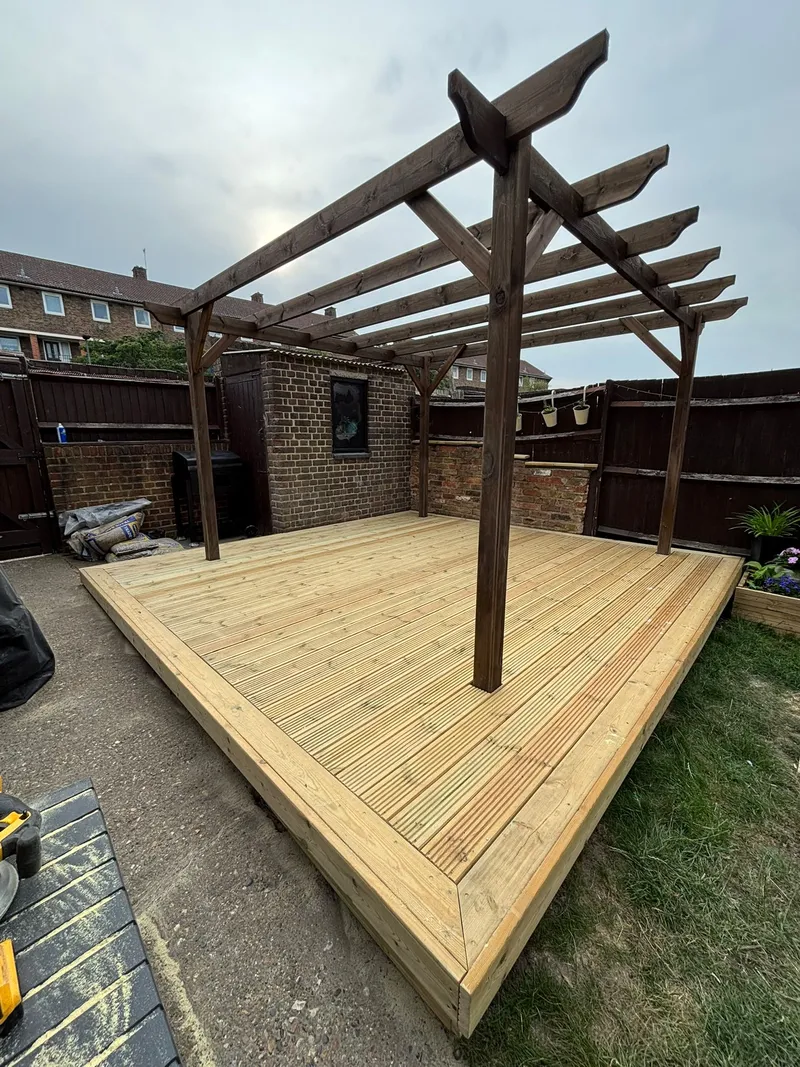
The most effective way to transform an overlooked London garden into a private, peaceful retreat is through layered screening. By combining eye-level boundary fencing (such as Western Red Cedar slatted panels), overhead architectural structures (like custom pergolas), and strategic living greenery, you block direct sightlines from neighbouring windows without turning your garden into a dark, claustrophobic box.
At The Tree Amigos, founders Billy Maddox and Vincent O'Connell design bespoke privacy solutions for terraced homes, victorian conversions, and urban courtyards across London. This guide breaks down the precise engineering and architectural principles needed to achieve maximum privacy while preserving precious natural daylight.
1. Understanding the Sightline Geometry of London Gardens
In London’s tightly packed Victorian terraces and modern developments, feeling overlooked is rarely just a ground-level issue. The primary source of exposure comes from first- and second-floor windows, neighbouring loft conversions, and adjacent multi-storey apartment blocks.
Simply erecting a taller 2-metre boundary fence will not shield your patio dining table from an upstairs window angled down at 45 degrees. To solve this, professional garden design focuses on targeted sightline blocking — placing screens and canopies directly between where you sit and the specific window creating the exposure.
2. Layer 1: Contemporary Slatted Boundary Fencing (Eye Level)
Traditional overlap or close-board fence panels can feel solid, heavy, and outdated. For contemporary London gardens, horizontal slatted fencing is the premier boundary choice. Narrow timber battens (typically 18x44mm or 18x38mm) are fixed horizontally with 5mm to 10mm shadow gaps. Before erecting new boundary panels, make sure to check fencing rules before you build.
Western Red Cedar (Clear Grade 1 Canadian)
Western Red Cedar is the gold standard for London privacy screening. Rich in natural thujaplicin oils, cedar is naturally resistant to rot, insect attack, and fungal decay. Its vibrant warm amber and reddish-brown tones add luxurious warmth to urban brickwork, and it requires no chemical treatment to last 25–30+ years outdoors.
Siberian Larch & WPC Composite Slats
For a slightly firmer grain or a cooler straw-golden tone, Siberian Larch provides extreme high-density durability at a lower material price point. Alternatively, Wood-Plastic Composite (WPC) slatted screens offer a zero-maintenance, color-fast solution that never needs staining or sealing.
Why Slatted Fencing Preserves Light
Horizontal shadow gaps allow wind and diffused sunlight to pass through freely, preventing dark dead zones in your garden while breaking up direct lines of sight from adjacent properties.
3. Layer 2: Overhead Pergolas & Canopies (Above Eye Level)
To defeat upper-floor window overlooking, an overhead architectural structure creates a protective "ceiling" over your outdoor dining zone, hot tub, or lounge space. A bespoke timber or aluminum pergola installation acts as an elegant visual shield.
- Slatted Rafter Roofs: Angled timber rafters block views from above while letting direct sunlight flood the patio when the sun is lower in the sky.
- Adjustable Louvred Aluminium Pergolas: Modern powder-coated aluminium frames with motorized roof louvres allow you to open or close the canopy at the touch of a button, providing 100% rain protection and instant overhead privacy.
- Side Louvre Blinds & Drops: Integrating pull-down fabric screens or fixed timber louvre side panels turns your pergola into an all-weather private sanctuary.
4. Layer 3: Living Screening & Stilted Pleached Trees
Soft planting adds a vital organic layer that softens hard timber structures and provides natural seasonal movement. Whether surrounding a natural lawn or an artificial grass surface, the ultimate professional horticultural secret for London privacy is the use of stilted pleached trees.
What Are Pleached Trees?
Pleached trees feature a clear, straight trunk (typically 1.8m to 2.0m high) topped with a flat, square-trained frame of foliage. Placed along a boundary fence, they act as a "raised green hedge" that extends your privacy line up to 3.0m or 3.5m high without taking up precious floor space in your garden bed.
Top 4 Evergreen & Deciduous Trees for London Screening
- Photinia 'Red Robin' (Evergreen): Vibrant red young leaves in spring, dense year-round privacy.
- Hornbeam / Carpinus betulus (Semi-Evergreen): Holds crisp copper leaves through winter, providing excellent privacy and wind protection.
- Cherry Laurel / Prunus laurocerasus (Evergreen): Large glossy green leaves that form an instant impenetrable green wall.
- Clumping Bamboo / Fargesia robusta 'Campbell': Non-invasive clumping bamboo that stays strictly within its root footprint, offering rustling privacy stems up to 3.5m.
5. Acoustic Fencing: Reducing City & Neighbour Noise
True garden privacy is about sound as much as sight. In suburban London properties bounded by railway lines, busy roads, or lively neighbouring gardens, acoustic noise pollution can ruin outdoor relaxation.
Installing heavy-duty acoustic timber fencing (which features dense interlocking tongue-and-groove boards with anti-vibration rubber gaskets) reflects and diffuses sound waves, reducing ambient outdoor traffic noise by up to 28 decibels (dB).
6. Permitted Development Limits & Fence Height Rules
Before installing boundary screening or pergolas, it is crucial to stay within legal height limits under UK Permitted Development rules:
- Rear & Side Boundary Fences: Maximum 2.0 metres high from ground level without requiring planning permission.
- Highway / Front Boundaries: Maximum 1.0 metre high if adjacent to a public road or pavement.
- Pergolas & Garden Structures: Maximum 2.5 metres high if placed within 2.0 metres of a boundary line.
For detailed guidance on height restrictions, conservation area Article 4 directions, and planning rules across London councils, read our guide on Planning Permission for Patios, Fencing and Decking in London.
Frequently Asked Questions
Q: What is the best way to add privacy to a small overlooked garden?
A: Layer your screening — a slatted boundary at eye level, a pergola or tall screen where you're overlooked from above, and planting to soften it. Slatted designs block the view while keeping the light, which matters most in a small garden.
Q: Should I choose fencing, trellis, or a pergola?
A: Fencing handles eye-level overlooking from neighbours; a pergola handles being overlooked from above by upstairs windows; trellis is best as a light decorative top-up. Many London gardens use a combination of all three.
Q: How do I keep privacy without losing too much light?
A: Use slatted screens and fencing rather than solid panels — the gaps let daylight through while obscuring the view, and only screen the specific angles you're actually overlooked from.
Q: What privacy solutions work best for London terraces?
A: Cedar slatted boundary fencing plus a pergola over the seating area is the most effective combination for terraces, because it deals with both the neighbour-to-neighbour view and the upstairs-window problem.
Ready to Make Your Garden Private?
Billy Maddox and Vincent O'Connell provide free on-site consultations across London. We'll measure your exact sightlines, inspect boundary walls, and design a custom cedar screening or pergola plan.
Get Your Free QuoteThe Tree Amigos are specialists in cedar fencing, pergolas, and garden design throughout London, serving Wandsworth, Bromley, Croydon, and Merton.
Explore Our Fencing & Pergola Guides: