Millboard vs NeoTimber, Composite Prime, Dino, Eva-Last and UltraDecking: A UK Comparison
Written by Billy Maddox & Vincent O'Connell, Founders of The Tree Amigos Landscaping & Gardening
Published: November 2026
DECKING GUIDE | The Tree Amigos
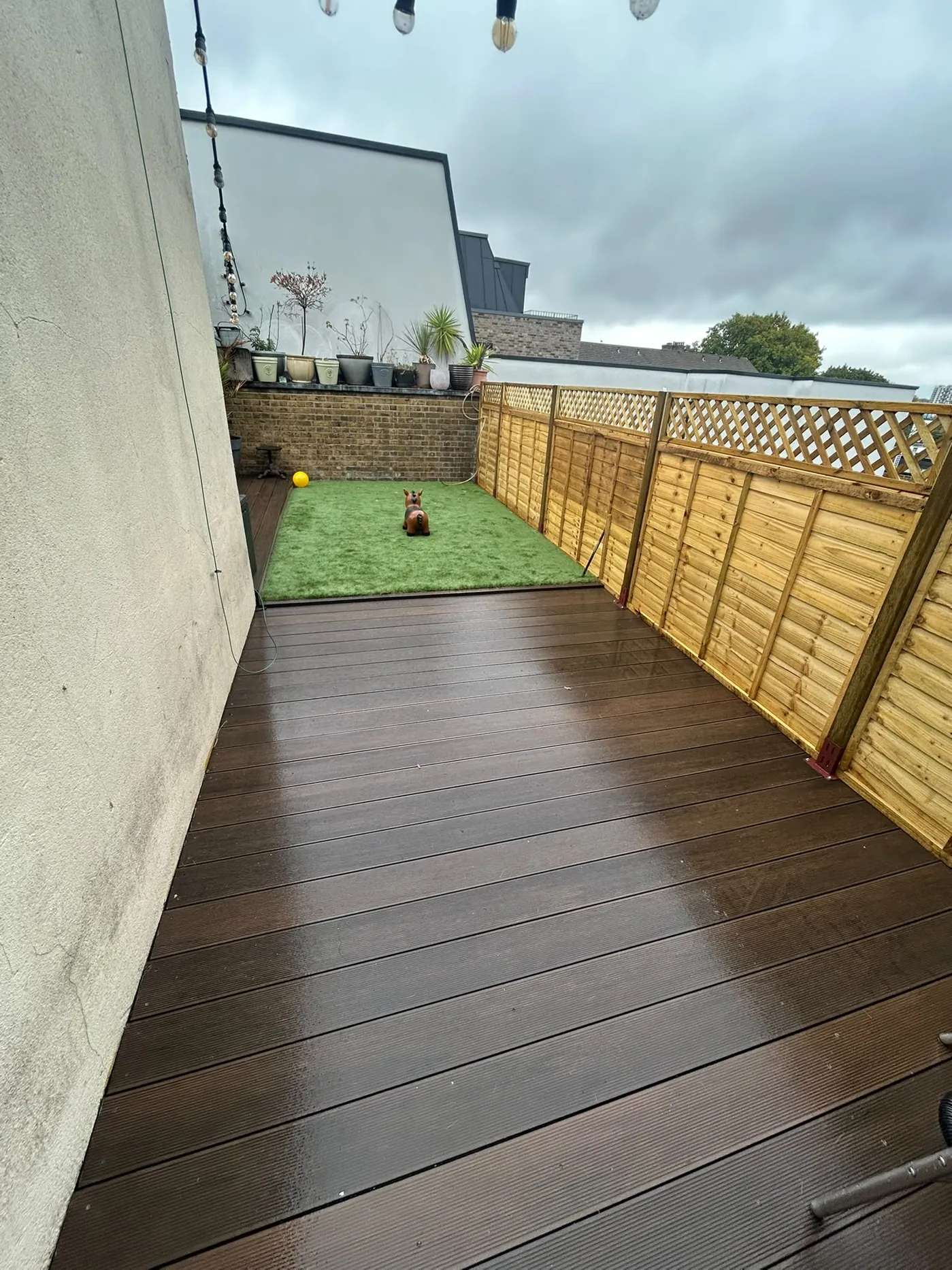
If you've asked for composite decking quotes, you've probably been offered more than one brand. Millboard comes up a lot, and so do NeoTimber, Composite Prime, Dino, Eva-Last and UltraDecking. This guide sets out how each of those five compares with Millboard, using the manufacturers' own data sheets, installation guides and warranty documents, plus what UK owners have said about them in public reviews and forums.
Where we stand: we're installers, not a manufacturer or retailer. Millboard and Trex are the composite brands we install most. We have no affiliate, commission or sponsorship arrangement with any brand in this article, and this comparison doesn't draw on installation experience of the other five brands. Everything below comes from published documents and owner comments, linked so you can check them. There are no prices here: prices change quickly and depend on the job.
If you're choosing between Millboard and Trex, our Millboard vs Trex comparison covers that pair. If you haven't yet decided between composite and timber at all, start with our composite vs timber decking guide.
Key Takeaways
- Millboard is a wood-free board with a moulded polyurethane surface. The other five are mostly wood-plastic or mineral-PVC composites fixed with hidden clips.
- Joist spacing is the biggest practical difference. Millboard specifies 400mm centres for homes. Composite Prime, Dino, Eva-Last Apex and UltraDecking specify 300mm, and some warranties are void if that's exceeded.
- Published test data is uneven. Millboard, NeoTimber, Composite Prime and Eva-Last publish slip results, and all but Millboard (whose decking fire class is being recertified) publish fire classes. Dino publishes neither, and UltraDecking gives one slip figure with no test method.
- Millboard says its residential decking shouldn't be used on balconies or roof terraces of buildings over 11m, and its decking fire classification is being recertified.
- Most of these warranties exclude fading and staining. Read what is actually covered, not just the number of years.
How to Read This Comparison
Three things to keep in mind:
- A brand isn't one board. NeoTimber, Composite Prime, Dino and Eva-Last each sell several ranges, some capped and some not, with different warranties. Always ask which range is on your quote.
- "Not published" doesn't mean "bad". Where a brand doesn't publish a slip or fire figure, we say so. That's a reason to ask for the test report, not proof the board performs poorly.
- Review scores aren't like for like. NeoTimber, Dino and UltraDecking sell direct to the public, so their Trustpilot scores mix delivery and service with the boards themselves. Millboard mainly sells through stockists and installers.
Slip figures below are pendulum test values (PTV). Under the UK pendulum test, 36 and above is treated as low slip potential, as NeoTimber's Essential data sheet states. Lab results are measured on new, clean boards, so a deck still needs regular cleaning to keep its grip.
The Millboard Baseline
Millboard's February 2026 technical brochure says the boards are made in Britain. They have a closed "cellular" core made from a blend of recycled natural minerals and resin, with a hand-moulded polyurethane surface Millboard calls Lastane, and 38% recycled materials overall. The brochure gives these slip values (BS 7976-2):
- Enhanced Grain: 36 wet, 49 dry
- Weathered Oak: 41 wet, 54 dry
- Lasta-Grip: 43 wet, 58 dry
Boards are screwed through the surface with Durafix screws that the Lastane closes over, or side-fixed with DuoFix guides. Joists go at 400mm centres for residential decks, with a 4mm gap between boards and 1mm at butt ends. The residential warranty is 25 years. The 2026 warranty document covers splitting and fungal decay, and excludes colour change and ordinary wear.
Two points owners should know. Millboard's FAQs say the boards tend to be hotter than wood in direct sun, especially darker colours. Some Trustpilot reviewers also report water sitting on the surface after rain, which is why the fall of the deck matters.
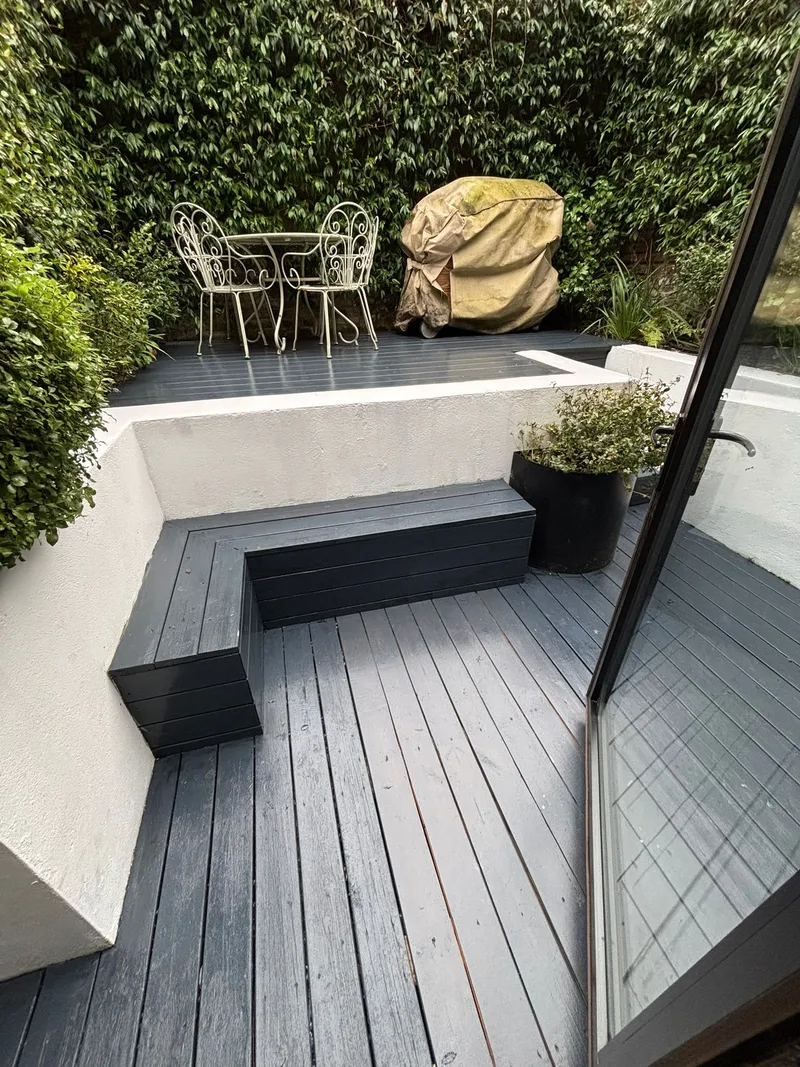
Millboard vs NeoTimber
NeoTimber is a wood-plastic composite range with the most published test data of the five. Its Essential and Classic boards are traditional uncapped composite, while Advanced and Deluxe have a polymer shell. Its installation guide uses hidden FastClips on joists at 250 to 350mm. The boards are reversible, with woodgrain on one side and grooves on the other.
- Slip: the Essential and Deluxe data sheets give wet values of 38 to 44 on the woodgrain face and 42 to 49 on the grooved face (BS 7976-2). That's a slightly higher wet range than Millboard's published figures.
- Fire: the data sheets list Cfl-s1 for its composite boards. NeoTimber notes that only its separate aluminium decking reaches A2fl-s1.
- Warranty: 25 years residential on the main ranges, 10 on Lite. The warranty terms exclude colour change, weathering, staining and mould.
- Where it's made: not stated. The company is based in England and says its products are designed in the UK.
What owners say: NeoTimber's Trustpilot score is high, with complaints mostly about delivery damage. One MoneySavingExpert poster liked the grip, but said the uncapped ends of their boards swelled when wet.
In short: NeoTimber's capped ranges and published slip data make it a reasonable comparison with Millboard. The main differences are construction (wood-plastic composite rather than wood-free), clip fixing and closer joists.
Millboard vs Composite Prime
Composite Prime is a UK supplier of hollow wood-plastic composite boards, made in China according to trade journal TTJ. It sells several ranges, including HD Deck and Elements. The HD Deck 150 installation guide asks for treated 47×100mm timber joists no more than 300mm apart, joist tape, a 1 in 100 fall, and one hidden clip and screw on every joist.
- Slip: the HD Deck 150 data sheet gives a wet pendulum mean of 40 to 42 and a DIN 51130 ramp rating of R10. The Elements data sheet uses a US test method that can't be compared directly.
- Fire: standard HD Deck 150 is Cfl-s1. There's a separate HD Deck 150 Fire board at Bfl-s1, and Elements is listed as Bfl-s1.
- Warranty: the residential warranty gives 10 years on HD Deck XS, 150 and 3D and 25 years on Dual and Pro, excluding fade. Elements has a lifetime residential warranty plus a separate fade and stain warranty, which only covers stains cleaned within a week.
What owners say: Composite Prime has few reviews on Trustpilot (19 when we checked) and a low score. Several one-star reviews describe boards splitting along their length within a few years, and some describe disputes over whether the cause was the boards or the fitting. It's a small sample, so treat it as a pattern to ask about, not a verdict.
In short: check which range is being quoted, because the warranty runs from 10 years to lifetime depending on it. If you go ahead, make sure the joists are at 300mm and keep a record of the board gaps, since gapping is where warranty disputes tend to start.
Millboard vs Dino Decking
Dino sells an uncapped Classic range and a capped Premium range, and publishes the least technical data of any brand here. We found no published slip test value, fire classification or place of manufacture. Its installation guide uses hidden clips on joists at a maximum of 300mm, on composite battens or aluminium joists.
- Warranty: 10 years. The limited warranty covers splitting, splintering and rot, but excludes normal weathering (including fading), staining from foreign substances, and decks where the joists are more than 30cm apart.
- Colour: Dino's own Anthracite product page says the Premium range can lighten noticeably in its first months.
What owners say: opinions are mixed and mostly about the Classic range. Several posters in a MoneySavingExpert thread reported Classic boards fading, and soaking up spills such as oil and red wine, while saying the capped Premium boards made liquids bead on the surface. Dino's high Trustpilot score is mostly about fence panels and delivery.
In short: if you're quoted Dino, ask which range it is and ask for slip test results. Expect uncapped Classic boards to stain and fade more than capped ones.
Millboard vs Eva-Last
Eva-Last is often described as bamboo decking, but its Apex range isn't bamboo. Eva-Last's UK FAQ says the decking is manufactured under licence in China. The Apex data sheets describe a foamed PVC and mineral core with an acrylic cap. Bamboo fibre applies to other ranges such as Infinity and Eva-tech. Apex is fixed with hidden clips or top fixings on joists at a maximum of 300mm, according to the Apex installation guide.
- Fire depends on the exact board. The Apex technical data sheet lists Bfl-s1 for single-tone Apex and Efl-s1 for dual-tone. Apex Plus is listed at Efl. Don't assume one fire class applies to every Eva-Last board.
- Slip: the Apex Plus data sheet gives R12 to R13 on the German DIN 51130 ramp test, and Eva-Last also uses an Australian pendulum rating. Those methods are not the UK pendulum test, so they don't line up directly with Millboard's PTV figures.
- Warranty: the Apex warranty has the longest headline term here: 30 years residential, with a limit on fading over 25 years and stain cover if stains are cleaned within a week. Infinity is 25 years and Eva-tech 10. The Apex warranty we found is issued by Eva-Last's Hong Kong company, so confirm UK terms with the UK distributor.
What owners say: we found no UK Trustpilot page or UK forum threads about Eva-Last. The only owner-side comment was from a US decking retailer on Reddit, who praised the look and grip of Apex Plus but said they stopped selling it after warranty claims for cracked boards. That's one US trade opinion, not UK evidence.
In short: Apex has strong grip ratings and fade cover on paper, but the evidence from UK owners is thin. Ask for the data sheet for the exact board and colour on your quote.
Millboard vs UltraDecking
UltraDecking is a UK direct-sale wood-plastic composite brand. It isn't the US brand UltraDeck. Its decking page lists the boards as 55% wood fibres and 35% recycled HDPE plastic. Home Choice is a hollow board, and Signature is the capped range. Boards are fixed with hidden clips on joists at 300mm for homes.
- Slip: UltraDecking says its boards achieved "an average PTV of 34" in independent testing, without naming the lab or method. 34 is just under the 36 threshold usually treated as low slip potential.
- Fire and origin: neither is stated.
- Warranty: the Home Choice warranty is 10 years residential, excluding fade, staining, mould, and joist spacing over 300mm. Longer warranties are listed for the Exclusive and Signature ranges, but we couldn't find their full terms.
- Recycled content: the page also says "90% recycled materials". That's hard to square with its own breakdown of 35% recycled plastic unless all the wood fibre is recycled, which the page doesn't say.
What owners say: UltraDecking's Trustpilot reviews are mostly positive and mostly about buying and delivery. We found no UK forum discussions about it.
In short: for a shaded or damp London garden, a published wet slip figure of 34 is the number to ask about before you commit.
All Six at a Glance
| Brand | Construction | Published wet slip | Published fire class | Joist centres (home) | Residential warranty | Made in |
|---|---|---|---|---|---|---|
| Millboard | Wood-free mineral and resin core, moulded Lastane surface | 36 to 43 PTV (BS 7976-2) | Being recertified; not for terraces on buildings over 11m | 400mm | 25 years | Britain |
| NeoTimber | Wood-plastic composite; capped and uncapped ranges | 38 to 49 PTV (BS 7976-2) | Cfl-s1 (composite) | 250 to 350mm | 25 years (Lite 10) | Not stated |
| Composite Prime | Hollow wood-plastic composite; some ranges capped | 40 to 42 (HD Deck 150), R10 | Cfl-s1; Bfl-s1 on Fire and Elements boards | 300mm max | 10 to 25 years; Elements lifetime | China (per TTJ) |
| Dino | Wood-plastic composite; Classic uncapped, Premium capped | Not published | Not published | 300mm max | 10 years | Not stated |
| Eva-Last | Apex: foamed PVC-mineral core, acrylic cap; other ranges bamboo composite | R12 to R13 (Apex Plus, DIN 51130) | Apex Bfl-s1 single tone; Efl-s1 dual tone | 300mm max (Apex) | Apex 30 years | China, under licence |
| UltraDecking | Wood-plastic composite; Signature capped | "Average PTV 34", method not stated | Not published | 300mm | Home Choice 10 years | Not stated |
Which Suits Which London Garden?
These are judgements from the published data, not field tests. In a London garden, board colour, the fall of the deck, airflow under it, gapping and cleaning make more difference than the brand name.
Shaded or north-facing gardens
Wet grip matters most here. Millboard (especially Lasta-Grip or Weathered Oak), NeoTimber's grooved face and Composite Prime HD Deck 150 all publish wet pendulum results. Eva-Last Apex Plus publishes ramp-test ratings, which use a different method. With Dino and UltraDecking, get a sample, wet it, and stand on it before deciding. Our decking winter care guide covers keeping any deck grippy through a London winter.
Roof terraces and balconies
Millboard's fire and safety page says residential Millboard decking should not be used on balconies or roof terraces in the UK where the total building height is above 11m, and that the decking is being recertified. For any terrace, the fire class of the exact board matters, and building control or the building's managing agent may have a say. Our roof terrace decking guide covers the wider checks.
Families with children and dogs
Capped or non-porous boards resist spills better than uncapped ones: Millboard, Eva-Last Apex, NeoTimber Advanced and Deluxe, Dino Premium. Owner comments about uncapped Dino Classic describe food and drink stains that didn't wash out. Pick lighter colours if the deck gets full sun, because darker composite boards get hot underfoot.
Under or near trees
Leaves, sap and bird droppings mean regular cleaning whatever you choose. Several warranties (NeoTimber, Dino, UltraDecking) exclude mould or staining, and the fade and stain cover from Eva-Last Apex and Composite Prime Elements depends on cleaning within a week. Leave room for air to circulate under the deck.
Five Questions to Ask Before You Accept a Composite Decking Quote
- 1.Which exact range and colour is this? "NeoTimber" or "Eva-Last" isn't enough. Warranty, cap and fire class all change by range.
- 2.What joist centres will you use? It should match the manufacturer: 400mm for Millboard, 300mm for most of the others. Dino and UltraDecking warranties exclude decks built with wider spacing.
- 3.What does the warranty actually cover? Most of these cover splitting and rot, not fading or staining. Check whether you need to register, and by when.
- 4.Can I see the slip and fire test results? If the brand doesn't publish them, ask the supplier for the report.
- 5.What subframe will it sit on? A composite surface on a poorly built frame will still fail. Our guide to why decks fail explains what to look for underneath.
Frequently Asked Questions
Is Millboard better than NeoTimber?
They're different products. Millboard is wood-free with a moulded polyurethane surface, screw-fixed on 400mm joists. NeoTimber is a wood-plastic composite with capped and uncapped ranges, clip-fixed on 250–350mm joists. NeoTimber publishes slightly higher wet slip figures (38–49) than Millboard (36–43). Compare the specific range you're being quoted.
Why do some composite decking brands need joists at 300mm?
Most wood-plastic composite boards flex more than timber, so manufacturers specify closer joists. Composite Prime, Dino, Eva-Last Apex and UltraDecking all state 300mm for homes, and Dino and UltraDecking exclude warranty claims where the joists are further apart.
Can Millboard be used on a roof terrace?
Millboard says residential Millboard decking should not be used on balconies or roof terraces in the UK where the total building height is above 11m, and its decking is being recertified for fire. Below that height, check with building control and the building's owner or managing agent first.
Which composite decking brands publish slip test results?
Millboard and NeoTimber publish BS 7976-2 pendulum values. Composite Prime publishes wet pendulum and DIN 51130 results for HD Deck 150. Eva-Last publishes DIN 51130 and Australian ratings for Apex Plus. UltraDecking gives "an average PTV of 34" without naming the method. Dino doesn't publish slip values.
Do composite decking warranties cover fading and staining?
Usually not. Millboard, NeoTimber, Dino and UltraDecking exclude colour change, normal weathering or staining in their published terms. Eva-Last Apex and Composite Prime Elements do offer fade and stain cover, as long as stains are cleaned within a week.
Planning a Composite Deck in London?
We design and build composite and timber decks across London, and we'll talk you through samples in your own garden's light before you commit. See our decking service in London, or get in touch for a free quote.
Get a Free QuoteRelated decking guides:
- Millboard vs Trex
- Composite vs Timber Decking
- Roof Terrace Decking
- Decking Winter Care
- Get a Free Quote
Sources: manufacturer technical data sheets, installation guides, warranty documents and product pages for Millboard, NeoTimber, Composite Prime, Dino, Eva-Last and UltraDecking; TTJ; Trustpilot; r/DIYUK; MoneySavingExpert forums. Checked November 2026. Manufacturers update their documents, so check the current data sheet for the exact board you are quoted. We have no affiliate, commission or sponsorship arrangement with any brand named.