Millboard vs Trex: Which Composite Decking Is Right for Your London Garden?
Written by Billy Maddox & Vincent O'Connell, Founders of The Tree Amigos Landscaping & Gardening
Published: October 2026
DECKING GUIDE | The Tree Amigos
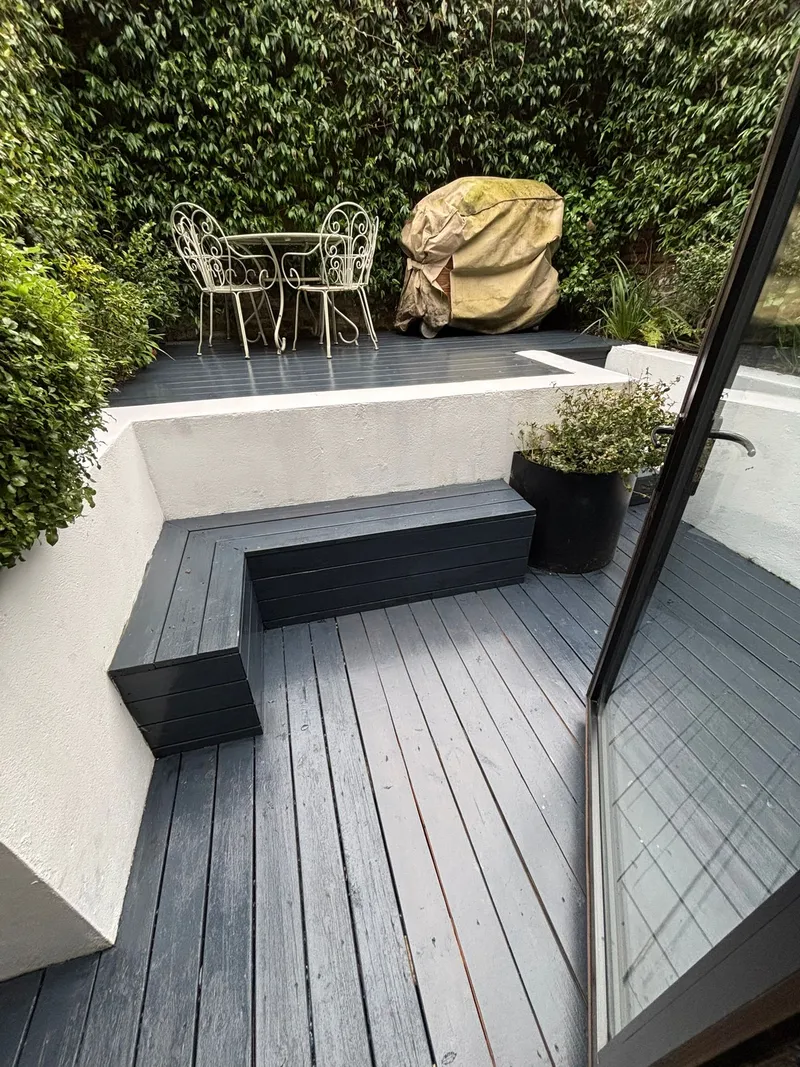
Millboard and Trex are the two composite decking brands we install most, and homeowners ask us which is better more than almost anything else. The honest answer is that they are different products, built differently and fixed differently, and the right one depends on your garden rather than the brand. This comparison sets out the differences using the manufacturers' own published information and independent UK sources, and says plainly where information is missing.
We have left out prices and warranty terms on purpose. Both change, and neither tells you how a deck will feel and perform in a damp, shaded London garden. If you are still weighing composite against timber, our composite vs timber decking comparison covers that decision, and our decking installation overview explains how we build.
Key Takeaways
- Millboard is a wood-free board with a polyurethane (Lastane) surface; Trex is a capped composite with a recycled and reclaimed composite core.
- Millboard publishes slip-resistance test values for Enhanced Grain: 49 to 60 dry and 36 to 42 wet, which sits in the low slip potential band. We could not find published pendulum values for Trex's UK ranges.
- Trex publishes a heat-reduction claim for selected ranges, up to 35 degrees Fahrenheit cooler than its original boards, but says all decking still gets hot in direct sun.
- Neither needs oiling, staining or sealing, and neither should be painted. Both need regular cleaning.
- For shaded, damp or winter-critical gardens, slip data matters most; for sunny, barefoot gardens, colour and heat matter most.
What Each Board Is Made Of
Millboard says its decking contains no natural timber. The boards use a structural core made with recycled minerals, topped with a hand-moulded polyurethane surface layer it calls Lastane, and Millboard states that over a third of the raw materials are recycled. The boards are solid rather than hollow.
Trex describes its decking as a composite made from recycled and reclaimed materials, with an engineered polymer shell protecting the surface against fading, staining, scratching, mould and mildew, which is what installers call a capped board. Trex's UK ranges include Enhance, Select and Transcend, with the Lineage colours sitting in the Transcend collection. Trex's Enhance boards have a profiled, grooved underside rather than a fully solid section.
In plain terms: Millboard is a wood-free board with a polyurethane skin; Trex is a wood-and-plastic style composite with a polymer shell. That difference drives most of what follows, from how the surface feels to how the boards are fixed.
Look, Grain and Colour
Both brands aim to look like timber, and both succeed to different degrees. Millboard's collections include Enhanced Grain, Weathered Oak, Lasta-Grip and Modello, and its boards have a hand-moulded surface with deep, irregular grain that varies from board to board. Trex uses embossed grain patterns, with Transcend and Lineage inspired by exotic hardwoods and Enhance offering monochrome and multi-tonal tones. Both brands offer matching fascia and trim so the edges of a deck match the boards.
Realism is a matter of taste, so judge it with your own eyes. Ask to see full-length samples outdoors in your own garden light, and look at how the colour varies across several boards, because a small sample hides that. Our Greenwich and Richmond pages cover how finishes sit against period brickwork.
Slip Resistance in a Wet London Winter
In the UK, slip resistance is usually measured with the pendulum test in BS 7976-2, which gives a Pendulum Test Value (PTV). A value of 36 or more is generally treated as low slip potential, 25 to 35 as moderate, and 24 or below as high.
Millboard's product specification sheet for Enhanced Grain reports values of 49 to 60 when dry and 36 to 42 when wet, which keeps the board in the low slip potential band even when wet. Millboard also offers Lasta-Grip boards, which add grit strips for more traction. We could not find published pendulum values for Trex's UK ranges; Trex's own guidance says, like most outdoor surfaces, its decking can become slick in rain, ice or snow, and recommends cleaning twice a year to remove the pollen and soil film that supports mould.
The caveat that matters in London: these are laboratory figures on new, clean boards. In a shaded, damp garden, algae and a film of dirt build up on any decking, and that lowers grip whichever brand you choose. Slip performance in practice depends as much on cleaning as on the board. See our decking maintenance and winter care guide.
Heat Underfoot in Summer
Composite holds heat, and dark boards in an unshaded south-facing garden can be uncomfortable barefoot. Trex states that its SunComfortable technology reduces heat build-up by up to 35 degrees Fahrenheit compared with its original boards, on selected colours in its Lineage collection. Trex also says that, like all decking, it will still get hot in direct sun, especially darker colours, and that results vary with conditions.
We could not find a comparable quantified heat claim from Millboard, so we cannot say which brand is cooler underfoot. What we can say is that colour, aspect and shade matter more than brand: a light board in a shaded garden will be comfortable in either, and a dark board in full sun will not. For families with young children, choose a lighter colour and put the colour sample in the sun yourself before committing.
How the Boards Are Fixed
Millboard is top-fixed with Durafix screws driven through the Lastane surface, which closes back over the screw head to hide it. Its installation guidance calls for joists at 400mm centres for normal residential use, 300mm for steps and balconies, a 4mm gap between boards and 2mm at board ends, and colour-matched touch-up coating on cut ends. Trex uses hidden fastener systems made for composite decking, and follows its own installation manuals for joist spacing and gaps; we build to the manufacturer's current specification for each product.
Either way, the boards are only as good as the structure under them. Every deck we build uses a strength-graded timber subframe with ventilation underneath, because most deck failures start below the boards, as our maintenance guide explains.
Cleaning and Care
Neither board needs oiling, staining or sealing, and Trex says the top surface cannot be painted or stained while Millboard says paints and stains will not adhere permanently, which is why a composite deck suits owners who do not want a yearly maintenance job. Both need regular cleaning instead: warm soapy water and a brush, along the line of the boards. Jet washing is allowed within limits, with the nozzle about 300mm from the surface and a fan tip, and Trex states a limit of about 3,100 psi on its high-performance ranges, with Millboard's limit lower at around 2,000 psi, as we cover in our maintenance guide.
Trex also says not to sand its boards, because sanding changes the surface. Millboard describes its surface as non-porous, which makes it less prone to algae and mildew, though shaded boards still need cleaning to keep their grip. If you have timber decking rather than composite, our guide to choosing a decking oil, stain or paint is the one to read.
Sustainability: What Each Brand Actually States
Millboard states that its boards use no natural timber, that over a third of the raw materials in the structural core are recycled, and that it holds ISO 14001 environmental management and ISO 45001 health and safety certification. Trex describes its decking as made from recycled and reclaimed materials, but we could not find a specific recycled-content percentage or third-party environmental certificate for its UK ranges in the sources we used, so we have not repeated any figures. If this matters to you, ask each manufacturer for current data sheets.
Millboard vs Trex at a Glance
| Factor | Millboard | Trex |
|---|---|---|
| Construction | Wood-free mineral core with a polyurethane Lastane surface; solid boards | Recycled and reclaimed composite core with a polymer shell; Enhance has a grooved underside |
| Look | Deep, hand-moulded grain; Enhanced Grain, Weathered Oak, Lasta-Grip, Modello | Embossed grain; Enhance, Select, Transcend and Lineage collections |
| Slip data | Enhanced Grain PTV 49-60 dry, 36-42 wet; Lasta-Grip adds grit strips | No UK pendulum values found; can become slick in rain, ice or snow |
| Heat claim | No quantified claim found | Up to 35°F cooler than original boards on selected colours; still hot in direct sun |
| Fixing | Top-fixed Durafix screws that close over the head; joists at 400mm | Hidden fastener systems; spacing per Trex's installation manual |
| Care | No oiling or painting; regular cleaning; non-porous surface | No oiling, staining, sealing or sanding; clean twice a year |
Which Should You Choose?
There is no universal winner, so here is how we would think it through for a London garden:
- Shaded, damp or north-facing garden, or steps and wet-weather safety: Millboard's published slip data and Lasta-Grip option are a strong reason to start there.
- Sunny, south-facing garden used barefoot: choose a lighter colour in either brand, and look at Trex's heat-reducing colours alongside it.
- You want the deepest, most irregular grain: Millboard's hand-moulded surface is the more textured of the two; compare full-length samples in your own light.
- A hidden-fixing look and a wide choice of collections: both give a clean surface, and Trex's several collections give more ways to match a look.
- A sloping or period garden: the board matters less than the subframe and the planning check. See our guide to planning permission for decking in London.
We install both, and we bring samples to the free survey so you can compare them in your own garden. That is the fairest test of all.
FAQ: Millboard vs Trex
Quick answers to the questions we hear most from London homeowners.
Is Millboard better than Trex?
Neither is better in every garden. Millboard publishes slip-resistance test values and has a deeply textured, wood-free surface. Trex offers several collections and publishes a heat-reduction claim for selected ranges. The right choice depends on shade, sun exposure, the look you want and how the boards are fixed.
Is Millboard slippery when wet?
Millboard's published specification for Enhanced Grain reports pendulum test values of 49 to 60 dry and 36 to 42 wet, which are in the low slip potential band at 36 and above. These are laboratory figures on new, clean boards, so boards still need regular cleaning.
Does composite decking get hot in the sun?
All decking gets hot in direct sun, and darker colours get hotter. Trex states that its SunComfortable technology reduces heat build-up by up to 35 degrees Fahrenheit compared with its original boards, but also says the deck will still get hot in direct sun.
Do Millboard or Trex need oiling or painting?
No. Both are designed to need no oiling, staining or sealing. Trex says the top surface cannot be painted or stained, and Millboard says paints and stains will not adhere permanently. They need regular cleaning instead.
Can you jet wash Millboard or Trex?
Yes, within limits. Keep the nozzle about 300mm from the surface with a fan tip, and stay within each manufacturer's pressure limits. If in doubt, soap, water and a brush clean both without risk.
South East & South West London Decking Specialists
Want to See Millboard and Trex Side by Side?
Billy or Vincent will bring samples to your garden on a free survey so you can compare colour, grain and feel in your own light. No obligation, just an honest recommendation.
See our decking installation overview, browse our full range of garden services, or see all the areas we cover.
About the Authors
Billy Maddox and Vincent O'Connell are the founders of The Tree Amigos Landscaping & Gardening Ltd, the South East and South West London landscaping firm they run together. Every decking installation and consultation is personally overseen by Billy and Vincent, who work hands-on across gardens throughout the capital. The Tree Amigos are rated 9.8/10 on Checkatrade.