Composite Decking vs Wood: What Composite Wood Is and Which to Choose
Written by Billy Maddox & Vincent O'Connell, Founders of The Tree Amigos Landscaping & Gardening Ltd
Published April 2026 · Updated November 2026
DECKING GUIDES | The Tree Amigos
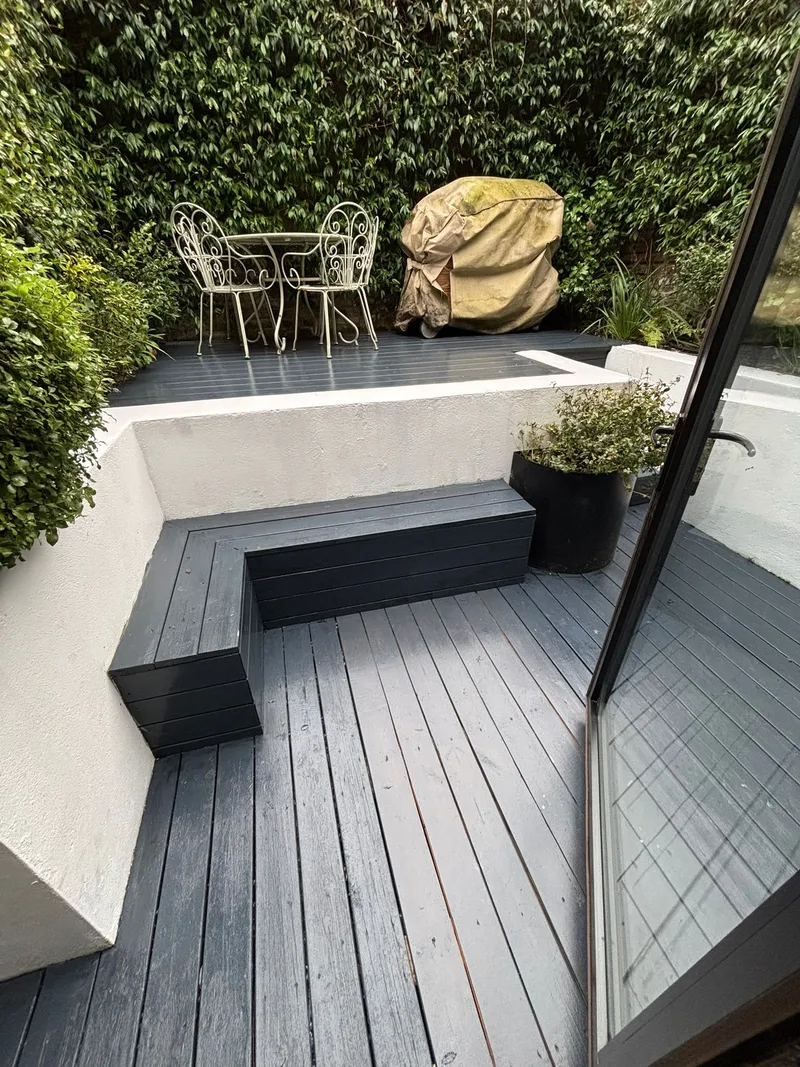
Composite wood, as used for decking, is a manufactured board made from wood fibre or mineral filler bound with plastic or resin, usually with a protective outer cap. There is no single winner against real wood, but there is a clear way to choose. If you want the least upkeep, choose capped composite. If you want real wood, choose a dense hardwood or modified timber. Choose softwood only if you accept washing and oiling it every year or two. Whichever board you pick, what matters most is the frame under it: a premium board on a poor frame fails early.
Key Takeaways
- Composite: lowest upkeep, even look, holds heat in direct sun, and cannot be sanded back to new.
- Hardwood: dense, natural and long-lived, but it needs pre-drilling and a proper frame, and it silvers unless oiled.
- Modified timber (Accoya, Kebony, ThermoWood): real wood that is more stable and rot-resistant than softwood, with less upkeep than most timber.
- Softwood: easiest to fit, most upkeep, shortest life, and slippery when it greens over.
- In every case, the frame and ventilation decide how long the deck lasts.
We install all four types. This is not a sales page for one of them. It is how we would explain the choice to a customer standing in their garden. If you want brand-level detail on composites, read our Millboard vs Trex comparison. If you are choosing timber, our oil, stain or paint guide covers the finish.
What Is Composite Wood?
Composite wood is the everyday name for boards that are manufactured rather than cut from a tree. The phrase covers two quite different things, so it helps to separate them.
- Outdoor composite decking. Boards made from wood fibre and plastic, or from a mineral and resin mix, usually with a tough outer cap that resists stains and fading. Trex is a wood-fibre and plastic board. Millboard is a mineral-resin board. These are what this guide compares with real timber.
- Indoor engineered boards. MDF, plywood, chipboard and similar sheet materials made from wood layers or particles and glue. They are used for furniture and fittings and are not suitable for an outdoor deck.
Two terms come up when you shop for composite decking. Capped boards have a protective outer shell that resists staining and fading, and uncapped boards do not, so capped is the better choice for a garden deck. Boards can also be solid or hollow: solid boards are denser and heavier, and hollow boards are lighter and use a cavity to save material. Composite does not splinter, warp or need yearly oiling the way timber does, but it still needs washing, and it cannot be sanded back if it is badly marked.
The Four Options Side by Side
| Softwood | Hardwood | Modified timber | Capped composite | |
|---|---|---|---|---|
| What it is | Pressure-treated pine or spruce, or premium larch and redwood | Dense species such as Balau, Ipe, Cumaru, Garapa | Softwood changed all the way through by heat, acetylation or a bio-based process: ThermoWood, Accoya, Kebony | A plastic-and-wood-fibre or mineral-resin core wrapped in a protective cap: Millboard, Trex |
| Upkeep | The most: wash and oil or stain every year or two | Oil yearly to keep the colour, or leave to silver | Low: clean it occasionally, oil only if you want to keep the colour | Lowest: soap and water |
| Slip when wet | Poor once algae builds, especially in shade | Moderate: oily species can be slick, grooved boards help | Like natural timber: reeded profiles help | Textured surfaces grip well, but algae still needs washing off |
| In direct sun | Stays cool | Cooler than dark composite | Cooler than dark composite | Holds heat longer, darkest colours most |
| Splinters | Yes, as it weathers | Low, but dense timber can check without pre-drilling | Low | None |
| Repairs | Easy to refinish or replace a board | Can be sanded and re-oiled | Can be sanded and re-oiled | Replace the board, no refinishing |
| Suits | People who enjoy the upkeep and do not mind re-oiling | People who want real, long-lived timber | People who want timber with less work and less rot risk | Families, shaded gardens, anyone who wants it left alone |
Lifespans depend on the exact product and the frame it sits on, so we do not quote one set of numbers for a whole material. A manufacturer warranty is not the same thing as a service life: it is a set of terms, and those terms usually come with conditions about how the deck is built, fixed and ventilated. When you compare boards, read what the warranty covers and what it excludes, and treat a long warranty on a board laid on a weak frame with caution.
Softwood: Easiest to Fit, Most to Maintain
Pressure-treated softwood is the entry-level choice and the easiest for any installer to cut and fix. The trade-off is upkeep. Unsealed boards take on moisture, algae and moss take hold quickly in shaded or damp London gardens, and the surface turns slippery in winter. Expect to wash it and re-oil or re-stain it every year or two to slow splitting and rot. Premium kiln-dried larch and redwood last better than standard treated pine, but the same maintenance applies. Softwood suits a temporary space, or someone who does not mind the annual job.
Hardwood: Real Timber That Lasts
Hardwoods such as Balau, Ipe, Cumaru and Garapa are dense, heavy and naturally durable, with a rich colour and grain that composites imitate but do not match. They are harder to work: every fixing has to be pre-drilled, and the weight calls for a properly built frame. Left alone, they weather to a silver-grey. Oil them each year if you want to hold the original colour. Ask your installer where the timber comes from and whether it is certified, because tropical hardwood supply chains vary.
Modified Timber: Timber With Less Work
Modified timber starts as fast-growing softwood and is changed throughout, not just on the surface. ThermoWood is heat-treated, Accoya is acetylated, and Kebony is treated with a bio-based liquid. The result is real wood that moves less and resists rot better than ordinary softwood, with an occasional clean in place of regular oiling. It still silvers unless you oil it. It is a good fit if you want the feel of wood without the annual job.
Composite: Fit and Forget, With Two Cautions
Capped composite boards, such as Millboard and Trex, have a protective outer layer that resists stains and fading, and need only soap and water. They never splinter, and the colour stays even. There are two things to plan for. First, they hold heat: darker boards get hotter underfoot in direct sun, so choose a lighter tone or add shade for a south-facing garden used barefoot, and a timber pergola over part of the deck is a good way to do that. Second, you cannot sand or refinish them. If a board is badly stained or scratched, it is replaced.
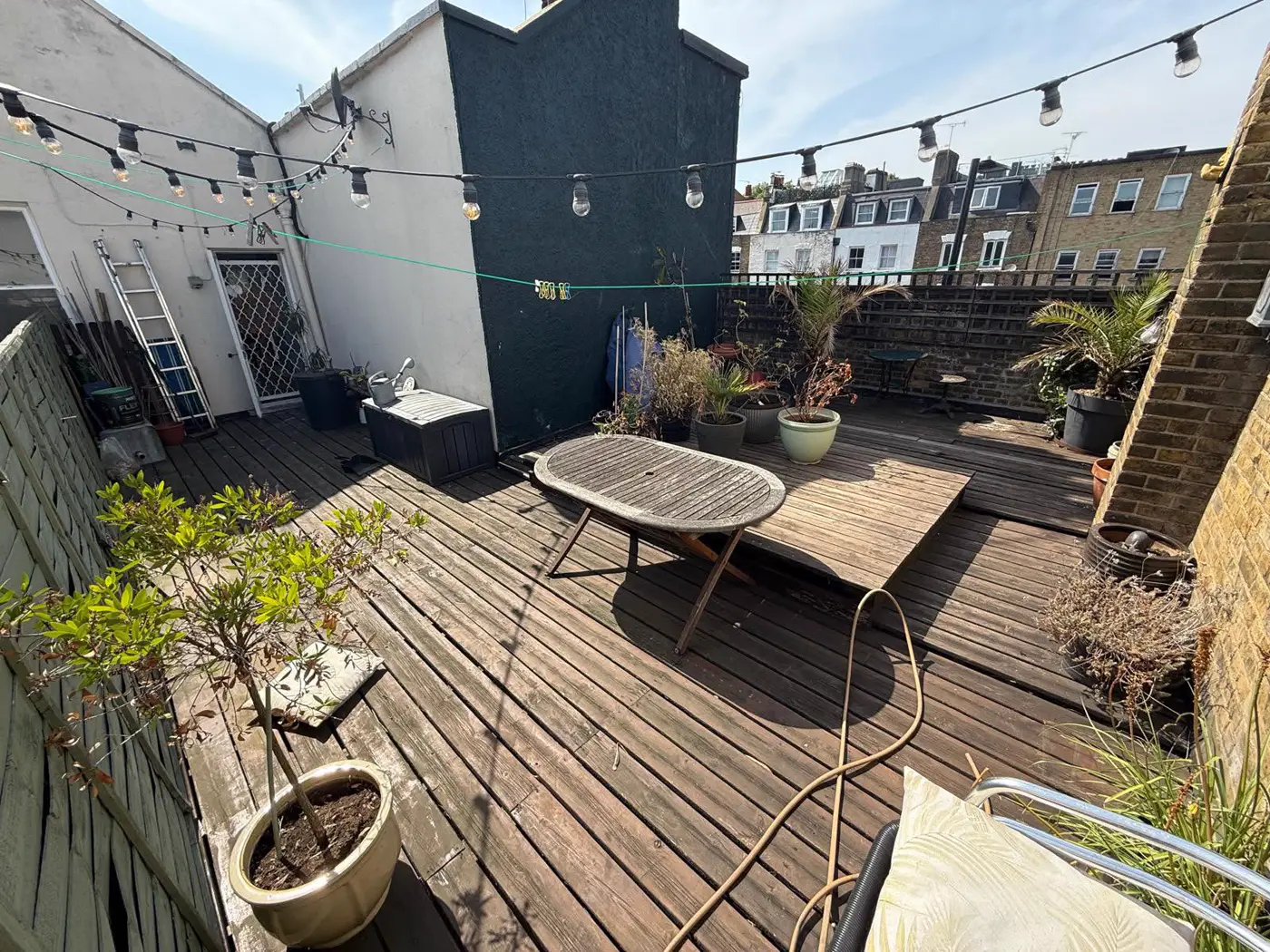
Composite decking in practice: a roof terrace we rebuilt in Islington, replacing an old timber deck.
See the full Islington roof terrace makeover, with before and after photos.
Does Composite Decking Need Less Upkeep Than Wood?
Yes. Capped composite needs only a wash with soap and water. Softwood needs washing and re-oiling every year or two, and may need boards replaced sooner. Hardwood and modified timber last longer than softwood but still silver unless you oil them. Upkeep is the real difference between the materials, so choose the one whose routine you are happy to keep up. Low upkeep is not the same as none: composite still needs a regular wash to remove dirt and algae, particularly in shade, and a deck that is never cleaned can still turn slippery.
At a survey we look at your garden, the levels and the shade, then give you a free itemised written quote for each option you are considering, so you can compare like with like.
Composite vs Hardwood: How Do They Compare?
Both are premium choices, and the real difference is upkeep and feel. Hardwood is real timber with a natural grain and can be sanded and re-oiled, but it needs pre-drilling, a properly built frame and yearly oiling if you want to keep the colour. Capped composite stays the same colour with only soap and water, never splinters, and cannot be sanded back if a board is badly marked. If you like wood and do not mind the annual job, hardwood is hard to beat. If you would rather leave it alone, composite is the easier life.
The Frame Matters More Than the Board
Trade magazine Pro Landscaper reported in June 2026 that many failed decks fail from below: indoor-grade timber, undersized frames, boards laid too tight, and no airflow. The board on top gets blamed, but the structure underneath is usually the problem. That is true for timber and for composite, which is heavier and needs a firm, well-ventilated frame. Before you compare boards, ask each installer how the frame is made, how far apart the joists are, and how the deck is ventilated. Our guide to why decks fail lists what to ask, and our decking hub explains how we build.
Deck or Porcelain Patio?
Sometimes the real choice is not between boards but between a deck and a patio. A deck suits slopes, raised areas and spaces where a warmer, softer surface is wanted. A porcelain patio suits level ground and is the lowest-maintenance hard surface of all. Look at how your garden is laid out, where the water goes, and how high the finished surface will be. A raised deck over 30cm needs planning permission, which we cover in our planning permission guide for decking, and raised areas in general are covered in our guide to raised patio planning permission. If a patio looks like the better fit, see our porcelain patio installation page.
Disadvantages, Recycling and Fire: The Honest Answers
The real disadvantages of capped composite are few, and worth knowing before you buy. It holds heat in direct sun, it cannot be sanded or refinished if a board is badly marked, it still needs washing, and it needs a firm, well-ventilated frame because it is heavier than many old decks were built for. None of that makes it a poor choice, and each point has a fix if you plan for it.
Recycling is less simple than the marketing suggests. Composite boards are made from different mixes of wood fibre, plastic or mineral resin, so what happens to an old board depends on the product and on whether the manufacturer or a local facility will take it. Ask the supplier before you buy. Timber is easier to reuse or recycle in principle, but tropical hardwood raises its own sourcing questions, so ask where it comes from and whether it is certified.
Fire rules rarely matter for a deck at ground level in a house garden, but they can for decking on a balcony or roof terrace of a flat in a taller building, where combustible materials may be restricted. That applies to timber and composite alike, and the product's fire classification matters, not just its material type. Fire guidance sits in Approved Document B. Our guide to decking on a London roof terrace sets out the rule and what to check with building control before you order.
What Affects the Price of a Deck?
We do not quote prices in a guide, because a deck is priced from the garden in front of us. What we can do is explain what moves the price, so you can compare quotes sensibly.
The board. Composite boards generally cost more upfront than softwood. Hardwood and modified timber sit in between, and a premium hardwood can cost more than an entry-level composite. So whether composite is cheaper than wood depends on which timber you compare it with, and over the life of the deck the upkeep you take on matters as well as the purchase price.
The size. A small deck usually costs more for each square metre than a large one, because the set-up and the labour of getting materials to site are spread over less area. If your garden is small, our decking ideas for small and narrow gardens may help.
Access. In a terraced London house, boards and timber often have to be carried through the property, which takes longer than unloading beside the garden.
The ground. Levelling, a sloping plot, a poor base or drainage problems all add groundwork before any boards go down. Our guide to why decks fail explains why the frame and the ground matter so much.
Height, steps and guarding. A raised deck needs a taller frame, and may need steps and a guard. Our decking planning permission guide covers when height changes the rules.
Removing an old deck. Taking out and disposing of an existing deck is extra work, so check whether a quote includes it.
The way to compare quotes is by specification, not the bottom line. Ask for an itemised written quote that names the boards, the frame, the groundwork, any steps or balustrade, and waste removal, and says what is not included. Our free survey is where we look at these things in your garden before we write that quote.
So Which Should You Choose?
A short answer from us as builders. If your garden is shaded or damp, or you want to leave it alone, a capped composite is the sensible choice. If you want real wood and are happy to oil it, a hardwood is hard to beat. If you want wood with less work, look at modified timber. Choose softwood only with open eyes about the upkeep. If you are not sure, we can talk through the options at a site visit, where light, shade and use of the space tend to make the choice clear.
See how we approach decking in your area. In South East London: Woolwich, Plumstead, Greenwich, Blackheath, Lewisham, Eltham, Lee, Belvedere, Erith, Welling, Bexleyheath, Bexley, Sidcup, Dartford. In South West London: Wimbledon, Raynes Park, Kingston, Richmond, Croydon.
Choosing a decking material?
Billy and Vincent will look at your garden, talk through the options and give you a written quote with no obligation.
About the authors
Billy Maddox and Vincent O'Connell are the founders of The Tree Amigos Landscaping & Gardening Ltd, a hard-landscaping firm based in Woolwich, SE18, building patios, decking, fencing, pergolas and sheds across London. More about us.
Related reading:
Frequently Asked Questions
Is composite or timber decking better for a London garden?
Neither wins in every garden. Capped composite suits families who want almost no upkeep, shaded and damp gardens, and anyone who does not want to oil a deck every year. Timber suits people who like real wood, want a deck that ages naturally, or want to repair and refinish it over time. The structure underneath matters more than the board in either case.
Which decking lasts longest in the UK?
Dense hardwoods, modified timber and capped composites can all last for many years when they are laid on a sound, ventilated frame. Manufacturers publish their own warranties, which differ widely by product, so compare the warranty terms for the actual board, not the material type. Softwood generally has the shortest life and needs the most upkeep.
Does composite decking get slippery?
Any decking can get slippery when algae builds up, especially in shade. Composites with a textured or grained surface grip better than smooth ones, but they still need washing. Timber is no different: grooved or reeded boards help, and cleaning matters on both.
Does composite decking get hot in the sun?
Darker composite boards get hotter underfoot than light ones and hold the heat longer than open-grained timber. In an unshaded, south-facing garden used barefoot, choose a lighter colour or add shade, such as a timber pergola.
Can I put new composite boards on my old timber deck frame?
Only if the frame is sound, level and well ventilated. Composite is heavier and needs a firmer, closer frame than many old decks have. A frame that is soft, damp or undersized should be replaced rather than covered. Our guide to why decks fail explains what to check.
Is modified timber like Accoya or Kebony worth considering?
It is worth a look if you want real wood with better stability and decay resistance than ordinary softwood and less upkeep than most timber. It is still timber, so it silvers over time unless you oil it.
Is composite or a porcelain patio better for my garden?
A deck suits raised areas, slopes, and spaces where you want a warm, softer surface. A porcelain patio suits level ground and gives the lowest-maintenance hard surface. They also behave differently around house walls, drainage and levels, so choose by how the garden is laid out, not just the material.
Does composite decking need less upkeep than wood?
Yes. Capped composite needs only a wash with soap and water, while softwood needs washing and re-oiling every year or two to slow splitting and rot. Hardwood and modified timber sit in between: they last longer than softwood but still silver unless you oil them. Which suits you depends on how much upkeep you want to take on.
Is composite or hardwood decking better?
Neither is better in every garden. Hardwood is real timber that can be sanded and re-oiled, but it needs pre-drilling, a sound frame and yearly oiling to keep its colour. Capped composite keeps an even colour with only soap and water and never splinters, but it holds more heat in direct sun and cannot be sanded back.
What are the disadvantages of composite decking?
It holds heat in direct sun, especially in darker colours; it cannot be sanded or refinished if a board is badly marked; it still needs washing to remove dirt and algae; and it needs a firm, well-ventilated frame. Choose a lighter colour or add shade for a sunny garden, and have the frame built properly for the extra weight.
Is composite decking maintenance-free?
No. It needs no oiling or staining, but it still needs a regular wash with soap and water to remove dirt and algae, particularly in shaded, damp gardens, where an uncleaned deck can turn slippery.
Is composite decking recyclable?
It depends on the product. Composite boards combine wood fibre with plastic or mineral resin in different mixes, so ask the supplier whether the manufacturer or a local facility takes old boards back before you buy.
What is composite wood made from?
For outdoor decking, composite wood is made from wood fibre or mineral filler bound with plastic or resin, usually with a protective outer cap. Trex is made from wood fibre and plastic, and Millboard is a mineral-resin board. Indoor composite wood such as MDF and plywood is made from wood layers or particles and glue and is not used for decks.
Is composite wood real wood or plastic?
It is a mix. Some composite decking contains wood fibre bound with plastic, and some is a mineral and resin mix with no wood at all. Either way it is a manufactured board rather than solid timber, so it does not have the grain of real wood, and it does not splinter or need yearly oiling.
What is the difference between capped and uncapped composite decking?
A capped board has a protective outer shell that resists stains, fading and moisture. An uncapped board does not, so it can mark and weather more. For a garden deck, capped composite is the better choice.
Is composite decking cheaper than wood?
Not usually upfront when you compare it with softwood, because composite boards generally cost more to buy. A premium hardwood can cost more than an entry-level composite, so the answer depends on which timber you compare. Over the years, composite needs less upkeep, so the two are closer than the purchase price suggests. Compare itemised quotes for the same size and specification.
What affects the price of a deck?
The boards you choose, the size of the deck, access to the garden, groundwork and levelling, how high the deck sits and whether it needs steps or a guard, and whether an old deck has to be removed. A small deck often costs more per square metre than a large one. An itemised written quote shows which of these are included.
Landscapers in South East London and beyond
Our landscaping service covers these areas: Woolwich, Plumstead, Charlton, Blackheath, Eltham, Lee, Thamesmead, Sidcup, Welling, Bexleyheath, Dartford. We also work across London, including Greenwich, Lewisham, Bexley, Southwark, Bromley, Wandsworth, Croydon, Merton.