Using a Pergola in Winter in London: Lighting, Heating and Shelter
Written by Billy Maddox & Vincent O'Connell, Founders of The Tree Amigos Landscaping & Gardening Ltd
Published November 2026
PERGOLA GUIDES | The Tree Amigos
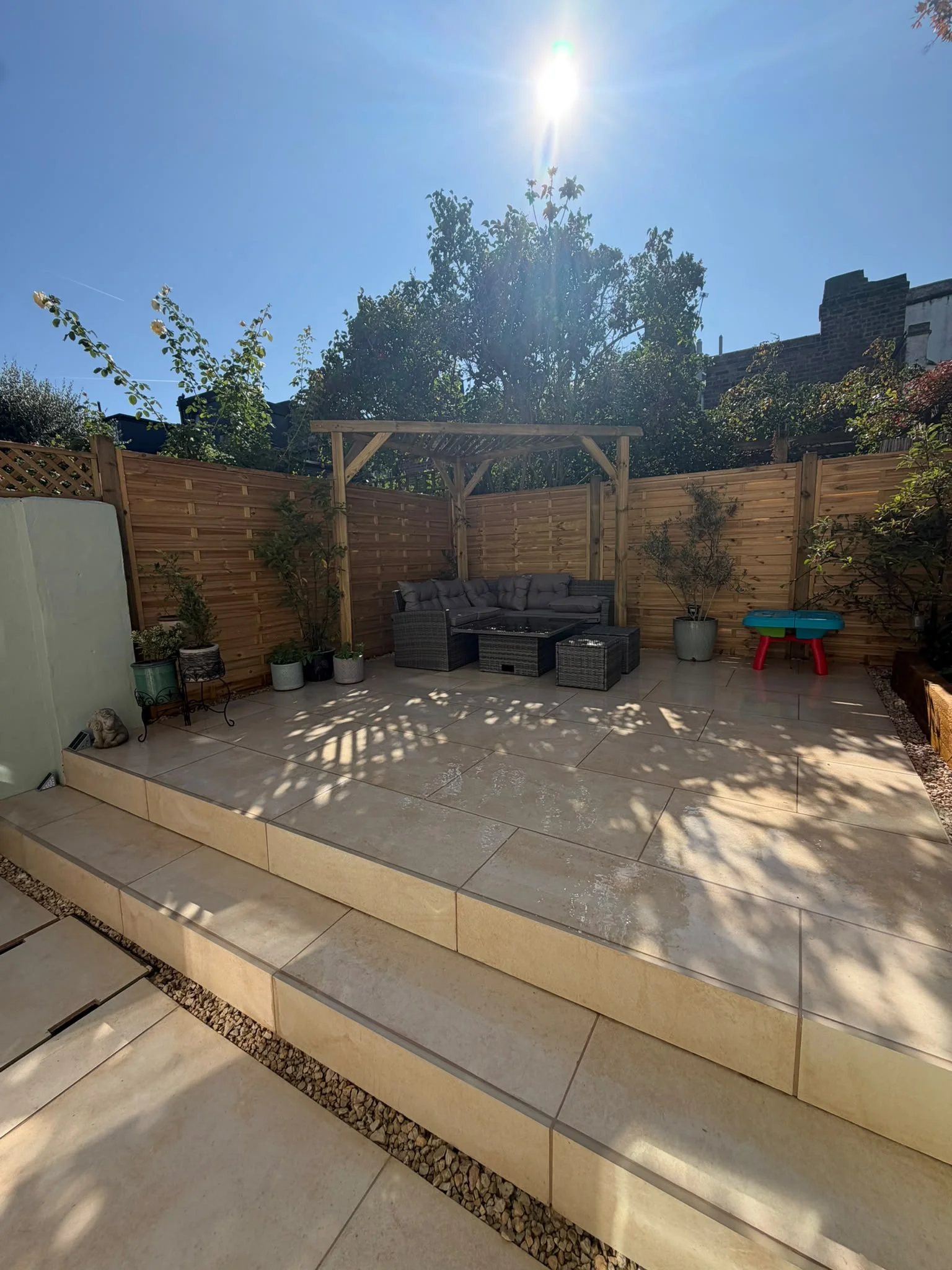
A timber pergola can be used through a London winter, but lighting, heaters and screens each change how safe and how strong the structure is. An open pergola gives you a defined spot and something to fix lighting to. It does not keep off rain, wind or cold. The things people add to fix that are the things that need checking first: electrics, heat near timber, and anything that catches the wind or holds snow.
Key Takeaways
- Plug-in and solar lights need no electrician. New fixed wiring from the house does, because garden electrics fall under Part P of the Building Regulations.
- Heater clearances to timber are set by each manufacturer, not by a single rule. Read the manual before fixing anything overhead.
- Gas heaters must never be used in enclosed or poorly ventilated spaces. Adding screens can turn an open pergola into one.
- Solid screens, blinds and roofs load the posts and footings far more than an open frame. Ask the builder before adding them.
- In wet weather, keep leaves, standing water and moss off the timber. A fixed winter oiling schedule is not the answer.
This guide covers using a pergola you already have, or are planning. For choosing the style and position in the first place, see our pergola guide for London gardens. For the timber itself, see cedar or larch for a pergola. One note on scope: we build pergolas. We do not install electrics, gas appliances or heaters, so on those topics this guide tells you what to check and who to hire.
Lighting a Pergola Safely
There are three routes, and they are very different jobs. Solar lights need no wiring, but how much light they give in December depends on daylight and battery, so do not expect summer performance. Plug-in outdoor lights run from an outdoor-rated socket. Fixed lighting is wired into the house supply and is the one that needs a professional.
IP ratings. The IP rating on the packaging tells you how well a fitting resists dust and water. The second digit is the water one. NICEIC gives IP44 or higher as a good rule of thumb for garden equipment, and says IP44 is the minimum you will want. A higher second digit suits anything exposed to driving rain, and the manufacturer's instructions still decide where a fitting can go.
Low-voltage lighting. The HSE says that for particularly harsh conditions it is worth choosing lower-voltage equipment run from a transformer or battery. It reduces risk, but the transformer still plugs into mains, so the supply side needs to be right.
Part P and RCDs. The Building Regulations Approved Document P (2013 edition) lists fixed lighting in gardens, and sheds that share their electricity with a house, as within the scope of Part P. Work like a new circuit to the garden is notifiable, so it should be done by an electrician registered with a competent person scheme, who can certify it, or notified to building control. Check the GOV.UK page for the current edition. The HSE recommends 30 mA RCD protection for equipment used outdoors, and an RCD is a back-up to safe wiring, not a replacement for it. Cable type, burial depth and where it enters the structure are decisions for the electrician, not something to copy from a forum.
If you want fixed lighting, tell your electrician where the posts and beams are before the pergola is built or before they quote. Cable routes are far easier to plan around a structure than to retrofit. See also our small-garden pergola guide for seating and lighting layout.
Heaters Under or Near Timber
This is where a pergola is least like an open patio. A heater that is fine on its own stand in open air can be a fire risk fixed under a timber beam.
Electric infrared heaters produce no combustion gases and are often built for wall or ceiling mounting. The safe distance to rafters, beams, blinds and furniture is not a universal number. It is set by the manufacturer for each model, along with whether the heater is approved for covered outdoor use and which way up it can be fixed. Neither the HSE nor the fire services publish one figure for all heaters, so use the one in the manual, and do not fix a heater to a rafter until you have read it.
Gas patio heaters carry a different risk. They burn fuel and release carbon monoxide, which you cannot see or smell. The HSE's gas safety guidance is clear that outdoor heaters are not designed for use indoors, and that gas appliances need adequate ventilation. A pergola with open sides is one thing. One with a roof and closed screens on several sides starts to behave like an enclosed space. A carbon monoxide alarm is a back-up, not permission to use a gas heater somewhere the manufacturer says not to.
Any gas work, such as connecting a heater to a fixed supply, should be done by a registered engineer. You can check one on the Gas Safe Register. For fixed electric heaters, the same electrician rules apply as for lighting.
Side Screens, Blinds and Covers: Check the Wind First
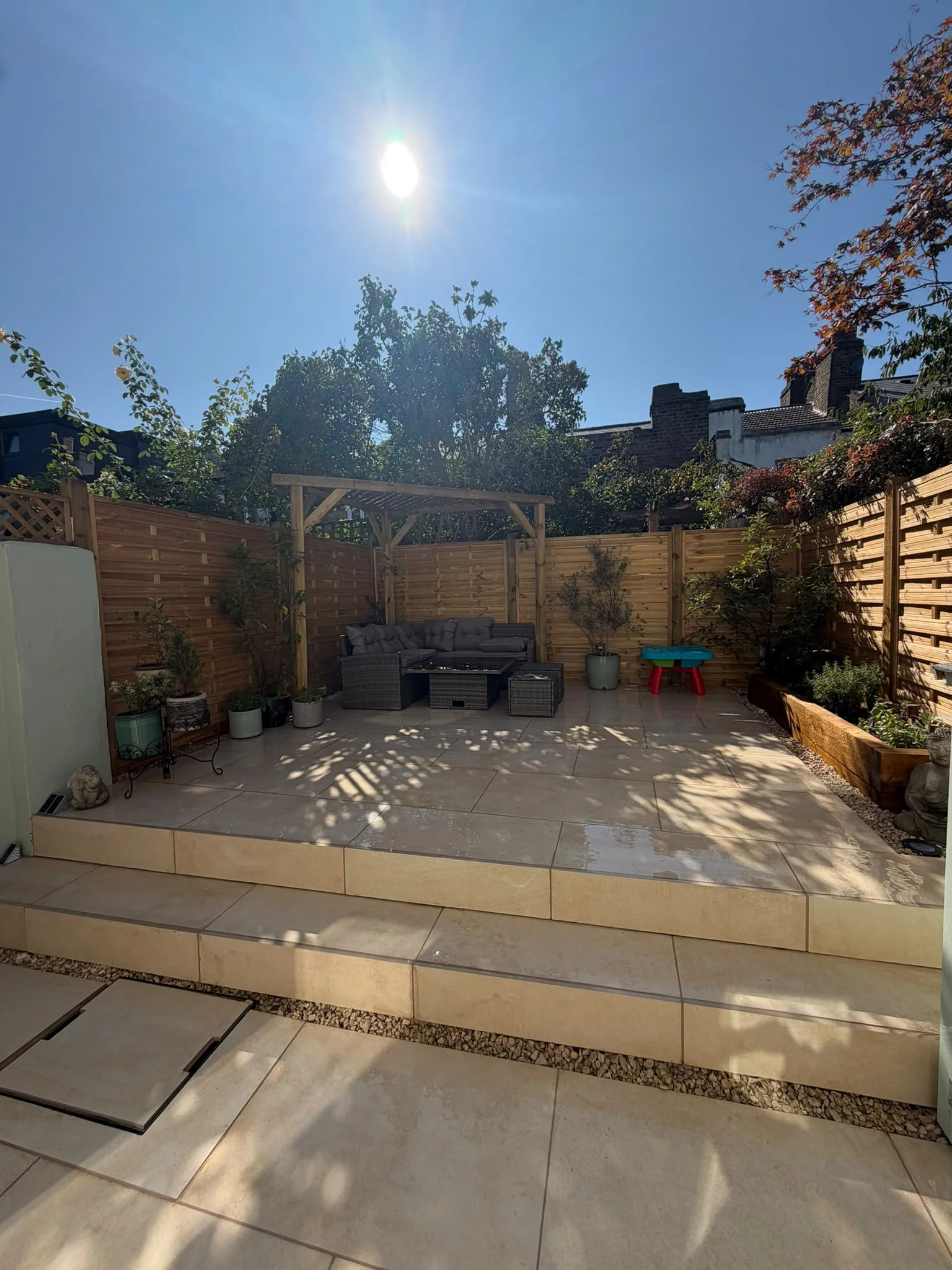
An open pergola lets wind pass through. Fix a solid panel, a closed blind or a clear cover to it and the wind pushes on that surface instead. The force goes into the posts, the connections and the footings, and these were sized for the structure as built, not for whatever gets added later.
Slatted timber screens are a middle route, because the gaps let some wind through. Retractable blinds, louvres and clear covers depend on the maker's wind limits and fixing instructions. Engineers assess wind on attached screens using the Eurocode wind standards, which is a design job. For a garden pergola the practical step is simpler: ask whoever built it whether it can take what you want to add, before you buy it.
Planning. The Planning Portal's outbuilding rules apply to garden structures like pergolas, and they exclude verandas, balconies and raised platforms. A pergola with a solid roof and solid sides starts to look like a building rather than a frame, and how a council sees that can vary. If you are adding a roof or enclosing the sides, check with your local planning authority first. Our guide to pergola planning permission covers the height and boundary limits.
Rain and Snow on a Covered Pergola
London does not get much lying snow, and the Met Office puts the UK average at about 13 days of lying snow a year (1991 to 2020), with Scotland seeing the most. But a solid or polycarbonate roof holds whatever lands on it, and wet snow is heavy. An open rafter frame sheds it, a covered one does not. Design snow and wind values are set by the UK National Annex to the Eurocodes, and Met Office averages are not the same thing as structural design figures, so no blog can give you a safe snow depth for your pergola.
What you can do is keep the roof clear of build-up, make sure water runs off rather than pooling, and avoid piling extra weight, such as heavy planters or wet climbers, onto the beams without asking. Our pergola guide covers the open-rafter versus covered choice.
Looking After Cedar and Larch Through the Wet
Both timbers we build with, Western Red Cedar and Siberian Larch, are naturally durable, but any outdoor timber lasts longest when it can dry out. TRADA notes that timber will not rot if it stays below a moisture content of 20%, but that this may not be achievable outdoors, which is why a durable species or preservative is used. It also means drainage and detailing matter as much as the finish.
- Clear leaves and debris from post bases, beam tops and joints, where they hold moisture against the timber.
- Look for standing water on horizontal surfaces and around footings, and fix the cause if you find it.
- Check fixings for movement, rust marks or splits near bolts after storms.
- Remove moss and algae gently with a stiff brush and a mild cleaner. Avoid aggressive pressure-washing, which roughens the surface and drives water in.
- Do not paint or seal over mould or soft patches. Find out why that area is staying wet.
- Treat oiling as a dry-weather job and follow the product's instructions, rather than a winter routine. We cover the choice in cedar vs larch.
Lighting and Heating Options: What Each One Needs
This pulls the sections above into one place. The "who fits it" column is about what the rules and the manufacturer's instructions point to. It is not a service we offer.
| Option | What it needs | Who fits it | Watch out for |
|---|---|---|---|
| Solar lights | No wiring, a spot that gets daylight | You | Winter output depends on daylight and battery. |
| Plug-in outdoor lights | An outdoor-rated socket with RCD protection, and lights rated IP44 or higher | You, if a suitable socket already exists | Use equipment made for outdoor use, and follow its instructions. |
| Low-voltage lighting | A transformer on a mains supply | You for plug-in, a registered electrician for a new fixed supply | Lower voltage cuts risk, but the supply to the transformer is still mains. |
| Fixed mains lighting | A new or extended circuit, RCD protection, outdoor-rated cable | A registered electrician, under Part P | Plan the cable route before the pergola is built. |
| Electric infrared heater | A power supply, and the manufacturer's minimum distance to timber | A registered electrician if it is fixed in place | Clearances differ by model. Check it is approved for covered outdoor use. |
| Gas patio heater | A gas cylinder or supply, and good ventilation | A Gas Safe registered engineer for any fixed gas work | Never in an enclosed or poorly ventilated space. Carbon monoxide risk. |
A Winter Checklist Before You Add Anything
- Is the lighting plug-in or solar, or does it need new fixed wiring from the house? If fixed, book a registered electrician.
- Does the heater's manual say it can be used under a timber structure, and at what distance?
- Would adding screens or a cover leave the space enclosed? If so, no gas heater.
- Has the builder confirmed the structure can take the screens, blinds or roof?
- Have you checked planning if the roof or sides will be solid?
- Are posts, beams and footings clear of leaves and standing water?
Planning a pergola that will work year-round?
Tell Billy and Vincent how you want to use it. They can design the frame and the screens with that in mind and talk through where lighting and heating will need a specialist.
Related reading:
Frequently Asked Questions
Can you use a pergola in winter?
Yes. An open timber pergola gives a defined seating area, a place to hang lighting and a frame for screens, but it does not keep out rain or cold on its own. Most winter use comes from adding lighting, a suitable heater and some shelter, and each of those needs checking first.
Can I put a patio heater under a timber pergola?
Only if the heater's manufacturer says it can be used there. Each heater has its own minimum distances to timber and overhead structures, and gas heaters must never be used in enclosed or poorly ventilated spaces because of carbon monoxide. Read the installation manual and use a Gas Safe registered engineer for any gas work.
Do I need an electrician for pergola lighting?
For plug-in and solar lights, no. For any new fixed wiring from the house, such as a new circuit to the garden, yes. Electrical work in a garden supplied from the house falls under Part P of the Building Regulations, and a registered electrician can certify it.
Will side screens or blinds damage my pergola in the wind?
They can. A solid screen or closed blind catches far more wind than an open frame, which loads the posts, fixings and footings. Ask whoever built the pergola whether it can take screens before you add them.
Should I oil my cedar or larch pergola in winter?
Not as a routine winter job. Oil needs dry timber to go on well, so do it in a dry spell and follow the product's instructions. Over winter the priority is keeping the timber clear of leaves, standing water and moss.
Landscapers in South East London and beyond
Pergolas and garden structures are part of our landscaping work in these areas: Woolwich, Plumstead, Charlton, Blackheath, Eltham, Lee, Thamesmead, Sidcup, Welling, Bexleyheath, Dartford. We also work across London, including Greenwich, Lewisham, Bexley, Southwark, Bromley, Wandsworth, Croydon, Merton.