Cedar or Larch for a Pergola? A Timber Guide for London Gardens
Written by Billy Maddox & Vincent O'Connell, Founders of The Tree Amigos Landscaping & Gardening Ltd
Published October 2026
PERGOLA GUIDES | The Tree Amigos
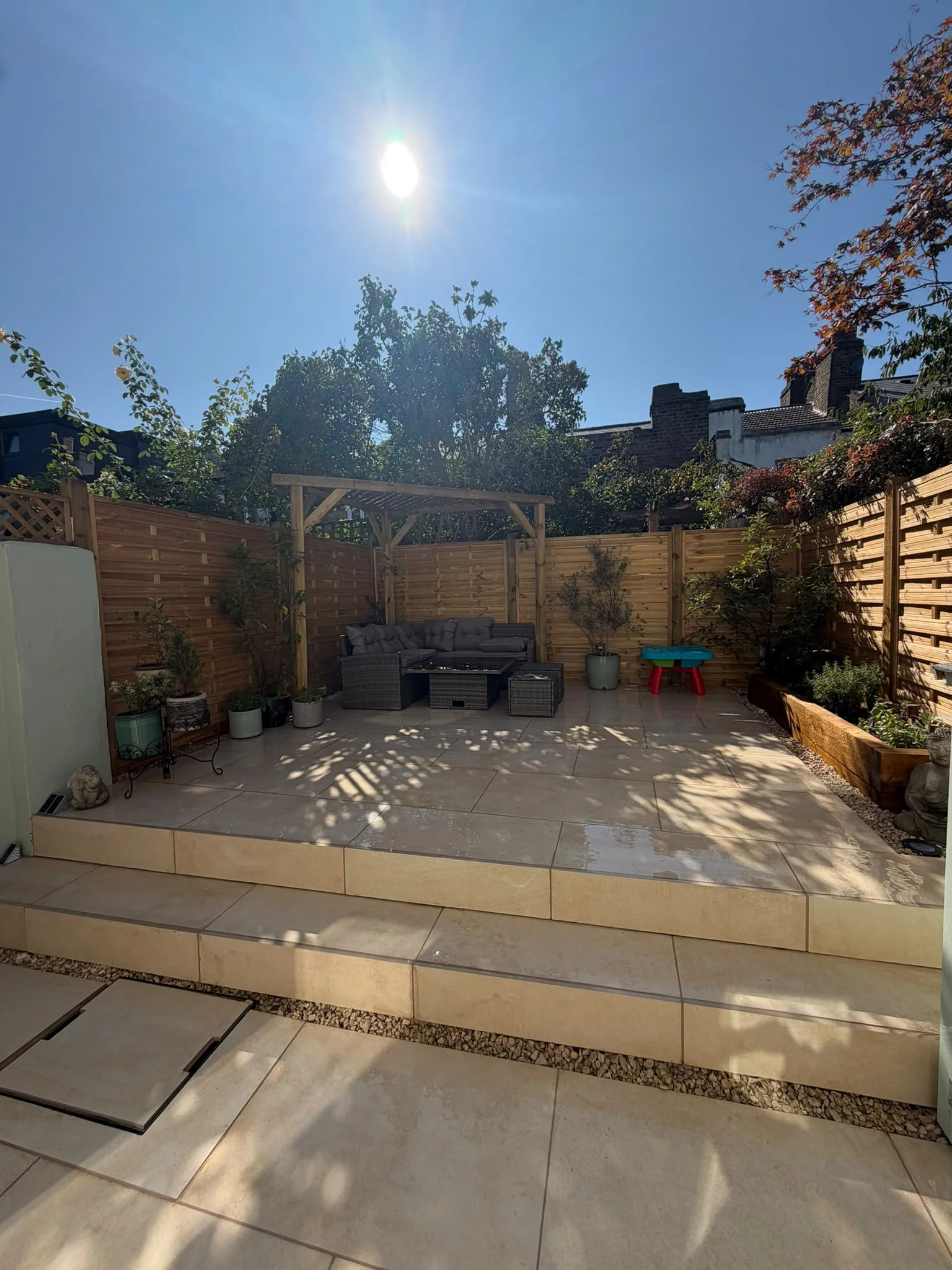
Choose Western Red Cedar for a lighter, traditional look and slatted screens; choose larch for a heavier frame or a longer span. Both are good timbers for a London pergola, both are used above ground, and both weather to silver-grey unless you oil them. The choice is mostly about look, weight and span. How the pergola is designed, fixed and drained matters as much as the species.
Key Takeaways
- Cedar: lighter, stable, easy to work, warm reddish-brown. Suits traditional gardens and slatted screens.
- Larch: denser and harder wearing, golden-brown. Suits robust frames and bigger spans.
- Both silver to grey if left unoiled. Oil holds the colour but is not needed for strength.
- Keep timber out of the ground: use footings and metal post bases.
- Use stainless or suitably coated fixings, especially with cedar.
We build bespoke timber pergolas in both, which is why this page does not push one. See our pergola installation page for the service itself and our planning permission guide for pergolas for the rules.
Cedar and Larch Side by Side
| Western Red Cedar | Larch | |
|---|---|---|
| Colour | Warm reddish-brown | Golden-brown to orange |
| Weight and feel | Light, soft, easy to work | Denser, harder, heavier |
| Strength for spans | Needs generous sections for larger spans | Better suited to robust frames and longer spans |
| Weathering | Silvers to grey if left unoiled | Silvers to grey if left unoiled |
| Knots and resin | Fewer resin pockets | More knots and resin pockets are common |
| Fixings | Natural acids can corrode ordinary steel: use stainless | Use stainless or coated fixings |
| Often chosen for | Slatted screens, traditional and period gardens | Larger frames, bolder structures |
Western Red Cedar
Cedar is a light, stable softwood that is easy to cut, shape and fix. It has a warm colour and a clean grain, which is why it is so often chosen for slatted side screens, louvred tops and traditional garden structures. Because it is a softer timber, it dents more easily and needs sensible section sizes for the span. It also contains natural acids that attack ordinary steel fixings, so stainless steel or suitably coated fixings are the right choice.
Larch
Larch is a denser, harder-wearing softwood with a golden-brown tone. That extra density makes it a good fit for robust frames and larger spans, and it stands up to knocks better than cedar. It tends to have more knots and resin pockets, which some people like as character and others find busy. Larch is sold from several origins, including Siberian, and quality varies by origin and grade, so ask for the species, the grade and the section sizes in writing.
How Durable Are They?
You will see different figures depending on who you read. The Low Impact durability guide for example, lists cedar in durability classes 2 to 3 depending on origin, and Siberian larch as class 3, with some sources placing it higher. Treat these as rough guides, not promises. What most sources agree on is that both are suitable above ground and that neither should be buried. A pergola is above ground by design, so the practical points are the ones that decide its life: footings and post bases that keep the timber dry at the bottom, joints that shed water rather than hold it, and fixings that do not corrode.
Oil, or Leave It to Silver?
Both timbers turn silver-grey in sunlight if you do nothing. That is a change in colour, not in strength. If you want to hold the original colour, a breathable exterior oil applied periodically does that; the frequency depends on the product and how exposed the pergola is. A pergola in a shaded or damp spot may also grow algae, which a gentle wash will remove. Both finishes are legitimate, so choose the look you prefer.
What Matters More Than the Timber
- Footings and post bases. Posts should be fixed to proper footings with metal bases so the timber does not stand in wet ground.
- Fixings. Stainless steel or suitably coated, especially with cedar.
- Section sizes. Heavier timbers for longer spans, whichever species you pick.
- Water shedding. Cut tops and angled joints so water runs off, not into, the timber.
- Position. Attached to the house or freestanding changes the fixings, the footings and the planning rules.
Which Should You Choose?
If you want a lighter, traditional look, perhaps with slatted screens for privacy, cedar is a natural fit. If you want a heavier, bolder frame or a wider span, larch is worth considering. If you are unsure, the answer usually comes from the garden itself: the house, the sunlight and how you want to use the space. We can talk through both at a site visit. See how we approach pergolas near you in Greenwich, Woolwich, Wimbledon and South West London.
Planning a pergola?
Billy and Vincent will visit, talk through cedar and larch in your own garden light and give you a written quote with no obligation.
Related reading:
Frequently Asked Questions
Is cedar or larch better for a pergola?
Neither is better in every case. Western Red Cedar is lighter, stable and easy to work, and suits traditional gardens, slatted screens and lighter frames. Larch is denser and harder wearing, so it suits robust frames and larger spans. Both are used above ground, and both silver to grey if left unoiled.
Does cedar or larch last longer outdoors?
Published durability ratings vary by source and by where the timber was grown, and both are commonly classed as moderately durable above ground. Neither should sit in the ground untreated. How long a pergola lasts depends at least as much on the design, the fixings and how water drains off it as on the species.
Do cedar and larch pergolas need treating?
Neither needs a preservative to survive, but a breathable oil will hold the colour. If you leave it untreated, it weathers to a silver-grey, which is a cosmetic change rather than a structural one.
What fixings should be used with cedar?
Cedar contains natural acids that can corrode ordinary steel and stain the timber, so use stainless steel or suitably coated fixings. It is worth asking any installer what they use.
Do I need planning permission for a timber pergola?
Often not, but it depends on the height, the position, whether it is attached to the house and where you live. The Planning Portal does not mention pergolas by name, so councils treat them like outbuildings. Our pergola planning guide covers the rules.
Can a pergola sit directly in the ground?
It is better not to. Timber in direct ground contact is the most likely to rot. A common approach is to fix posts to concrete footings with metal post bases, so the timber stays above the ground.
Landscapers in South East London and beyond
Pergolas and garden structures are part of our landscaping work in these areas: Woolwich, Plumstead, Charlton, Blackheath, Eltham, Lee, Thamesmead, Sidcup, Welling, Bexleyheath, Dartford. We also work across London, including Greenwich, Lewisham, Bexley, Southwark, Bromley, Wandsworth, Croydon, Merton.