Pergolas for Small London Gardens: Privacy Without Losing Space
Written by Billy Maddox & Vincent O'Connell, Founders of The Tree Amigos Landscaping & Gardening Ltd
Published October 2026
PERGOLA GUIDES | The Tree Amigos
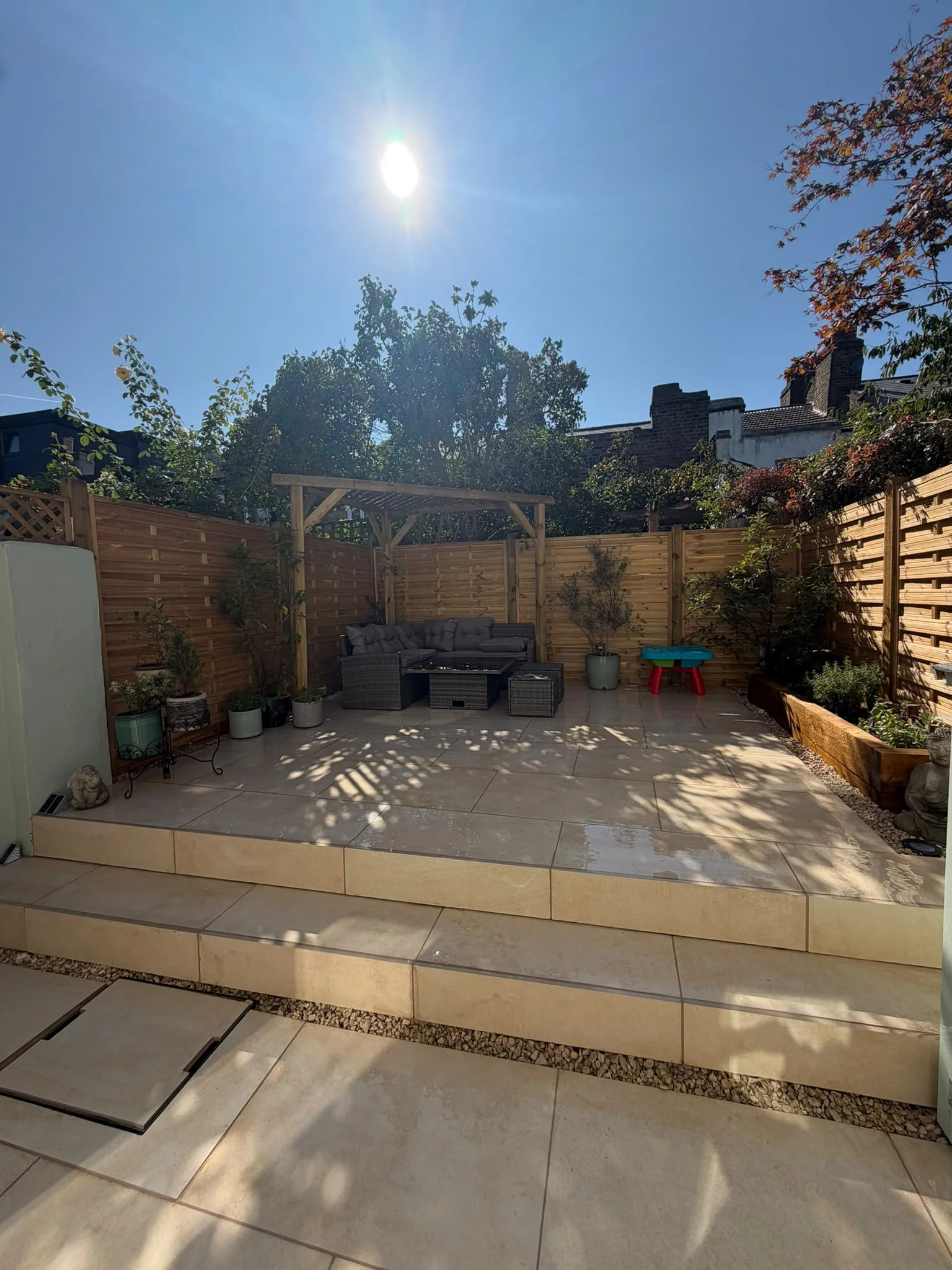
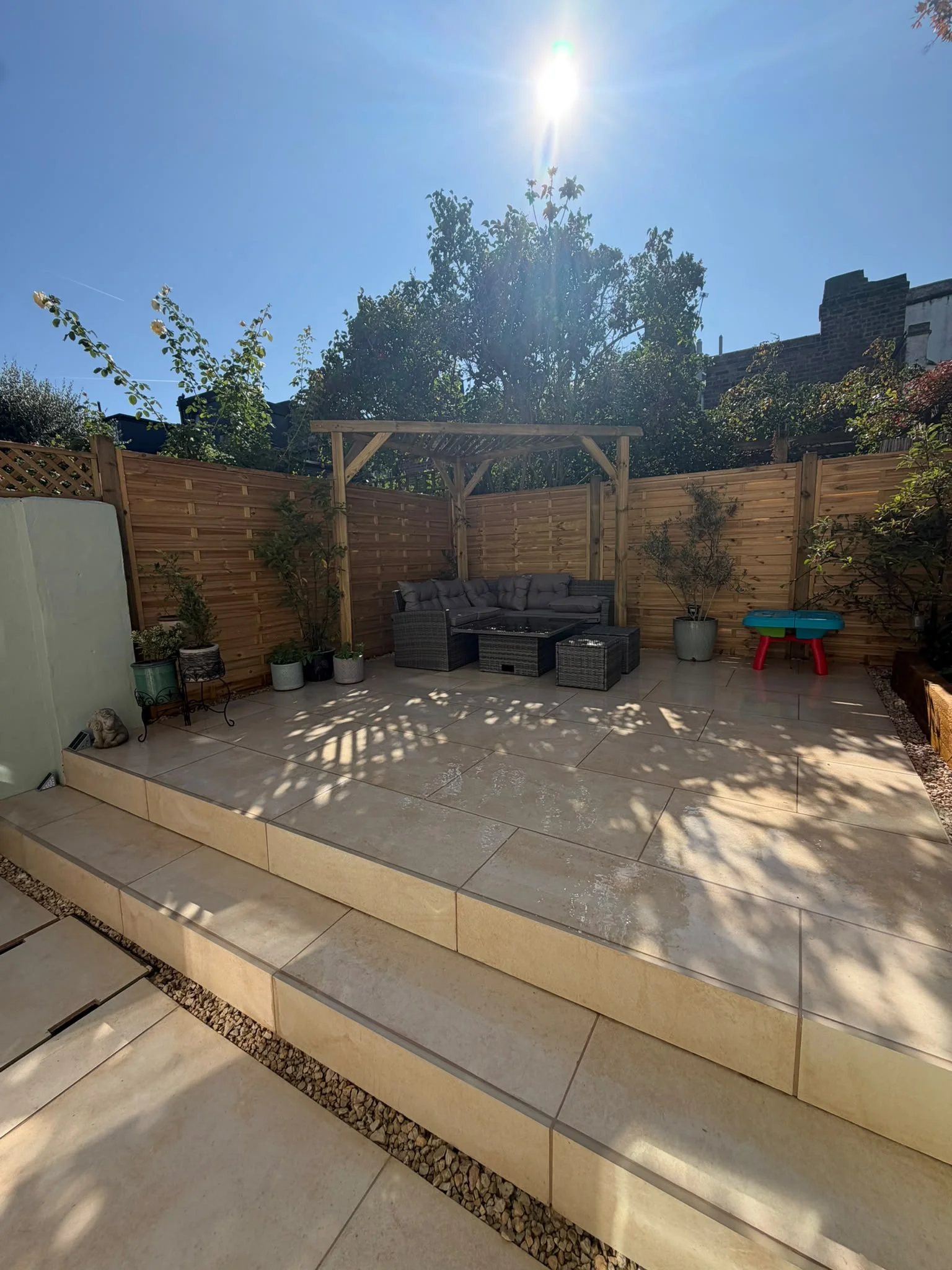
The pergola above is from our Greenwich garden transformation, with before and after photos.
In a small garden, a pergola should make one room, not cover the whole space. A frame sized to a single table or pair of chairs gives you shade and a sense of enclosure without using up the garden. For privacy, the useful question is not how high to build a screen, but where it sits between the overlooking window and the person sitting down.
Key Takeaways
- Size the pergola to one use, with room to pull chairs out and walk past, and mark it out on the ground first.
- Privacy is a sightline problem: find the window, the seat and the line between them, and put the screen on that line, close to the seat.
- Keep the top light with open rafters or widely spaced slats, and screen only the overlooked side.
- Give the pergola its own posts and footings. Do not hang it from a fence that may not be yours.
- Check the height limit: structures within 2 metres of a boundary are limited to 2.5 metres under the Planning Portal's outbuilding rules.
Make It One Room, Not the Whole Garden
The most common mistake in a small garden is a pergola that spans the full width. It leaves no way round, shades the whole space and makes the garden feel like a corridor. A better approach is to decide what the pergola is for and build only that.
A dining pergola needs the table and the chairs pulled out from it. A seating pergola needs less. Add room to walk past without squeezing between a chair and a post. Before you commit, mark the footprint on the ground with tape or string and live with it for a few days. Check where the sun falls, whether the door still opens freely and whether you can still reach the rest of the garden.
Privacy Is a Sightline Problem
An overlooked garden is rarely overlooked from everywhere. It is usually one or two windows, and the view only matters where you sit. That makes privacy a matter of lines, and it is easier to solve than it first looks.
- Find the windows. Sit where you would sit and note which windows look down at you. Ignore the ones you cannot see from the seat.
- Draw the line. A screen only blocks a view if it sits on the line between the window and your seat.
- Move it towards you. The closer a screen is to the seat, the less height it needs to block a window above it. A side screen close to the chair can do the work of a much taller fence at the boundary.
- Use the roof for windows above. Slats or rafters overhead, set at the right spacing, cut down the view from upstairs windows while leaving gaps for light.
This is a design principle, not a guarantee, and every garden is different. At the free survey we check the windows and sightlines on site, so we are not guessing from a plan. If your garden is overlooked, our garden privacy ideas cover other ways to screen it.
Keep It Light: Open Tops and Slatted Sides
A solid pergola on a small plot can feel heavy. Open rafters keep the sky visible and carry climbers if you want them later. Slatted side screens give privacy while letting air and light through, so the pergola reads as an open structure rather than a box.
A good rule is to screen only the overlooked side, or two sides in a corner, and leave the others open. A solid wall on every side turns a pergola into a shed. Slats spaced so that they block the angle you care about, rather than closed up completely, keep the structure open to the garden.
Where to Put It in a Small Garden
In a narrow garden, an attached pergola uses the house wall for one side of its support, so it needs fewer posts and runs straight out from the back door. A freestanding pergola in a corner creates a separate sitting area and keeps the area next to the house clear. A corner pergola uses two fences as its backdrop, with screens on those two sides.
Whichever you choose, keep a clear route past it, line it up with a door or path so it feels connected to the house, and keep posts away from French doors. Our pergola guide for London gardens compares attached, freestanding and corner pergolas in more detail.
Its Own Posts, Not the Fence's
In a small garden the temptation is to hang the pergola from the fence to save space. We would not. Fence posts are built to hold up panels, not the weight and wind load of a roof, and the fence may belong to a neighbour or be shared. A thin paving slab is not a footing either. A pergola needs its own posts on proper footings with metal post bases, so it stands independently of the boundary.
Standing on its own posts also means the pergola can sit a short distance from the boundary, which leaves room for planting and for the fence to be repaired later.
Climbers for a Small Shady Garden
Climbers soften a pergola and add privacy over time, but they also add weight and wind load, so plan the structure for them from the start. The RHS list of award-winning plants for shady north walls includes climbing hydrangea, which clings to walls, fences and tree trunks using tiny roots. That is worth knowing before you plant one: a self-clinging climber attaches itself to whatever it grows on, so decide whether you want it on the timber or on a separate support.
Small gardens suit one or two climbers rather than a mix. Choose them for the aspect and exposure of your own garden, because shade, wind and soil all change what thrives.
Seating, Doors and Lighting
Plan the furniture first and the frame second. Leave space to pull a chair out, keep the door clear, and think about where lights and any power supply will go while the frame is being designed, not after. Cabling is easier to hide in a pergola that was planned for it.
Common Mistakes in Small Gardens
- Spanning the full width of the garden, so there is no way round.
- Building solid sides on every side, which makes the space dark and boxed in.
- Putting the pergola so close to the house that it blocks the light into the rooms behind it, or so far away that nobody uses it.
- Fixing it to the fence or to thin slabs instead of giving it its own footings.
- Planning the screen for the boundary instead of for the sightline from the seat.
- Forgetting the height limit near a boundary.
Planning Rules in Brief
Many garden pergolas on an ordinary house need no planning permission, but there is no rule written for pergolas, so they are judged like other outbuildings. Under the Planning Portal's outbuilding guidance, a structure within 2 metres of a boundary is limited to 2.5 metres in height, which matters in a small garden where almost everything is near a boundary. Flats, conservation areas, listed buildings and Article 4 directions change the position. Our guide to planning permission for a pergola goes through the rules.
Frequently Asked Questions
What size pergola suits a small garden?
There is no fixed size. Size it to one use: a table and chairs with room to pull the chairs out, or a pair of chairs and a small table. Mark the footprint on the ground with tape and leave it for a few days before you commit, so you can see how it affects the routes to the door and the rest of the garden.
Will a pergola make a small garden feel smaller or darker?
It can if it is solid or spans the whole width. An open-rafter top, or slats with wide gaps, leaves the sky visible, and a pergola over one area leaves the rest of the garden open. Screening only the side that is overlooked keeps the other sides light.
Can a pergola stop neighbours overlooking my garden?
It can block particular sightlines, but not everything. Work out which windows overlook the garden and where you sit, then place a slatted screen or overhead slats on the line between them. A screen close to the seat can be shorter than one near the boundary. At a survey we can mark this out on site.
Can I attach a pergola to my fence?
We would not. A fence is built to hold up panels, not the weight and wind load of a pergola, and it may belong to your neighbour or be shared. A pergola should stand on its own posts on proper footings, or be fixed to the house wall where the wall allows it.
Do I need planning permission for a pergola in a small garden?
Often not, but there is no rule written for pergolas, so they are judged like outbuildings. Under the Planning Portal's outbuilding guidance, a structure within 2 metres of a boundary is limited to 2.5 metres in height. Flats, conservation areas, listed buildings and Article 4 directions change the rules, so check before you build.
Planning a pergola for a small garden?
Billy and Vincent will visit, check the windows, sightlines and ground, and give you a written quote with no obligation.
Pergola guides and pages:
Landscapers in South East London and beyond
Pergolas and garden structures are part of our landscaping work in these areas: Woolwich, Plumstead, Charlton, Blackheath, Eltham, Lee, Thamesmead, Sidcup, Welling, Bexleyheath, Dartford. We also work across London, including Greenwich, Lewisham, Bexley, Southwark, Bromley, Wandsworth, Croydon, Merton.