Composite, Hardwood & Softwood Decking in Kingston upon Thames
Bespoke composite decking and luxury hardwood timber installations built on engineered C24 subframes across Kingston, Surbiton, New Malden & Coombe. Experienced with Millboard & Trex composite boards, Yellow Balau, and softwood decks. Founder-led by Billy Maddox & Vincent O'Connell.
Decking in Kingston upon Thames: Riverside Gardens, Surbiton Villas and Coombe Hill
Across the Royal Borough of Kingston upon Thames, from Victorian villas in Surbiton and 1930s family homes in New Malden to riverside developments near Kingston Bridge and grand plots in Coombe Hill, gardens range from compact riverside courtyards to large suburban plots. A deck here has to cope with tricky site levels and varied ground conditions.
Kingston's geology transitions from sandy, gravelly riverside alluvium near the Thames to dense, moisture-retentive London clay further inland in Chessington and Tolworth. Gravel drains freely and clay holds water, so footing depth and subframe ventilation depend on where in the borough the garden sits.
We are based in South London (~18-20 miles via the A205 and A3), operating daily across Kingston upon Thames with zero travel surcharges and dedicated founder-led supervision on every build.
Which Decking Suits Kingston upon Thames Gardens?
Near the river, where gravel drains freely, hardwood and softwood both perform well if they are kept treated, while composite keeps upkeep minimal for riverside courtyards that stay damp and shaded. On the heavier clay further inland, composite on a ventilated subframe is the low-maintenance choice because the ground holds water.
Surbiton's Victorian villas and the larger Coombe Hill plots leave room for multi-level decks, though conservation areas and the 30cm limit both apply. Our composite vs timber decking comparison compares the materials in more detail.
What Our Kingston upon Thames Site Survey Looks At
Every Kingston upon Thames garden is different, so the free survey checks the things that decide how the deck should be built:
- Ground: free-draining gravel near the Thames, or clay further inland, which sets footing method and ventilation.
- Flood sources: the Hogsmill, Surbiton Stream and Beverley Brook, rather than the non-tidal Thames, checked against the Environment Agency map.
- Conservation areas: Kingston Old Town, Riverside South, Surbiton Hill Park, Coombe Hill and others.
- Levels: the step from the house and any fall across the garden, against the 30cm limit.
- Trees: mature trees and the six-week notice for work in a conservation area.
Whatever the board, every deck is built on a C24 strength-graded timber subframe over a breathable membrane, with joists at 400mm centres (300mm for diagonal layouts) and airflow underneath.
Planning, Flooding and Trees: What to Check Before Building a Deck in Kingston
Under the Planning Portal rules, garden decking is normally permitted development if it is no more than 30cm above the ground, covers no more than 50% of the garden together with any extensions and outbuildings, and is not forward of the front wall of the house. A raised deck above 30cm, or any decking within the grounds of a listed building, needs planning permission. On designated land such as conservation areas, decking at the side of the house is not permitted development either. Kingston upon Thames has around 27 conservation areas, including Kingston Old Town, Riverside South, Surbiton Hill Park and Coombe Hill, and some carry Article 4 directions, so check with the Royal Borough before assuming a deck needs no permission.
The Thames at Kingston is above the tidal limit at Teddington Lock, so tidal flooding is not the issue here. The Royal Borough's strategic flood risk assessment instead points to the River Hogsmill, the Surbiton Stream and Beverley Brook, smaller catchments that respond quickly to heavy rain. If your garden is near one of them, check the Environment Agency flood map; a raised, ventilated subframe and a permeable surface such as decking suit ground that can get wet.
In a conservation area you must give the council six weeks' written notice before cutting or pruning a tree, and the council can respond with a Tree Preservation Order, so a deck layout has to work around mature trees rather than assume they can come out. This is general guidance, not planning advice; always confirm with your local council before building. Our full guide to planning permission for decking in London covers every rule in detail. Once your deck is built, our decking maintenance and winter care guide and our guide to choosing a decking oil, stain or paint cover looking after it.
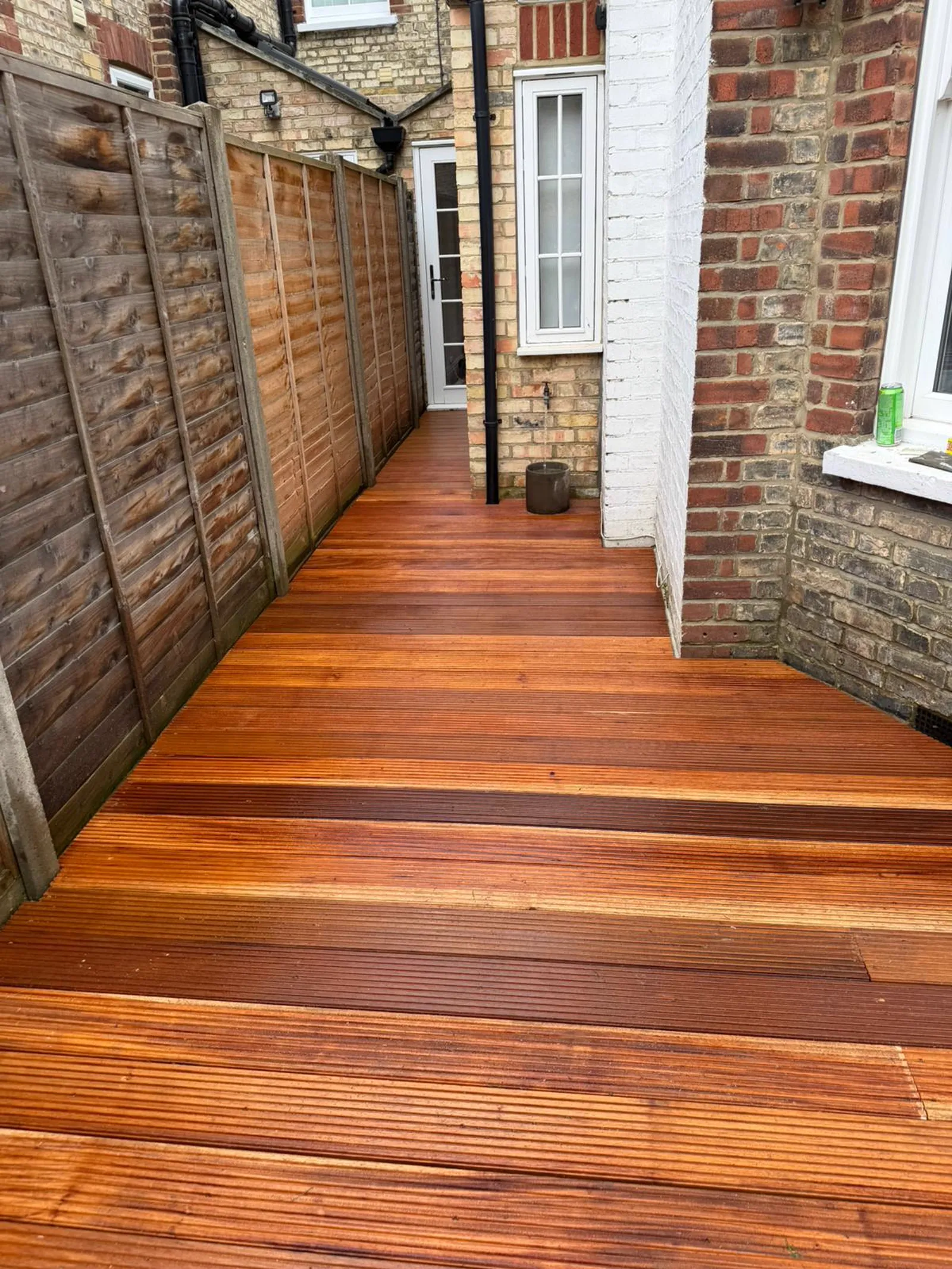
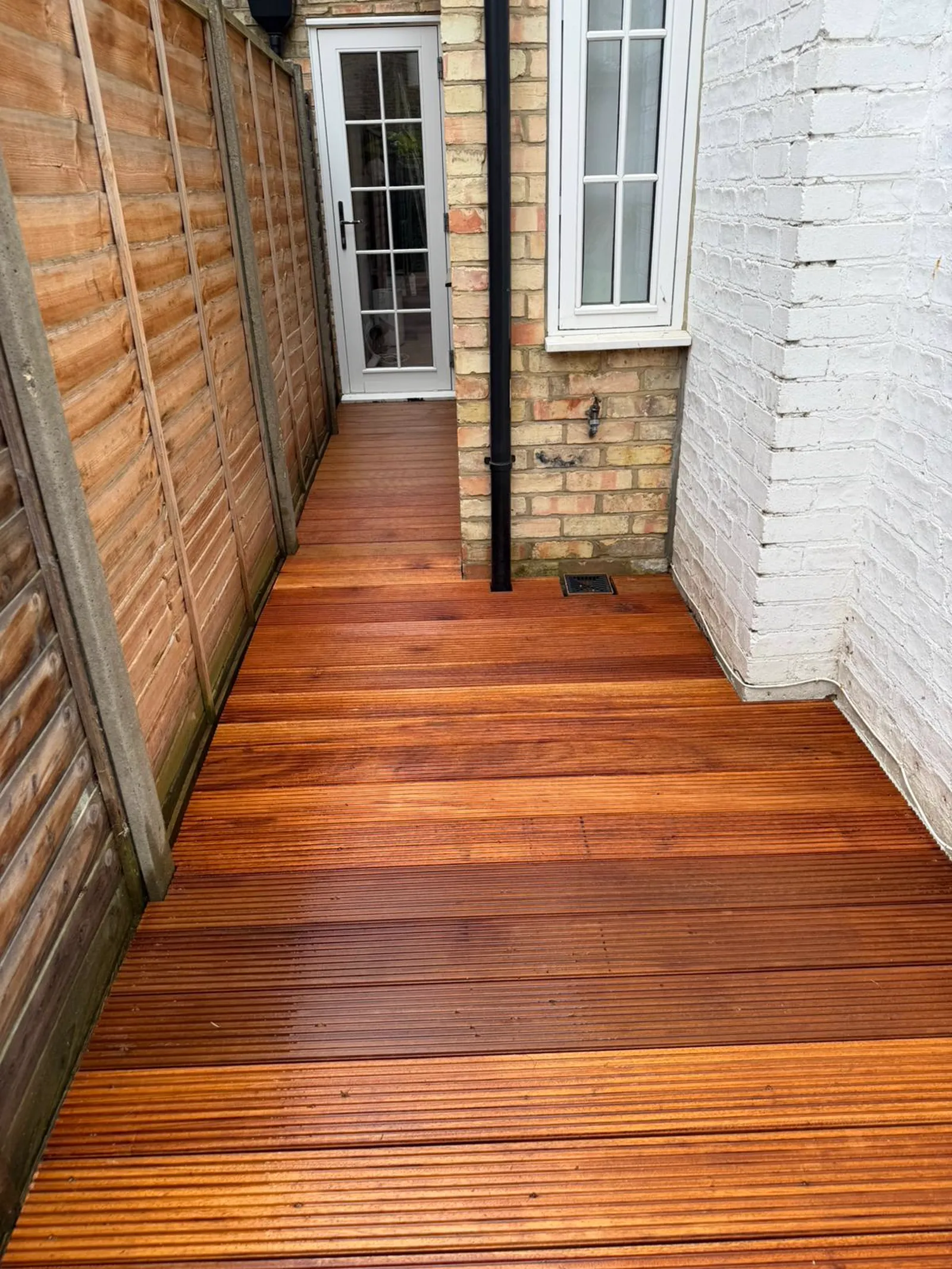
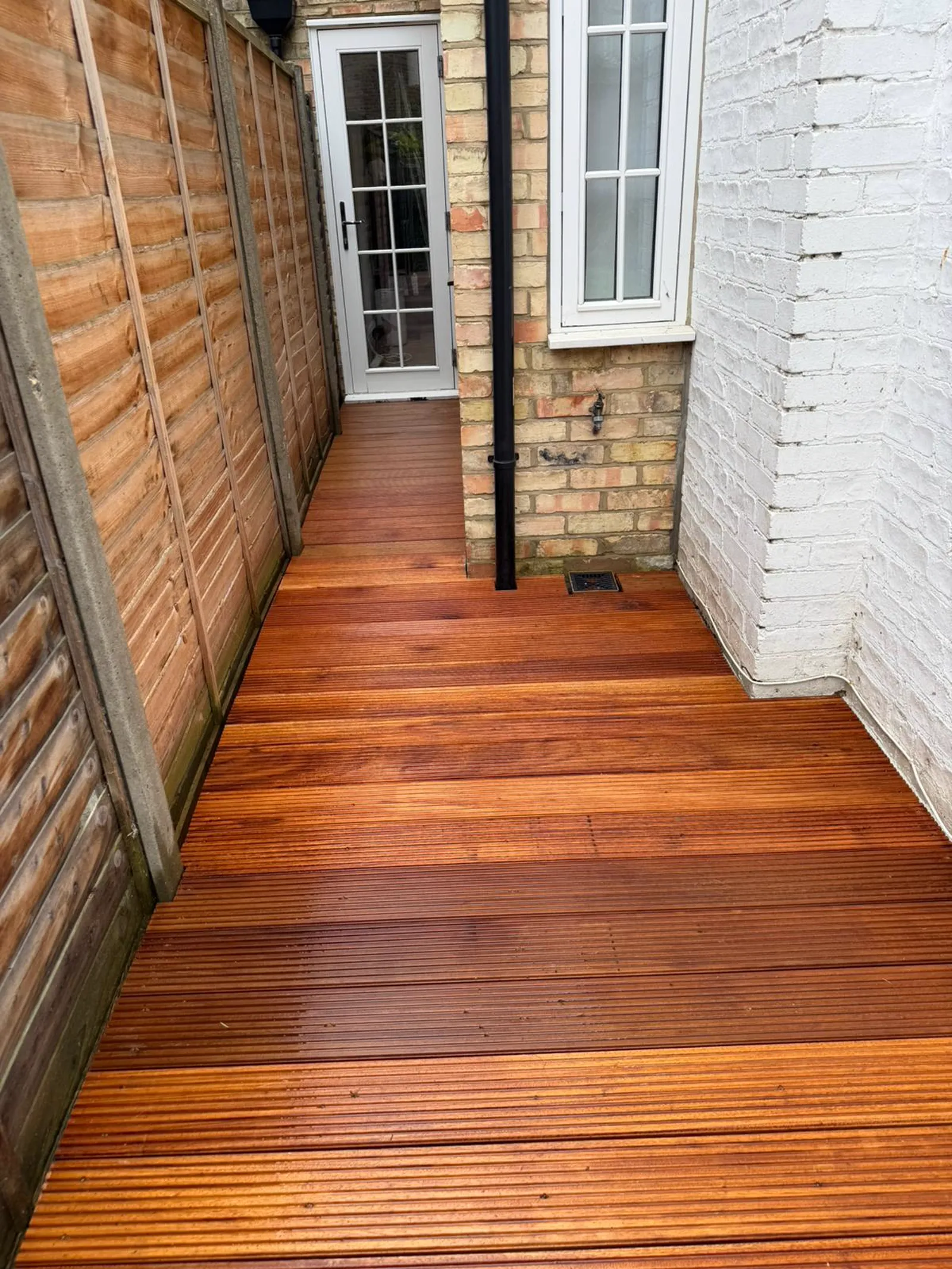
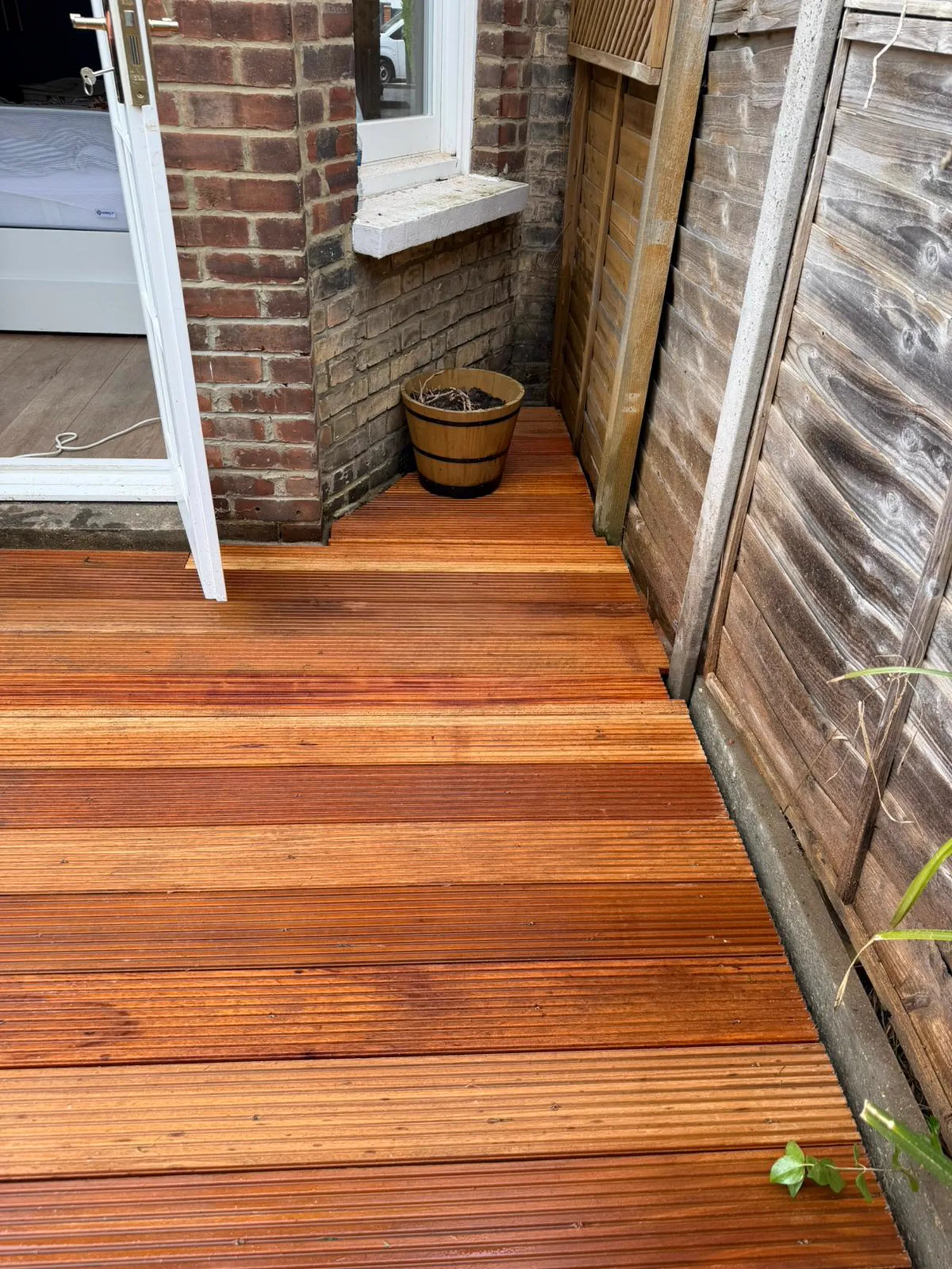
Balau Hardwood Decking
A recent Balau hardwood decking installation by The Tree Amigos Landscaping, South East London — showcasing the rich natural grain and warm tones of premium hardwood timber.
Verified Craftsmanship & South West London Showcase
Explore our nearby South West London decking projects in Wimbledon and Raynes Park to see the high standard of finish delivered on every installation.
Wimbledon Decking Showcase
Multi-level Millboard composite platform constructed on complex clay slopes.
View Wimbledon Project →Raynes Park Decking Showcase
Sleek contemporary Trex composite deck with integrated cedar privacy panels.
View Raynes Park Project →Frequently Asked Questions: Kingston Decking
How do you handle sloped or riverside gardens in Kingston?
Do you charge travel surcharges to Kingston upon Thames?
Do I need planning permission for decking in Kingston upon Thames?
Are Kingston gardens near the Hogsmill or Beverley Brook prone to flooding?
Does gravel ground in Kingston help decking?
Is a riverside deck in Kingston different from one inland?
Schedule Your Kingston Decking Survey
Speak directly with founders Billy and Vincent for expert advice and a free on-site survey across Kingston upon Thames KT1, KT2 & KT3.