Decking Ideas for Small and Narrow London Gardens
Written by Billy Maddox & Vincent O'Connell, Founders of The Tree Amigos Landscaping & Gardening Ltd
Published November 2026
DECKING GUIDES | The Tree Amigos
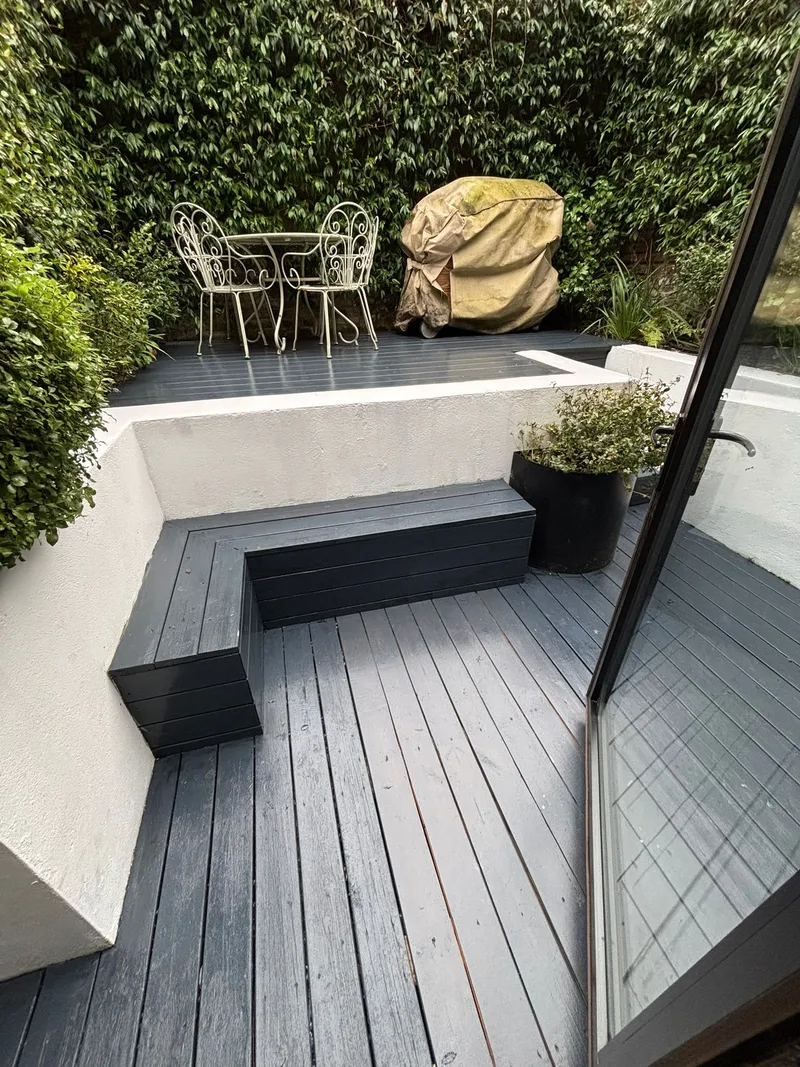
In a small or narrow London garden, the best deck is a compact one shaped to the space, with a clear route around it. Keep it to one room, such as a corner or the area outside the back door, lay the boards to suit the shape of the plot, and leave planting or lawn so the garden does not turn into one big platform. This guide covers small, narrow and sloping gardens, then privacy, materials and the frame underneath.
Key Takeaways
- Keep the deck compact and shaped to the garden, often in a corner or by the back door.
- In a long, narrow garden, split the space into zones instead of one long strip.
- On a slope, a deck can make a level area, as one raised level or two tiers.
- Slatted screens or a pergola add privacy without enclosing the garden.
- The frame and drainage under the boards decide how long the deck lasts.
How Do You Make a Small Garden Feel Bigger With Decking?
Keep the deck compact and shaped to the space. A deck in a corner, or just outside the back door, gives you somewhere to sit while keeping room to move around it. A deck that fills the whole garden can make a small space feel enclosed. Lighter board colours tend to make a small garden feel more open, and curved or angled edges soften a boxy plot.
Think about what else the garden needs. Leaving a strip of planting, a patch of turf or a few pots around the edge keeps the garden from feeling like a single hard surface. Built-in seating along one edge can also free up floor space for the table. Whatever you choose, leave enough room to pull out chairs and walk past them.
What Works in a Long, Narrow Garden?
A long narrow plot can feel like a corridor. Splitting it into zones usually works better than one long strip of decking: a wider seating area near the house, then a narrower section or path further down. A change in width or level gives the eye somewhere to stop.
Board direction helps too. Boards laid lengthways tend to lead the eye down the garden, while boards laid across the width tend to make the plot look wider. Either can work, so choose the effect you want.
Is Decking a Good Choice for a Sloping Garden?
It can be. On a slope, a deck can create a level area where there was none, either as one raised level or as two tiers joined by steps. Steps can double as extra seating. With a raised deck, the frame and footings matter more, and height changes the rules. In England, a deck more than 30cm above the ground can need planning permission, and a higher deck may need a guard. Our decking planning permission guide explains when, and you should always check your own address with your council. Our roof terrace decking guide covers the extra points for raised terraces.
How Do You Plan Dining Space on a Small Deck?
Put the dining area close to the back door, where carrying food and drink is easiest, and use any lower level for seating or planting. Allow room to pull the chairs out and walk round the table. A table that fits the deck well is better than a large one that blocks the way.
How Do You Add Privacy to a Small Deck?
In a terraced street, being overlooked is often the real problem. Slatted screens or a pergola can block a sightline from a window without enclosing the whole garden. Fix screens securely to the frame or posts, not just to the boards, and space the slats evenly so the screen stays strong in wind while still letting some light through. Our garden privacy ideas and small garden pergola guides cover this in more detail.
Which Decking Material Suits a Small Terraced Garden?
Both timber and composite can work. Composite needs less upkeep, which suits a small space you want to use rather than maintain. Timber suits a natural look and can be repaired board by board. Our composite vs timber decking guide compares them, and our Millboard vs Trex guide compares the two composite ranges we fit.
In a terraced house, ask how the materials will reach the garden. Boards and timber often have to be carried through the property, which affects the job and the quote, and is worth agreeing before work starts.
What Sits Under a Small Deck Matters Most
A deck is only as good as its frame and drainage. We build on a C24 strength-graded timber subframe with a breathable membrane and ventilation underneath. A deck should shed water and let air move beneath it, and timber should never sit straight on the ground. Poor drainage or a weak frame can shorten a deck's life, sometimes before the boards show any wear. Our guide to why decks fail and how to build one that lasts explains the details.
Decking in South East London
We design and build timber and composite decks across South East London and the surrounding boroughs, and the founders visit first to look at your garden, the levels and the access before we write a quote. The survey is free. For the service overview, see our decking in London page. Our Islington roof terrace makeover shows composite decking in a compact space.
Frequently Asked Questions
Can you fit a deck in a small garden?
Yes. A small garden usually works best with a compact deck shaped to the space, often in a corner or just outside the back door, instead of covering the whole garden. Leaving room to walk round and keep some planting or lawn stops the garden feeling like one big platform.
What decking design suits a long, narrow garden?
Splitting a long narrow garden into zones usually works better than one long strip. A wider deck near the house for seating, then a narrower section or path further down, breaks up the corridor effect. Boards laid lengthways tend to lead the eye down the garden, while boards across the width tend to make it look wider.
Is decking a good choice for a sloping garden?
It can be. A deck can create a level area on a slope, either as one raised level or as two tiers joined by steps. The frame and the footings matter more on a slope, and a deck more than 30cm above the ground can need planning permission in England, so check before you build.
Which decking material is best for a small terraced garden?
Both timber and composite work. Composite needs less upkeep, which suits a small space you want to use rather than maintain. Timber suits a natural look and board-by-board repairs. In a terraced house, ask how boards will get to the garden, because they may need to be carried through the property.
Can I add privacy to a small deck?
Yes. Slatted screens or a pergola can block overlooking windows without enclosing the whole garden. Screens should be fixed securely to the frame or posts, not just to the boards, and the slats should be spaced evenly so the screen stays strong in wind while still letting some light through.
Planning a deck?
Billy and Vincent will visit, look at your garden, the levels and the access, and give you a written quote with no obligation.