Fence Repair Across South East London: The Areas We Cover and Why Every One Is Different
Written by Billy Maddox, Co-Founder of The Tree Amigos Landscaping & Gardening
Published: September 2026
FENCING & BOUNDARIES | The Tree Amigos
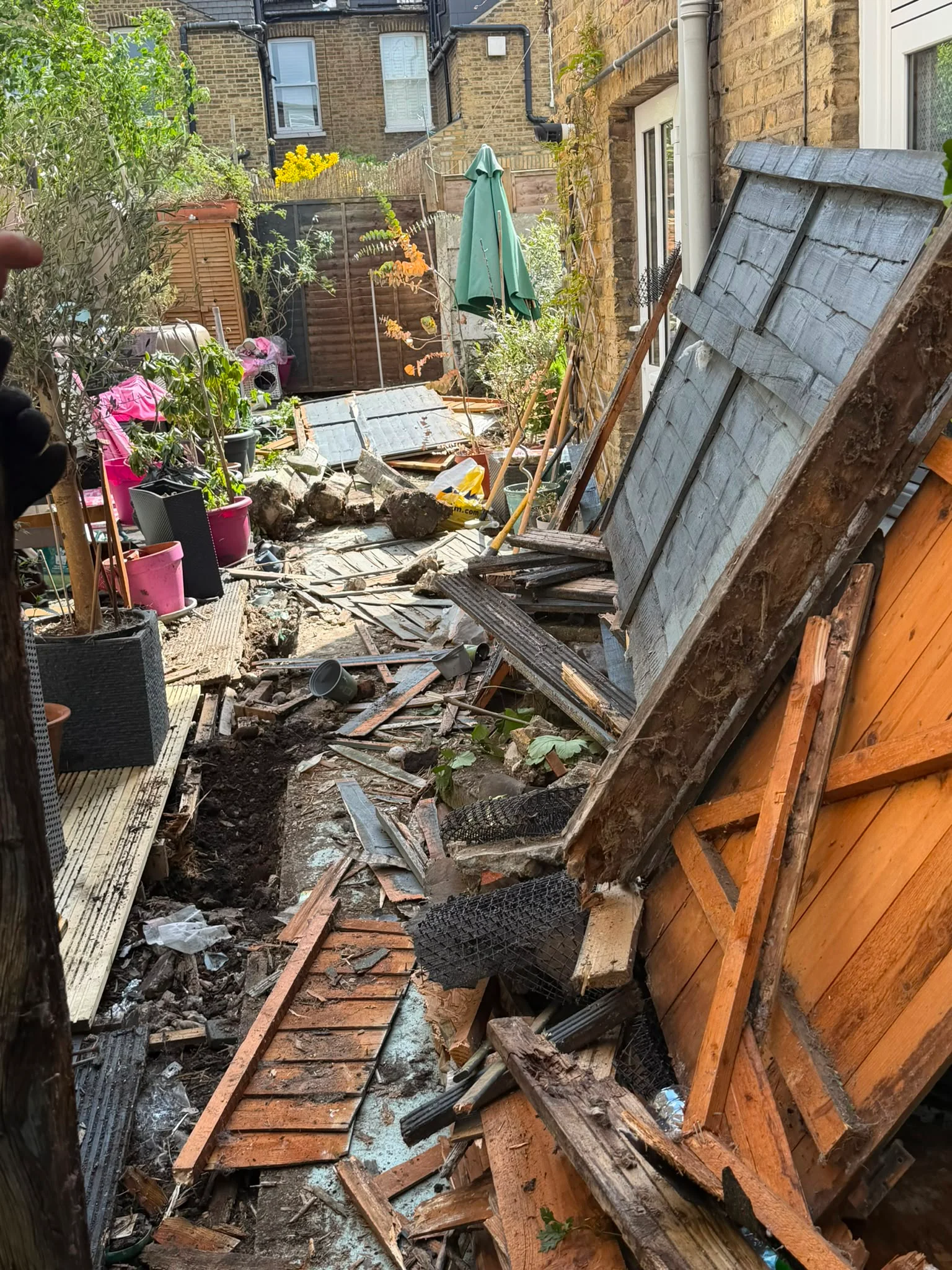
"Fence repair" sounds like the same job everywhere. It isn't. A leaning post in Blackheath might sit inside a conservation area that scrutinises even a gate alteration. The same lean in Dartford might be exactly what the council's own storm guidance warned residents to check before the last named storm hit. We repair and reinforce boundaries across 16 distinct South East London areas, and treating them all the same is how repairs get delayed by planning issues nobody flagged, or priced without accounting for the ground they're going into.
At The Tree Amigos Landscaping & Gardening Ltd, founders Billy Maddox and Vincent O'Connell repair fences across South East London from our base in Woolwich SE18. This guide goes through each area we cover and the specific local factor — planning, soil, or boundary law — that actually changes how the job gets done.
Quick Summary (TL;DR):
We repair fences across 16 South East London areas grouped around our Woolwich SE18 base — from the Royal Greenwich heartland (Woolwich, Plumstead, Greenwich, Eltham, Blackheath, Lee, Avery Hill) through the Bexley/Kent border (Bexleyheath, Bexley, Belvedere, Welling, Blackfen, Dartford) to Abbey Wood, Deptford, and our Merton coverage in SW19. Each area has a genuinely different planning quirk, soil condition, or boundary-law issue that changes how a repair should be approached.
The Royal Greenwich Heartland: Woolwich, Plumstead, Greenwich, Eltham, Blackheath, Lee & Avery Hill
This cluster sits closest to our Woolwich base, and it's also where planning history runs deepest — several of these areas carry conservation status or heritage designations that genuinely change what you can build.
Woolwich (SE18)
The question we get most often in Woolwich isn't about materials — it's "who's actually responsible for this fence?" Terraced properties with tight boundaries mean a failed fence immediately compromises privacy from close neighbours, and boundary liability confusion (see the T-mark/H-mark explainer below) is common. See our Woolwich fence repair page.
Plumstead (SE18)
Plumstead's sloped and gradient gardens — around Plumstead Common, Shooter's Hill, and East Wickham — put structural lean at the top of the list of problems we see, on top of the same T-mark/H-mark boundary confusion as Woolwich. See our Plumstead fence repair page.
Greenwich (SE10)
Maritime Greenwich is a UNESCO World Heritage Site, and much of SE10 falls under Article 2(3) designated land — which halves the standard Permitted Development fence height allowances that apply elsewhere in London. Combined with heavy London clay underground, a Greenwich repair often needs a planning check most other areas don't. See our Greenwich fence repair page.
Eltham (SE9)
Eltham sits inside Royal Greenwich's planning framework, and several pockets — Eltham Park, Mottingham, New Eltham — are designated conservation areas where fence materials and appearance are expected to stay sympathetic to the street's character. We handle a lot of long-run boundary replacements here rather than single-panel patches. See our Eltham fence repair page.
Blackheath (SE3)
Blackheath and Blackheath Park are both designated conservation areas — Royal Greenwich's own planning register shows real, recent applications for front-fence and gate alterations that needed formal permission rather than falling under Permitted Development. On top of that, the open Heath means genuinely high wind exposure for boundaries nearby. See our Blackheath fence repair page and our dedicated Blackheath landscaping guide.
Lee (SE12)
Lee's gradient gardens around Lee Green, Grove Park, and Hither Green raise a technical point flat-plot fencing guides don't cover: on a slope, fence height is measured from the ground level on the higher side, not the lower one. A fence that looks compliant from your patio can be over the limit measured correctly. See our Lee fence repair page.
Avery Hill (SE9)
Avery Hill shares its postcode with Eltham and sits under the same Royal Greenwich rules — 2m rear, 1m front or roadside — but parts of Avery Hill fall under Article 4 directions that remove those standard allowances. We prioritise premium, long-lasting timber fencing over quick budget patches for the semi-detached family homes typical here. See our Avery Hill fence repair page.
Bexley Borough & the Kent Border: Bexleyheath, Bexley, Belvedere, Welling, Blackfen & Dartford
Further out along the A2/A20 corridor, the recurring theme shifts from conservation planning to boundary ownership myths and storm exposure.
Bexleyheath (DA6)
One of the most persistent myths we hear quoting jobs in Bexleyheath — around Barnehurst, the Clocktower, and Crook Log — is that whichever side has the fence posts owns the boundary. It doesn't; ownership comes from the property deeds. Heavy clay footing shifts are the recurring structural issue here. See our Bexleyheath fence repair page.
Bexley (DA5)
A rule that catches out more Bexley Village and Old Bexley homeowners than you'd expect: a boundary fence next to a road used by vehicles — including a quiet residential side street — is capped at 1 metre without planning permission, even where the back garden itself allows 2m. See our Bexley fence repair page.
Belvedere (DA17)
A question we get quoting in Belvedere more than most areas: can you force a neighbour to fix or contribute to a failing shared fence? Generally no — there's no automatic UK legal duty to maintain a boundary fence unless a specific covenant says otherwise. Estuary wind funnels around Upper and Lower Belvedere add real structural stress on top of that. See our Belvedere fence repair page.
Welling (DA16)
Boundary ownership confusion is the most common delay we see before pulling down an old fence in Welling. Your Title Register and Title Plan, downloadable from HM Land Registry, will show a T-mark on your side of a boundary if you own it — worth checking before any repair starts. See our Welling fence repair page.
Blackfen (DA15)
The "trellis trap" catches out a lot of Blackfen homeowners near Marlborough Park: the 2-metre Permitted Development height limit for a rear garden fence includes anything fixed on top, so adding a 30cm decorative trellis to a standard 1.8m closeboard panel can push the total over the limit. Blackfen's 1930s semi-detached housing stock also means we're often weighing a structural repair against a full replacement. See our Blackfen fence repair page.
Dartford (DA1)
Dartford Borough Council's own published Storm Eunice guidance specifically named loose fence panels — alongside sheds and greenhouse windows — as a pre-storm risk residents should check. That's not generic advice; it's the council's own list. Add clay-and-chalk soil movement and Thames Valley wind exposure around West Hill, Joydens Wood, and Wilmington, and Dartford sees genuinely different failure patterns to areas closer to our Woolwich base. See our Dartford fence repair page.
Abbey Wood & Deptford
Two areas with a genuinely mixed housing stock, where the right answer depends heavily on which specific pocket you're in.
Abbey Wood (SE2)
Abbey Wood has a genuine clay-soil ground rot issue that we see repeatedly, and parts of the area fall under Article 4 directions that remove standard Permitted Development rights. The Plumstead and Abbey Wood Co-Op estate pocket has a real concentration of Victorian terrace housing with private rear gardens — a different job entirely to the flat-only stock found elsewhere in SE2, where a fence repair often isn't the right service at all. See our Abbey Wood fence repair page.
Deptford (SE8)
Deptford's period terrace boundaries around Deptford Park and St John's often mean tight-access gardens and timber fencing suited to older properties. Worth being upfront about here: large parts of SE8 are flat-only developments without private gardens, and we're not the right fit for those — we're specialists in the period terrace boundary work the area's Victorian housing actually needs. See our Deptford fence repair page.
Merton (SW19): Wimbledon, Raynes Park & Morden
Merton is the one area on this list well outside our South East London home turf, but it's one we cover with the same zero-travel-surcharge standard. The mistake we see most often here is a front-garden fence built taller than the 1-metre roadside limit without anyone realising — until a neighbour complains or the council sends an enforcement notice. Retrospective planning applications to fix this after the fact are a real, avoidable cost. See our Merton fence repair page and our wider Merton landscaping guide.
Not sure which category your fence falls into?
Billy and Vincent will come out, check the boundary, the planning position, and the structure — free, no obligation.
Frequently Asked Questions
Who is legally responsible for repairing a shared boundary fence?
There's no automatic UK legal duty for a neighbour to repair or contribute to a shared boundary fence unless a specific covenant on the title says otherwise. Ownership and responsibility come from the property deeds, not from which side the fence posts or rails face.
What is a T-mark or H-mark on my title plan?
A "T" mark on your Land Registry title plan means that boundary is yours to maintain. An "H" mark (two T's forming an H) means it's a shared party boundary. You can check this on your Title Register and Title Plan from HM Land Registry.
Do I need planning permission to repair or replace a garden fence?
Most rear garden fences up to 2 metres, and front or roadside boundaries up to 1 metre, fall under Permitted Development and don't need planning permission. Conservation areas, Article 4 directions, and UNESCO World Heritage Site designations (such as part of Greenwich) can remove or reduce these allowances, so it's always worth checking before you build.
Does a decorative trellis count towards the fence height limit?
Yes. The 2-metre Permitted Development height limit for a rear garden fence includes anything fixed on top, including a decorative trellis. Adding a 30cm trellis to a standard 1.8m closeboard panel can take the total over the limit.
For the mechanics of diagnosing rot, storm-proofing a fence, and repairing vs replacing, see our Ultimate Guide to Garden Fencing. For the legal side of heights, permissions, and boundary ownership in more depth, see Fencing in London: Rules, Styles and What Actually Changes at the Boundary.
About the Author
Billy Maddox is co-founder of The Tree Amigos Landscaping & Gardening Ltd, the South East London landscaping firm he runs with Vincent O'Connell. Billy has repaired and reinforced boundaries across every area covered in this guide, from conservation-area terraces in Blackheath to storm-exposed estuary gardens in Belvedere. Every Tree Amigos project is founder-led and Checkatrade-verified at 9.8/10.