Premium Decking in Bromley
Bespoke composite and timber decking installations built on engineered C24 subframes across Bromley BR1 & BR2. Experienced with Millboard & Trex composite boards, Yellow Balau hardwood, and treated softwood. Founder-led by Billy Maddox & Vincent O'Connell.
- 9.8 / 10 Checkatrade, 23 verified reviews
-

- Founder-led by Billy Maddox & Vincent O'Connell
- Every job built by the two founders
Decking in Bromley: Victorian Terraces to Bickley Villas
Bromley ranges from Victorian cottages and Edwardian semis in Bromley Old Town, around Church House Gardens and the Church of St Peter and St Paul, to terraced homes across the town centre and newer developments near Bromley South. Further out, Bromley Common has 1930s semis and Bickley has larger detached houses.
The town centre sits in the lower Ravensbourne valley on heavy, sticky London Clay that can shift seasonally beneath poorly built foundations. Ground conditions ease slightly further south towards Bromley Common (BR2), where the clay mixes with sand and gravel and drains a little better.
We cover Bromley from our Woolwich base, and the first step is a free on-site survey.
Which Decking Suits Bromley Gardens?
On heavy clay, composite on a ventilated subframe is the low-maintenance choice and hardwood suits larger gardens where owners want natural timber. Terraced town-centre gardens are often small, so how the deck is laid out on a compact plot matters more than its overall size.
Larger Bickley and Bromley Common gardens give more freedom, but conservation areas and Article 4 directions apply in places, so check first. Our composite vs timber decking comparison compares the materials.
Composite, Hardwood, Modified Timber or Softwood?
We install all four. Here is how they compare on the things people ask about most.
Composite
Millboard and Trex
Slip: textured or grained surfaces, but algae still needs washing off.
Upkeep: soap and water, no oiling.
Heat: holds heat longer in sun, darkest tones most.
Feel: engineered and splinter-free; Millboard has a deep natural grain.
Hardwood
Balau, Ipe, Cumaru and more
Slip: moderate; oily species can be slick when wet, so grooved boards help.
Upkeep: oil yearly to keep the colour, or leave to silver.
Heat: stays cooler underfoot than dark composite.
Feel: real, dense timber grain.
Modified timber
Kebony, Accoya and ThermoWood
Slip: behaves like natural timber; reeded profiles are available.
Upkeep: low; an occasional clean, with oil optional to hold the colour.
Heat: like natural timber, cooler than dark composite.
Feel: real wood, treated to be more stable.
Softwood
Pressure-treated
Slip: poor when wet or mouldy, especially in shade.
Upkeep: the most; oil or stain every year or two.
Heat: stays cool in sun.
Feel: classic timber look, but weathers and can splinter.
See the full comparison on our decking hub, or read composite vs timber decking.
What Our Bromley Site Survey Looks At
Every Bromley garden is different, so the free survey checks the things that decide how the deck should be built:
- Ground: sticky clay in the centre, or easier sand and gravel towards BR2, which sets footing depth.
- Conservation areas: Bromley Town Centre, Bickley Park and the Article 4 areas for Bickley and Bromley Common.
- Plot size: compact terrace gardens against larger Bickley plots.
- Trees: mature trees and conservation-area notice rules.
- Levels and access: the step from the house and how materials reach the garden.
What's Under the Boards: How We Build the Frame in Bromley
Most deck failures start below the surface, not in the boards. Whatever board you choose, every deck we build uses the same structure:
- C24 strength-graded timber frame that carries the load properly.
- Breathable membrane over prepared ground, so weeds stay down and ground moisture can escape.
- Joists at 400mm centres (300mm for diagonal board layouts), so boards stay flat and firm.
- Airflow underneath, because a frame that cannot dry out is a frame that rots.
- Structural pedestals and deeper footings where the ground is soft or wet.
- No new boards over an old frame. If the existing frame is not sound, it is replaced.
Bromley has heavy London Clay in the north and centre, and clay mixed with sand and gravel to the south, so the frame needs deep footings and good airflow. This is general area guidance, not a promise about any single garden, so we check yours at the survey.
Want to know what goes wrong when a deck is built cheaply? Read why decks fail and how to build one that lasts.
What's Included in Your Decking Quote in Bromley
After your free survey you receive an itemised written quote, so you can see exactly what is being built and what you are paying for. A decking quote covers:
- The free on-site survey and measuring up.
- Ground preparation and levelling.
- Breathable membrane.
- The C24 frame, with footings and pedestals where the ground needs them.
- Your chosen boards and fixings.
- Trims, edging and steps, as designed for your garden.
- Waste removal and a clean site at the end.
Anything extra you ask for is itemised separately, so nothing is hidden in the small print.
Planning, Conservation Areas and Article 4: What to Check Before Building a Deck in Bromley
Bromley is in the London Borough of Bromley. Under the Planning Portal rules, garden decking is normally permitted development if it is no more than 30cm above the ground, covers no more than 50% of the garden together with any extensions and outbuildings, and is not forward of the front wall of the house. A raised deck above 30cm, or any decking within the grounds of a listed building, needs planning permission. On designated land such as conservation areas, decking at the side of the house is not permitted development either. Conservation areas here include Bromley Town Centre and Bickley Park, and the council has made Article 4 directions covering the Bickley and Bromley Common areas of special residential character, which remove some permitted development rights. Check with Bromley Council if your home is in BR1 or BR2.
BR1 and BR2 gardens range from Victorian terraces to large detached homes in Bickley, and mature trees are common. In a conservation area you must give the council six weeks' written notice before cutting or pruning a tree, and the council can respond with a Tree Preservation Order, so a deck layout has to work around mature trees rather than assume they can come out. This is general guidance, not planning advice; always confirm with your local council before building. Our full guide to planning permission for decking in London covers every rule in detail. Once your deck is built, our decking maintenance and winter care guide and our guide to choosing a decking oil, stain or paint cover looking after it.
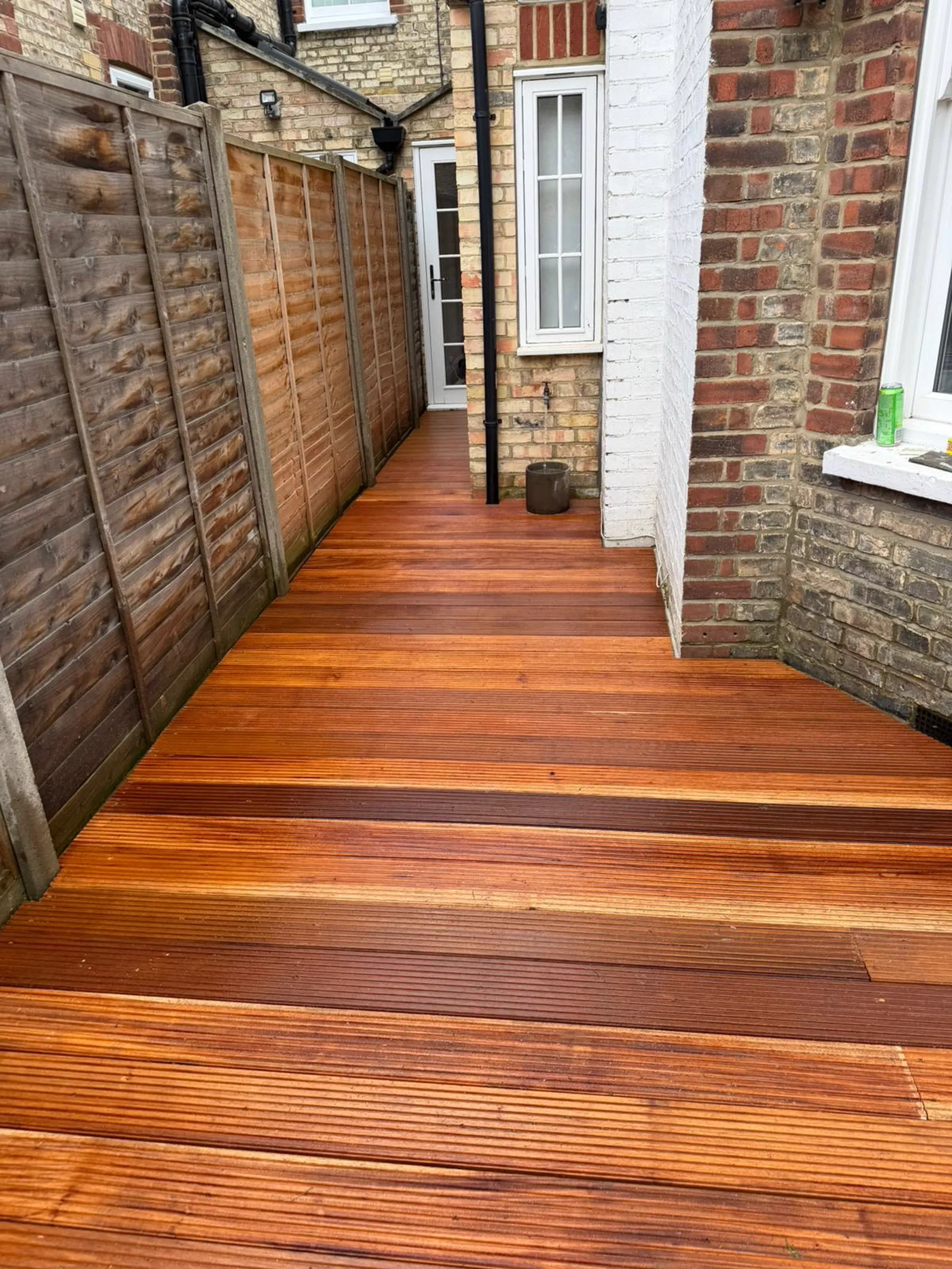
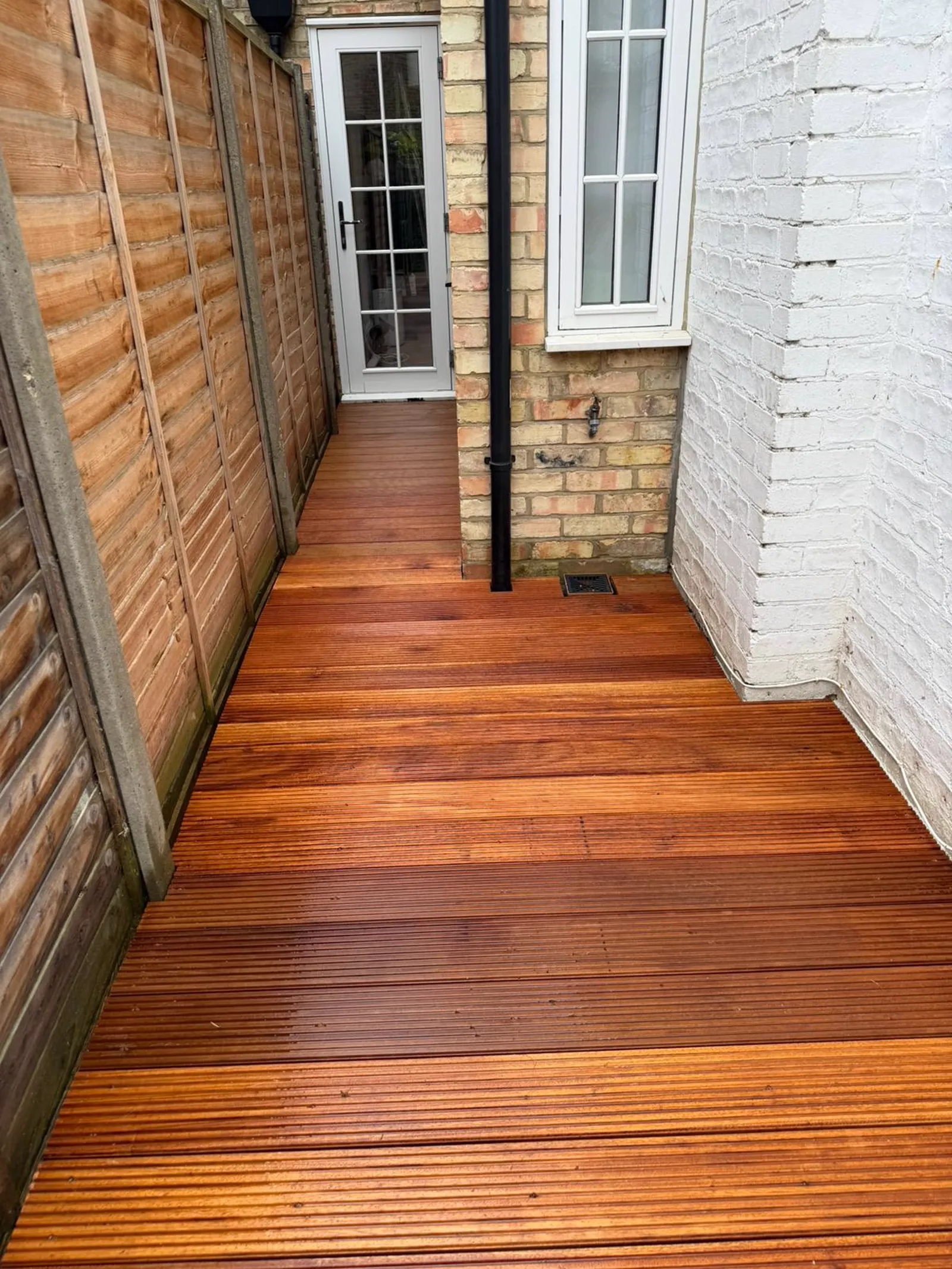
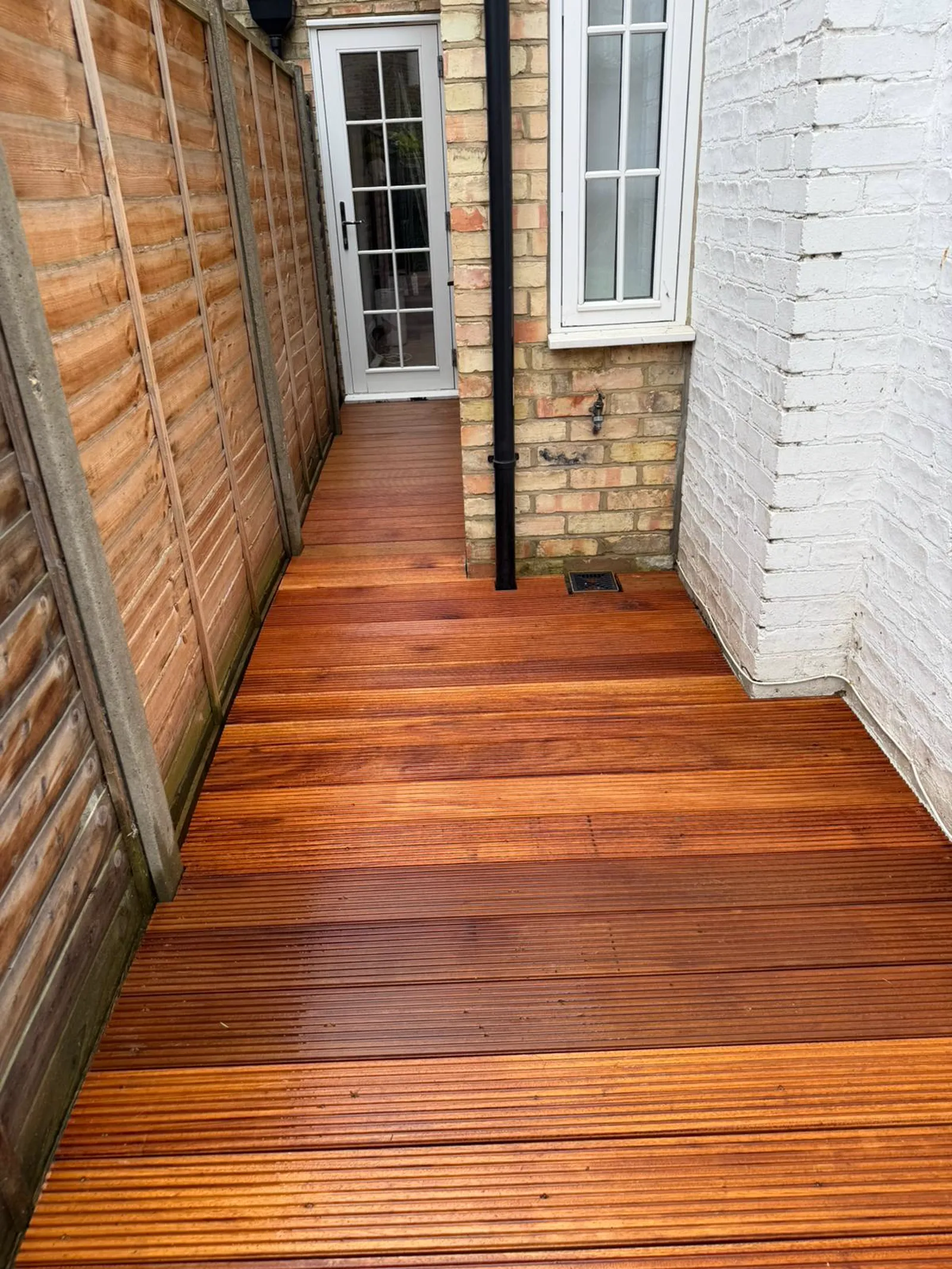
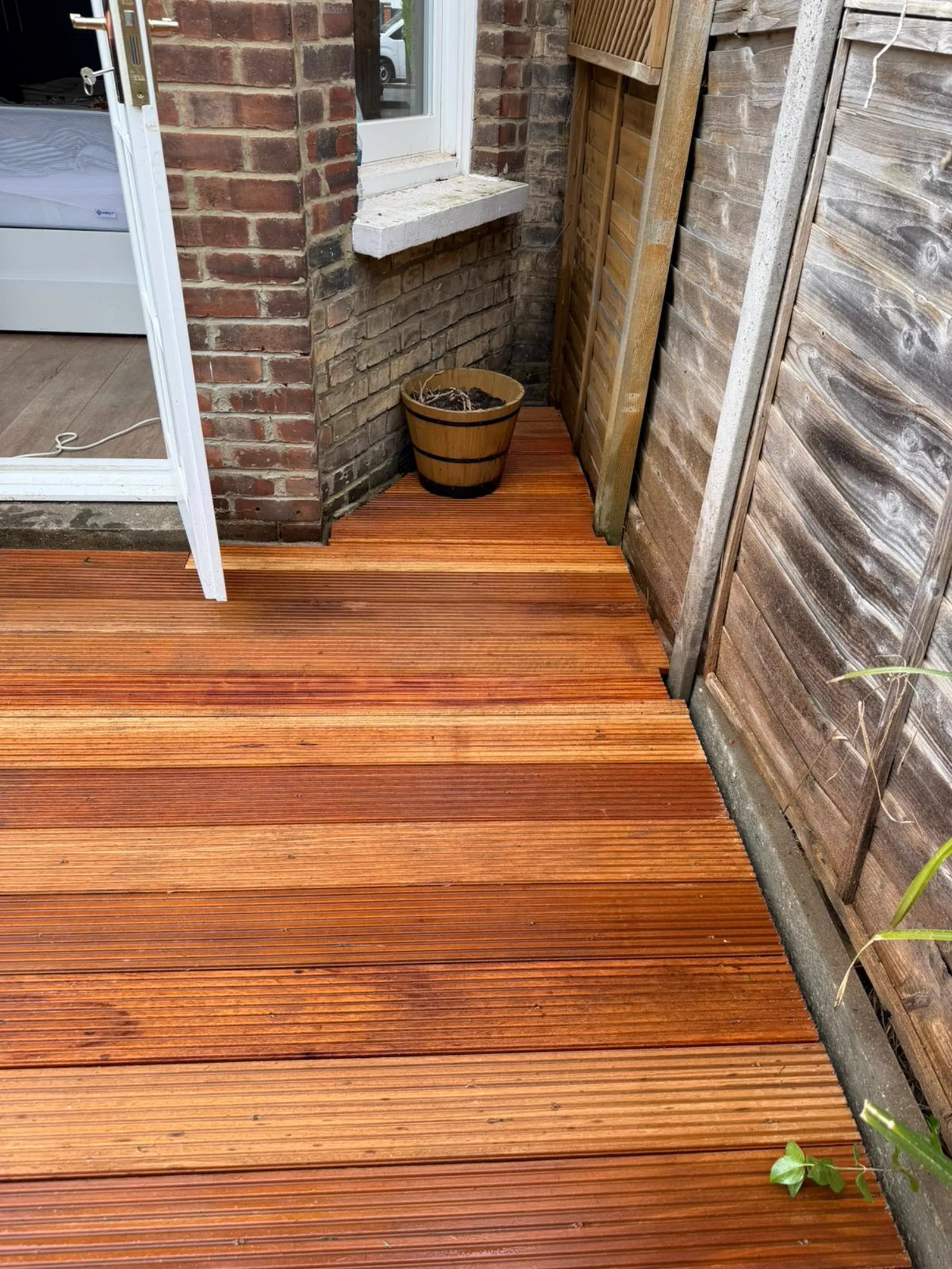
Balau Hardwood Decking
A recent Balau hardwood decking installation by The Tree Amigos Landscaping, South East London — showcasing the rich natural grain and warm tones of premium hardwood timber.
Quality Craftsmanship & Proof of Work
Every decking project is built and supervised by the founders, Billy Maddox and Vincent O'Connell.
Explore Our Full Transformation Case Study
See our complete breakdown of a full garden transformation featuring high-performance paving, timber sleeper planters, and boundary fencing completed in 8 working days.
View Case Study Breakdown →Frequently Asked Questions: Bromley Decking
How do you handle Bromley's clay soil when building a deck subframe?
Do I need planning permission for decking in Bromley?
Does living in Bickley affect decking?
Does clay affect decking in Bromley?
Which Bromley areas have extra planning rules for decking?
How do I get an itemised quote for my Bromley decking project?
Decking Questions We Hear Most in Bromley
Can a deck sit level with my patio or bi-fold doors, and what about air bricks?
Is decking slippery when wet?
What makes a deck rot, and how do you prevent it?
Should I choose timber or composite decking?
How long will my deck last?
Get a Decking Quote in Bromley
How the Free Survey Works
- You get in touch. Send the form, call, or message on WhatsApp. Photos of the garden help but are optional.
- A founder visits. Billy Maddox or Vincent O'Connell comes to the garden and measures the space.
- We check what decides the build: ground, levels, access, trees, and where the deck meets the house, including damp-proof course and air brick positions.
- You see samples and options. We talk through board samples, the frame and how you will use the space.
- You get an itemised written quote showing what is included.
Prefer to talk? Call 07470 419 056.
Decking Pages Across Our Service Area
Every area has its own page covering local ground, planning and access. See the London decking hub for the full range.
South East London
Bexley and Dartford
Bromley and the Kent Edge
- Decking in Chislehurst
- Bromley (this page)
- Decking in Orpington
- Decking in Beckenham
South West London and Croydon
North East London
Schedule Your Bromley Decking Survey
Speak directly with founders Billy and Vincent for expert advice and a free on-site survey across Bromley BR1 & BR2.